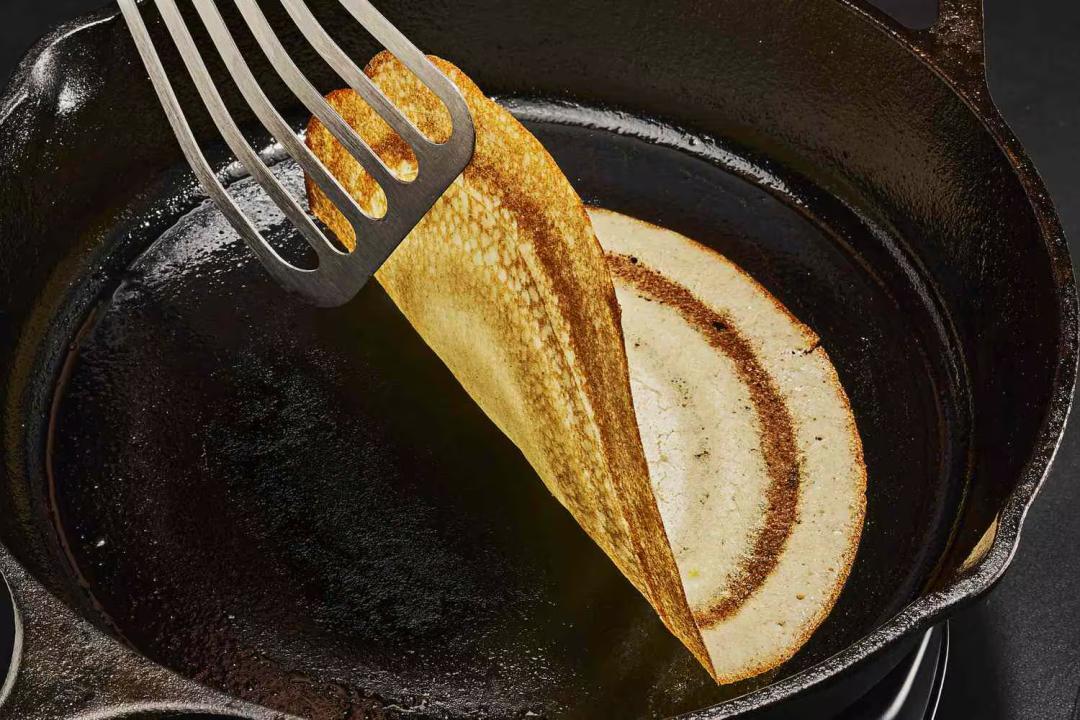
IIT-Madras professor explains why dosas are crispy on outside & soft on inside
Dosa, a traditional South Indian dish, has been a staple in many Indian households for centuries. The delicate balance of crispy exterior and soft interior has always fascinated food enthusiasts. But have you ever wondered what makes dosas crispy on the outside and soft on the inside? A professor from the Indian Institute of Technology, Madras (IIT-Madras) has shed light on the science behind this phenomenon.
Professor Mahesh Panchagnula, a renowned expert in the field of mechanical engineering, has explained that the practice of sprinkling water on a hot tawa before pouring dosa batter is linked to the Leidenfrost Effect. This phenomenon was first identified in Germany in the 18th century by Johann Leidenfrost. The Leidenfrost Effect is a phenomenon where a liquid, in this case, water, comes into contact with a surface that is significantly hotter than its boiling point. When this happens, the water droplets do not immediately evaporate, but instead, they glide and float on a thin vapor layer.
According to Professor Panchagnula, when the tawa is not hot enough, the water evaporates slowly, and the dosa batter sticks to the surface. However, when the tawa is at the right temperature, the water droplets behave differently. They form a thin vapor layer, which prevents the dosa batter from coming into direct contact with the hot surface. This vapor layer, also known as the Leidenfrost layer, reduces the heat transfer between the tawa and the dosa batter, allowing the dosa to cook evenly and preventing it from sticking to the surface.
As the dosa batter is poured onto the hot tawa, it comes into contact with the vapor layer, which helps to distribute the heat evenly. The heat from the tawa causes the starches in the batter to gelatinize, creating a crispy exterior. At the same time, the interior of the dosa remains soft and fluffy, thanks to the reduced heat transfer. This delicate balance of heat and moisture is what gives dosas their characteristic texture.
The Leidenfrost Effect is not unique to dosas; it can be observed in other cooking processes as well. For example, when cooking pancakes or eggs, a small amount of oil or butter is often added to the pan to prevent the food from sticking. This is also an example of the Leidenfrost Effect, where the oil or butter creates a thin vapor layer that reduces the heat transfer and prevents the food from sticking to the pan.
Professor Panchagnula’s explanation has sparked a lot of interest among food enthusiasts and scientists alike. It highlights the importance of understanding the underlying physics and chemistry of cooking processes. By applying scientific principles to cooking, we can gain a deeper appreciation for the complex processes that occur in the kitchen and develop new techniques to improve the quality and texture of our food.
In conclusion, the next time you enjoy a crispy dosa, remember the science behind it. The Leidenfrost Effect, a phenomenon discovered in the 18th century, plays a crucial role in creating the perfect balance of texture and flavor. Whether you are a food enthusiast or a scientist, understanding the physics and chemistry of cooking can help you appreciate the complexity and beauty of the culinary arts.
News Source: https://x.com/iitmadras/status/1993901259925909929
About the Author