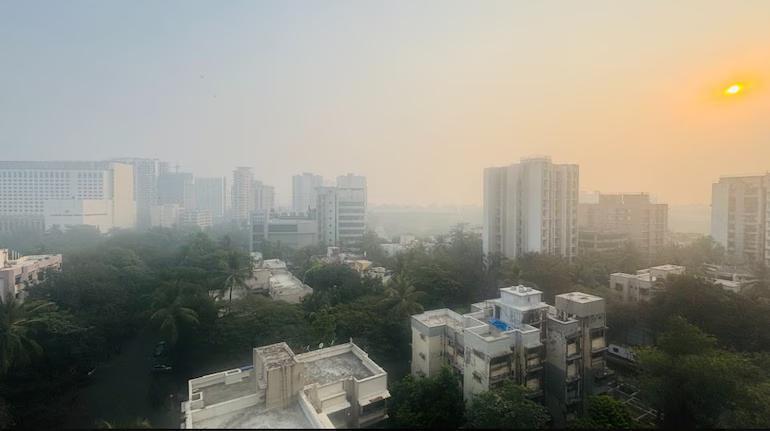
Why Mumbai’s Air is Getting Worse?
Mumbai, the financial capital of India, has been grappling with deteriorating air quality in recent days. The city’s air quality index (AQI) has been fluctuating, often crossing the hazardous threshold, leaving residents gasping for breath. The sudden spike in pollution levels has raised concerns among Mumbaikars, who are wondering what’s behind the worsening air quality. In this blog post, we’ll delve into the reasons behind Mumbai’s deteriorating air quality and explore the factors contributing to this menace.
One of the primary reasons for the worsening air quality in Mumbai is the combination of local pollution sources and seasonal weather shifts. As the monsoon season comes to an end, roadwork picks up, pushing road-dust levels higher across the city. The increased construction activity and resumption of roadwork after the monsoon have led to a significant rise in particulate matter (PM) levels, which are a key contributor to poor air quality. The road dust, which is rich in PM, gets airborne and mixes with the atmosphere, making the air unbreathable.
Another major factor contributing to Mumbai’s poor air quality is the surge in construction activity across the city. The construction sector is a significant contributor to air pollution, as it generates massive amounts of dust, debris, and other pollutants. The use of heavy machinery, excavation, and demolition activities release large amounts of particulate matter, nitrogen oxides, and volatile organic compounds (VOCs) into the atmosphere, further exacerbating the air quality crisis. The construction boom in Mumbai has led to an increase in the number of building sites, which are often poorly regulated, leading to unchecked emissions of pollutants.
Industrial fumes from heavy industries and refineries along the eastern corridor are also a significant contributor to Mumbai’s air pollution. The city is home to several large-scale industrial units, including oil refineries, chemical plants, and manufacturing facilities, which release massive amounts of pollutants into the atmosphere. These industries emit a cocktail of toxic gases, including particulate matter, sulfur dioxide, nitrogen oxides, and VOCs, which can have severe health impacts on residents. The eastern corridor, which is home to many of these industries, has become a pollution hotspot, with air quality levels often exceeding safe limits.
The geography of Mumbai also plays a role in its poor air quality. The city is surrounded by the Arabian Sea to the west and the Ulhas River to the east, which creates a unique microclimate. During the winter months, the city experiences a temperature inversion, where a layer of cool air gets trapped under a layer of warm air, preventing pollutants from escaping. This phenomenon, known as the “temperature inversion,” leads to a buildup of pollutants in the atmosphere, making the air quality worse.
The health impacts of poor air quality in Mumbai are severe and far-reaching. Exposure to polluted air can lead to a range of health problems, including respiratory diseases, cardiovascular diseases, and even cancer. Children, the elderly, and people with pre-existing medical conditions are particularly vulnerable to the effects of air pollution. The poor air quality also has economic implications, as it can lead to lost productivity, increased healthcare costs, and a decrease in the quality of life.
So, what can be done to improve Mumbai’s air quality? The first step is to implement stricter regulations on pollution sources, including construction sites and industries. The government must ensure that these sources are equipped with adequate pollution control measures, such as dust suppressants, scrubbers, and electrostatic precipitators. Additionally, the city needs to promote the use of clean energy sources, such as solar and wind power, to reduce its dependence on fossil fuels.
The city also needs to invest in green infrastructure, such as parks, gardens, and green roofs, which can help absorb pollutants and improve air quality. The government must also promote the use of electric and hybrid vehicles, which can significantly reduce emissions from the transportation sector. Furthermore, the city needs to implement a robust waste management system, which can help reduce the amount of waste that ends up in landfills and eventually gets burned, releasing toxic fumes into the atmosphere.
In conclusion, Mumbai’s air quality has deteriorated due to a combination of local pollution sources and seasonal weather shifts. The surge in construction activity, industrial fumes, and roadwork have all contributed to the worsening air quality. The city’s geography and climate also play a role in trapping pollutants in the atmosphere. To improve the air quality, the government must implement stricter regulations, promote clean energy sources, invest in green infrastructure, and promote the use of electric and hybrid vehicles. It’s time for the city to take concrete steps to address the air quality crisis and ensure a healthier, more sustainable future for its residents.
About the Author