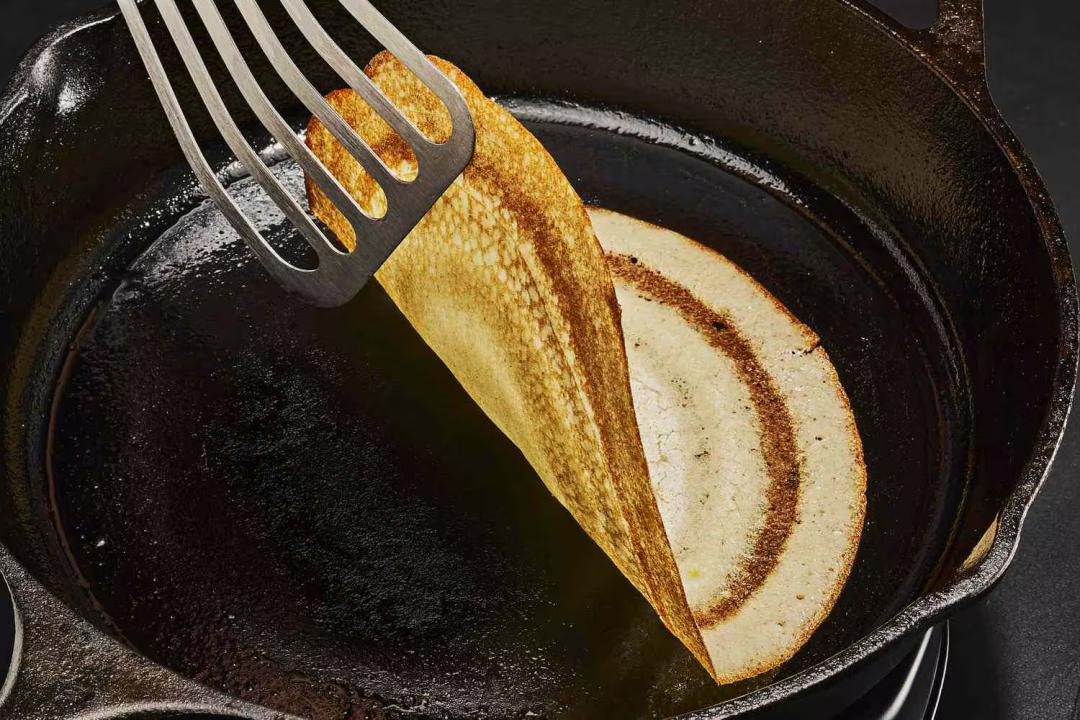
IIT-Madras professor explains why dosas are crispy on outside & soft on inside
Dosa, a traditional South Indian dish, has been a staple in many households for centuries. The delicate balance of crispy exterior and soft interior has always fascinated food enthusiasts. While many have attempted to replicate this perfect dosa, few have succeeded in understanding the science behind it. Recently, Prof Mahesh Panchagnula from IIT-Madras shed light on the phenomenon, revealing the secret to the perfect dosa.
According to Prof Panchagnula, the key to a crispy outside and soft inside lies in the practice of sprinkling water on a hot tawa before pouring the dosa batter. This age-old technique has been passed down through generations, but its scientific significance was never fully understood. The professor explained that this practice is linked to the Leidenfrost Effect, a phenomenon identified in Germany in the 18th century.
The Leidenfrost Effect occurs when a liquid comes into contact with a surface that is significantly hotter than its boiling point. In the case of dosa making, when water is sprinkled on the hot tawa, it creates a thin vapor layer between the tawa and the water. This vapor layer reduces the heat transfer between the tawa and the water, allowing the water to glide and float on the surface. As a result, the water evaporates quickly, leaving behind a dry surface that prevents the dosa from sticking.
However, when the tawa is not hot enough, the water evaporates slowly, and the dosa sticks to the surface. This is because the vapor layer is not formed, and the heat transfer between the tawa and the water is more direct. On the other hand, when the tawa is too hot, the water evaporates instantly, and the dosa becomes brittle and crispy on the outside, but hard and dry on the inside.
The ideal temperature for making dosas is around 200-250°C, which is hot enough to create the vapor layer but not so hot that it burns the dosa. At this temperature, the water glides and floats on the thin vapor layer, preventing the dosa from sticking and making it crisp. The heat from the tawa is evenly distributed, cooking the dosa batter uniformly and resulting in a soft and fluffy interior.
Prof Panchagnula’s explanation has sparked interest among food enthusiasts and scientists alike. The Leidenfrost Effect has been studied in various fields, including engineering and physics, but its application in cooking is a relatively new area of research. The professor’s work has opened up new avenues for understanding the science behind cooking and the properties of materials at high temperatures.
In addition to the Leidenfrost Effect, the type of batter used also plays a crucial role in determining the texture of the dosa. The batter should be made with the right proportion of rice and lentils, and the fermentation process should be allowed to complete to produce the desired texture. The fermentation process breaks down the starches and proteins, making the batter more pliable and easier to cook.
The art of making dosas is not just about following a recipe; it’s about understanding the science behind the cooking process. The perfect dosa is a balance of temperature, texture, and technique. With Prof Panchagnula’s explanation, we now have a deeper understanding of the Leidenfrost Effect and its role in creating the perfect dosa.
In conclusion, the secret to a crispy outside and soft inside lies in the combination of the right temperature, the right batter, and the right technique. The Leidenfrost Effect plays a crucial role in preventing the dosa from sticking and making it crisp. As we continue to explore the science behind cooking, we may uncover more secrets to creating the perfect dish. For now, we can appreciate the art of making dosas and the science that goes into creating this delicious and iconic dish.
News source: https://x.com/iitmadras/status/1993901259925909929
About the Author