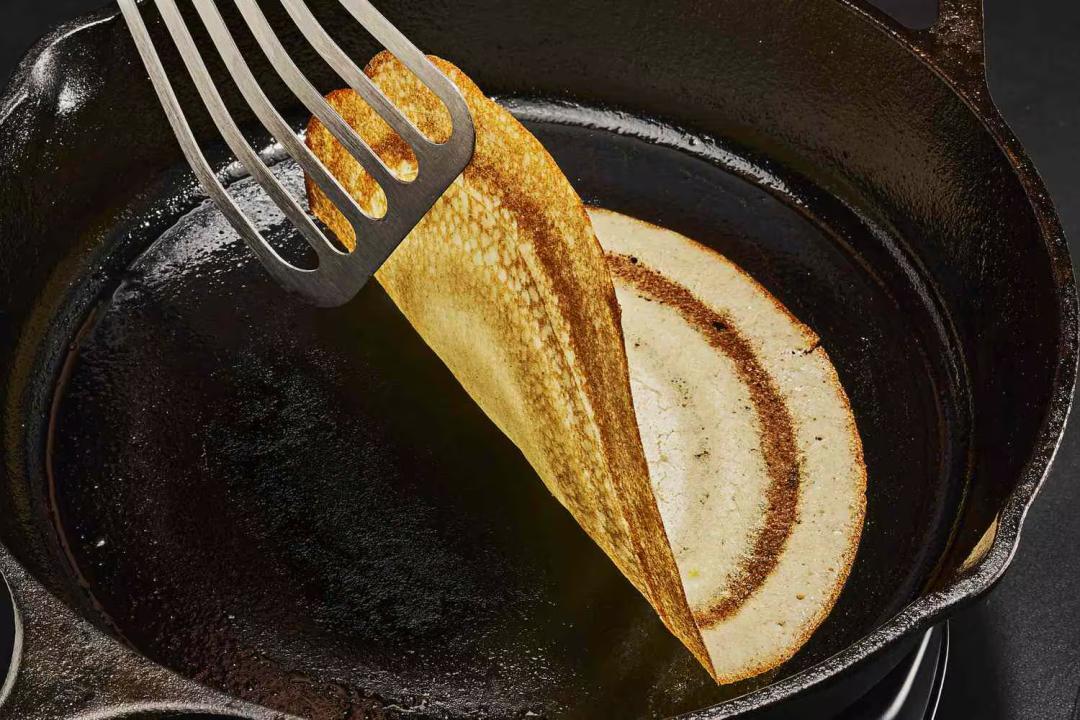
IIT-Madras professor explains why dosas are crispy on outside & soft on inside
Dosa, a traditional South Indian dish, has been a staple in many households for centuries. The perfect dosa is a delicate balance of crispy exterior and soft interior, making it a delight to eat. However, have you ever wondered what makes dosas crispy on the outside and soft on the inside? A professor from IIT-Madras, Prof Mahesh Panchagnula, has shed light on the science behind this phenomenon, and it’s fascinating.
According to Prof Panchagnula, the key to achieving the perfect dosa lies in the practice of sprinkling water on a hot tawa before pouring the dosa batter. This age-old technique has been passed down through generations, but its scientific significance was unknown until now. The professor explained that this practice is linked to the Leidenfrost Effect, a phenomenon identified in Germany in the 18th century.
So, what is the Leidenfrost Effect? In simple terms, it’s a phenomenon where a liquid, in this case, water, comes into contact with a surface that is significantly hotter than its boiling point. When this happens, the water evaporates rapidly, creating a thin layer of vapor between the water and the hot surface. This vapor layer reduces the contact between the water and the surface, allowing the water to glide and float on the surface.
In the context of making dosas, the Leidenfrost Effect plays a crucial role. When the tawa is not hot enough, the water sprinkled on it evaporates slowly, and the dosa batter sticks to the surface. However, when the tawa is heated to the right temperature, the water glides and floats on a thin vapor layer, preventing the dosa from sticking. This is what makes the dosa crispy on the outside and soft on the inside.
The science behind this phenomenon is quite interesting. When the dosa batter is poured onto the hot tawa, it comes into contact with the vapor layer created by the Leidenfrost Effect. The vapor layer reduces the contact between the batter and the tawa, allowing the batter to cook evenly and preventing it from sticking. As the dosa cooks, the heat from the tawa causes the starches in the batter to gelatinize, creating a crispy exterior. At the same time, the moisture inside the dosa is trapped, making the interior soft and fluffy.
Prof Panchagnula’s explanation of the Leidenfrost Effect and its role in making dosas crispy on the outside and soft on the inside is a fascinating example of how science can be applied to everyday life. It’s a reminder that even the simplest of tasks, like making a dosa, involve complex scientific principles.
The next time you make a dosa, remember the Leidenfrost Effect and the crucial role it plays in creating the perfect dosa. Sprinkle water on the hot tawa, pour the batter, and watch as the dosa transforms into a crispy, golden-brown delight. The science behind it may be complex, but the result is simple: a delicious dosa that’s sure to satisfy your taste buds.
In conclusion, the secret to making the perfect dosa lies in the Leidenfrost Effect, a phenomenon that’s been understood by scientists for centuries. By applying this scientific principle to the art of making dosas, we can create a dish that’s not only delicious but also visually appealing. So, the next time you’re in the kitchen, making a dosa, remember the science behind it and appreciate the complexity of this simple, yet fascinating, dish.
News Source: https://x.com/iitmadras/status/1993901259925909929
About the Author