IIT-Madras professor explains why dosas are crispy on outside & soft on inside
Dosa, a traditional South Indian dish, has been a staple in many Indian households for centuries. The delicate balance of crispy exterior and soft interior has always fascinated food enthusiasts and scientists alike. Recently, Prof Mahesh Panchagnula from IIT-Madras shed some light on the science behind the perfect dosa. In a fascinating explanation, he revealed that the secret to achieving the ideal texture lies in the Leidenfrost Effect, a phenomenon identified in 18th century Germany.
For those who are unfamiliar with the Leidenfrost Effect, it is a phenomenon where a liquid, in this case, water, comes into contact with a surface that is significantly hotter than its boiling point. When this happens, the water droplets do not immediately evaporate, but instead, form a thin layer of vapor between the water and the hot surface. This vapor layer, also known as the Leidenfrost layer, reduces the heat transfer between the water and the surface, allowing the water to “float” on the vapor layer.
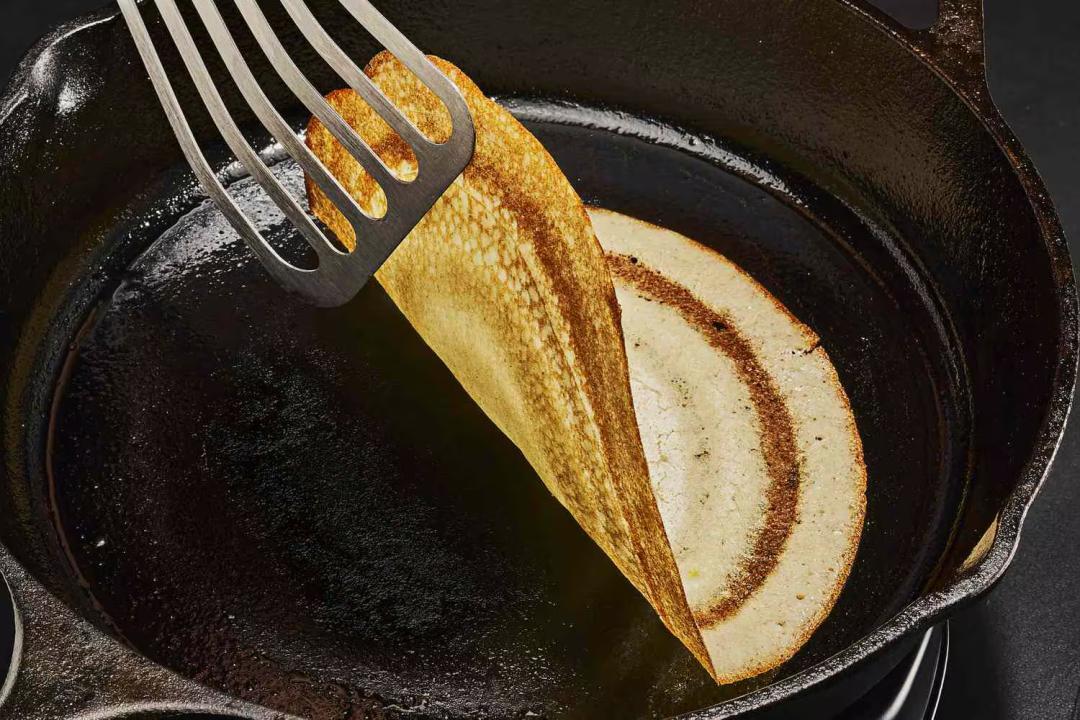
Now, let’s relate this to the art of making dosas. When a dosa batter is poured onto a hot tawa, it is common practice to sprinkle a few drops of water on the tawa before pouring the batter. This simple act, according to Prof Panchagnula, is linked to the Leidenfrost Effect. When the tawa is not hot enough, the water evaporates slowly, and the dosa batter sticks to the tawa, resulting in a suboptimal texture. However, when the tawa is at the right temperature, the water droplets do not evaporate immediately, but instead, form a thin vapor layer between the water and the tawa.
This vapor layer, as explained earlier, reduces the heat transfer between the water and the tawa, allowing the dosa batter to “glide” on the vapor layer. As a result, the dosa does not stick to the tawa, and the heat from the tawa is evenly distributed, resulting in a crispy exterior and a soft interior. This is the secret to making the perfect dosa, and it’s all thanks to the Leidenfrost Effect.
But how does this effect contribute to the crispy exterior and soft interior of the dosa? To understand this, let’s dive deeper into the science of cooking a dosa. When the dosa batter is poured onto the hot tawa, it starts to cook immediately. The starches in the batter absorb the heat from the tawa, causing them to gelatinize and form a crust on the exterior. This crust is what gives the dosa its crispy texture.
However, if the tawa is too hot, the crust forms too quickly, resulting in a dosa that is burnt or overcooked. On the other hand, if the tawa is not hot enough, the crust does not form at all, resulting in a dosa that is soft and soggy. The ideal temperature, as explained earlier, is achieved when the water droplets form a vapor layer between the tawa and the dosa batter. This vapor layer reduces the heat transfer between the tawa and the dosa, allowing the crust to form slowly and evenly.
As the dosa cooks, the heat from the tawa penetrates the batter, cooking the interior. However, because the exterior is already crispy, the interior remains soft and fluffy. This is because the starches in the interior of the dosa have not yet gelatinized, and the heat from the tawa has not penetrated far enough to cook the interior completely.
In conclusion, the secret to making the perfect dosa lies in the Leidenfrost Effect, a phenomenon that was identified in 18th century Germany. By sprinkling water on the hot tawa before pouring the dosa batter, we create a thin vapor layer that reduces the heat transfer between the tawa and the dosa, allowing the dosa to cook evenly and resulting in a crispy exterior and a soft interior. This simple technique, combined with the right temperature and cooking time, is the key to making the perfect dosa.
So, the next time you’re making dosas, remember to sprinkle a few drops of water on the hot tawa before pouring the batter. It’s not just a matter of tradition; it’s science! And who knows, you might just become the dosa master in your household.
News Source: https://x.com/iitmadras/status/1993901259925909929
About the Author