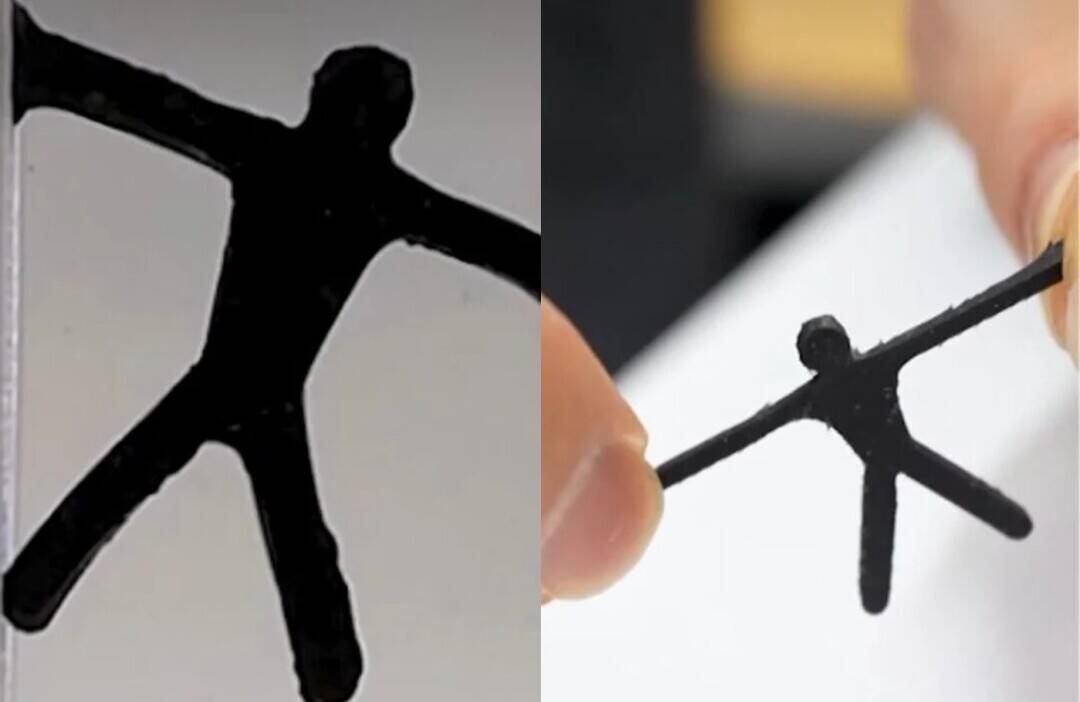
UK scientists create shape-shifting jelly robot that moves with electric fields
In a groundbreaking achievement, British researchers have developed a soft, jelly-like robot that moves and changes shape using external electric fields, without the need for motors or joints. Designed by University of Bristol scientists, the robot is capable of reshaping its body to bend, stretch, and move, opening up new possibilities for exploration in tight, fragile, or hazardous environments.
The innovative robot, which resembles a jelly-like substance, is made up of a soft, flexible material that can be controlled using electric fields. By applying an electric field to the robot, the researchers can manipulate its shape and movement, allowing it to navigate through complex spaces with ease. This unique ability to change shape and move without the need for traditional motors or joints makes the robot ideal for applications where flexibility and adaptability are crucial.
The development of this shape-shifting robot is a significant breakthrough in the field of robotics, as it offers a new approach to designing and controlling robots. Traditional robots are often rigid and inflexible, making them unsuitable for certain environments or tasks. In contrast, the jelly-like robot is highly flexible and can be easily manipulated to fit into tight spaces or navigate through delicate environments.
The potential applications of this technology are vast and varied. For example, the robot could be used to explore fragile or hazardous environments, such as disaster zones or areas with toxic chemicals, without risking human safety. It could also be used in medical applications, such as navigating through the human body to deliver medications or perform surgeries.
The University of Bristol scientists who designed the robot used a combination of materials science and electrical engineering to create the jelly-like substance. The robot is made up of a soft, flexible material that is capable of changing its shape in response to electric fields. The researchers used a technique called electroactive polymers to create the material, which is capable of expanding and contracting in response to electric fields.
To control the robot, the researchers use an external electric field to manipulate its shape and movement. By applying an electric field to the robot, they can cause it to bend, stretch, or move in a specific direction. This allows the robot to navigate through complex spaces and perform tasks that would be difficult or impossible for traditional robots.
The development of this shape-shifting robot is a significant achievement in the field of robotics, and it has the potential to revolutionize the way we approach exploration and navigation in complex environments. With its ability to change shape and move without the need for traditional motors or joints, the robot is ideal for applications where flexibility and adaptability are crucial.
In addition to its potential applications, the robot also raises interesting questions about the future of robotics and artificial intelligence. As robots become increasingly sophisticated and adaptable, we may see a shift towards more flexible and autonomous systems that are capable of navigating and interacting with their environments in new and innovative ways.
The University of Bristol scientists who designed the robot are excited about the potential implications of their research. “We are thrilled to have developed a robot that can change its shape and move without the need for traditional motors or joints,” said one of the researchers. “This technology has the potential to revolutionize the way we approach exploration and navigation in complex environments, and we are eager to see where it will take us in the future.”
In conclusion, the development of the shape-shifting jelly robot is a significant breakthrough in the field of robotics, with the potential to revolutionize the way we approach exploration and navigation in complex environments. With its ability to change shape and move without the need for traditional motors or joints, the robot is ideal for applications where flexibility and adaptability are crucial. As researchers continue to develop and refine this technology, we can expect to see new and innovative applications emerge in the fields of robotics, artificial intelligence, and beyond.
About the Author