What agreement did Govt of India sign with Govt of Nagaland?
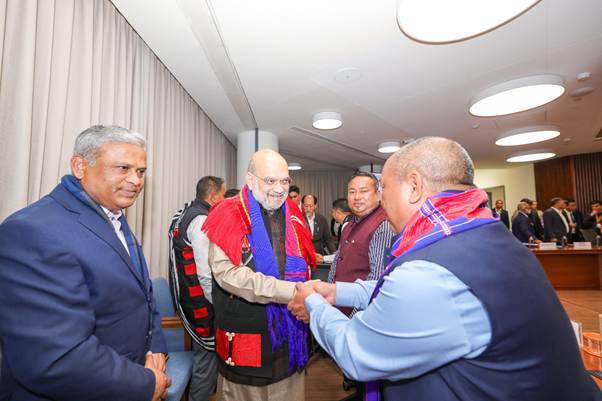
The Government of India has recently signed a historic agreement with the Government of Nagaland, marking a significant milestone in the development of the region. The agreement, which also involves the Eastern Nagaland Peoples’ Organisation (ENPO), aims to boost development and provide greater autonomy to the tribes in Eastern Nagaland. In this blog post, we will delve into the details of the agreement and its implications for the region.
The agreement establishes the Frontier Nagaland Territorial Authority (FNTA), which will cover six districts in Eastern Nagaland. The FNTA will have jurisdiction over these districts, giving the local tribes greater control over their affairs. The authority will be responsible for managing and administering various subjects, including education, healthcare, and infrastructure development. This move is expected to bring about significant improvements in the lives of the people living in these districts, who have long been deprived of basic amenities and services.
One of the key features of the agreement is the transfer of powers over 46 subjects to the FNTA. This means that the authority will have the power to make decisions and take actions on a wide range of issues, from education and healthcare to agriculture and urban development. This transfer of power is expected to enable the FNTA to respond more effectively to the needs of the local population, and to develop and implement policies that are tailored to the specific requirements of the region.
The Centre has also agreed to provide annual funding to the FNTA, which will enable the authority to implement its development plans and programs. This funding will be used to support a range of initiatives, including infrastructure development, education and healthcare programs, and economic development projects. The Centre has also agreed to provide a mini-secretariat to the FNTA, which will provide administrative support and help the authority to function more effectively.
The agreement is a significant step forward for the development of Eastern Nagaland, and is expected to have a major impact on the lives of the people living in the region. The establishment of the FNTA and the transfer of powers to it will enable the local tribes to have greater control over their affairs, and to develop and implement policies that are tailored to their specific needs. The funding and administrative support provided by the Centre will also help to support the development of the region, and to ensure that the FNTA has the resources it needs to function effectively.
The agreement is also significant because it marks a new era of cooperation and collaboration between the Government of India and the Government of Nagaland. The two governments have worked closely together to develop the agreement, and have demonstrated a commitment to finding solutions that benefit the people of the region. The involvement of the ENPO in the agreement is also significant, as it reflects the importance of involving local stakeholders in the development process.
The FNTA is expected to play a key role in promoting the development of Eastern Nagaland, and in improving the lives of the people living in the region. The authority will be responsible for developing and implementing policies and programs that support the economic, social, and cultural development of the region, and will work closely with the Centre and the state government to ensure that the region receives the support and resources it needs.
In conclusion, the agreement signed between the Government of India and the Government of Nagaland is a significant step forward for the development of Eastern Nagaland. The establishment of the FNTA and the transfer of powers to it will enable the local tribes to have greater control over their affairs, and will provide a framework for the development of the region. The funding and administrative support provided by the Centre will also help to support the development of the region, and will ensure that the FNTA has the resources it needs to function effectively.
The agreement is a testament to the commitment of the Government of India to promoting the development of the region, and to supporting the aspirations of the people living in Eastern Nagaland. It is a significant step forward for the region, and is expected to have a major impact on the lives of the people living there.
News Source: https://www.pib.gov.in/PressReleasePage.aspx
About the Author