World-class tech isn’t the domain of the West anymore: Ola CEO to Musk
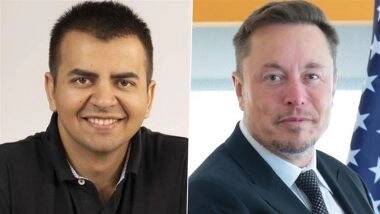
The world of technology is constantly evolving, and the boundaries that once separated the West from the rest of the world are slowly disappearing. A recent exchange between two prominent figures in the tech industry, Elon Musk and Bhavish Aggarwal, highlights this shift. Musk, the CEO of Tesla, announced that his company had achieved a “major breakthrough” in lithium battery production by scaling the dry electrode process. However, Aggarwal, the founder-CEO of Ola Electric, was quick to respond, stating that his company had been using a similar dry coating process since last year, with lakhs of cells already in customer vehicles.
This exchange is significant, not just because of the technology involved, but also because of the message it conveys. Aggarwal’s response to Musk’s announcement was not just a statement of fact, but also a declaration of intent. “World-class tech isn’t the domain of the West anymore,” he said, emphasizing that companies from other parts of the world, including India, are now capable of developing and implementing cutting-edge technology. This statement reflects a broader trend, where companies from emerging economies are increasingly challenging the dominance of Western tech giants.
The dry electrode process is a significant innovation in lithium battery production, as it allows for more efficient and cost-effective manufacturing. Tesla’s breakthrough in scaling this process is undoubtedly a major achievement, but Ola Electric’s similar technology and its implementation in customer vehicles demonstrate that the company is also at the forefront of this field. This is not just a matter of pride for Ola Electric or India, but also a testament to the growing capabilities of companies from emerging economies.
The implications of this trend are far-reaching. As companies from other parts of the world, including India, China, and Southeast Asia, develop and implement world-class technology, the global tech landscape is likely to undergo a significant transformation. The traditional dominance of Western tech giants, including companies from the United States and Europe, will be challenged, and new players will emerge to take their place.
This shift is already visible in various sectors, including e-commerce, fintech, and renewable energy. Companies like Alibaba, Tencent, and Huawei from China, and Flipkart, Paytm, and Ola from India, have already made significant strides in these areas. These companies have not only developed innovative technologies but have also implemented them at scale, often with greater success than their Western counterparts.
The reasons for this shift are complex and multifaceted. One major factor is the growing pool of talented engineers and entrepreneurs in emerging economies. As education and training improve, and the availability of funding and resources increases, more and more people in these countries are able to develop and implement cutting-edge technology. Additionally, the growing demand for technology in emerging economies, driven by rapid urbanization and economic growth, has created a vast market for innovative solutions.
Another factor is the willingness of companies from emerging economies to take risks and experiment with new technologies. Unlike their Western counterparts, which often have to navigate complex regulatory environments and legacy systems, companies in emerging economies can start from scratch and build new systems and processes that are more efficient and effective.
The exchange between Musk and Aggarwal also highlights the importance of collaboration and knowledge-sharing in the tech industry. While Tesla’s breakthrough in lithium battery production is undoubtedly a significant achievement, Ola Electric’s similar technology demonstrates that innovation is a global phenomenon, and companies from different parts of the world can learn from and build upon each other’s work.
In conclusion, the world of technology is no longer the exclusive domain of the West. Companies from emerging economies, including India, China, and Southeast Asia, are increasingly developing and implementing world-class technology, challenging the traditional dominance of Western tech giants. The exchange between Musk and Aggarwal is just one example of this trend, which is likely to continue and accelerate in the coming years. As the global tech landscape undergoes this transformation, we can expect to see new innovations, new companies, and new opportunities emerge, driving growth and prosperity for all.
About the Author