World-class tech isn’t domain of the West anymore: Ola CEO to Musk
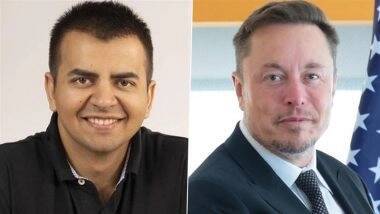
The world of technology has long been dominated by the West, with companies like Tesla, Google, and Apple leading the charge in innovation. However, in recent years, we have seen a significant shift in the landscape, with companies from other parts of the world, particularly Asia, making significant strides in technology. A recent exchange between Tesla CEO Elon Musk and Ola Electric founder-CEO Bhavish Aggarwal highlights this shift, with Aggarwal asserting that “world-class tech isn’t the domain of the West anymore.”
The exchange began when Musk announced that Tesla had achieved a “major breakthrough” by scaling the dry electrode process for lithium battery production. This process is a significant advancement in battery technology, allowing for more efficient and cost-effective production of lithium-ion batteries. Musk’s announcement was seen as a major milestone for Tesla, which has been at the forefront of electric vehicle (EV) technology.
However, Aggarwal was quick to respond, pointing out that Ola Electric had already been using a dry coating process for its battery production since last year. Moreover, Aggarwal claimed that lakhs of cells using this process were already in customer vehicles, demonstrating the scalability and effectiveness of the technology. This response was not just a matter of one-upmanship, but a statement of fact that highlighted the advancements being made by companies outside of the West.
Aggarwal’s comment, “World-class tech isn’t the domain of the West anymore,” is a significant statement that reflects the changing dynamics of the technology landscape. For too long, the West has been seen as the epicenter of technological innovation, with companies like Silicon Valley’s tech giants leading the charge. However, with the rise of companies like Ola Electric, BYD, and Huawei, it is clear that the center of gravity is shifting.
This shift is driven by a combination of factors, including government support, investment in research and development, and a large talent pool. Countries like China and India have made significant investments in technology, with a focus on areas like artificial intelligence, renewable energy, and electric vehicles. This has led to the emergence of a new generation of tech companies that are capable of competing with their Western counterparts.
Moreover, the COVID-19 pandemic has accelerated this shift, as companies in Asia have been able to adapt quickly to the new reality and innovate in response to changing market conditions. The pandemic has also highlighted the importance of diversification and the need for companies to be more resilient and adaptable.
The implications of this shift are significant, as it challenges the traditional dominance of Western tech companies. It also creates new opportunities for collaboration and innovation, as companies from different parts of the world come together to share knowledge and expertise. For instance, Ola Electric’s partnership with other companies to develop advanced battery technologies is a testament to the potential for global collaboration.
Furthermore, this shift also highlights the importance of diversity and inclusivity in the tech industry. For too long, the tech industry has been dominated by a narrow group of companies and individuals, with limited representation from other parts of the world. The emergence of new tech companies from Asia and other regions creates new opportunities for diverse perspectives and ideas, which can lead to more innovative and effective solutions.
In conclusion, the exchange between Elon Musk and Bhavish Aggarwal highlights the changing dynamics of the technology landscape. Aggarwal’s statement, “World-class tech isn’t the domain of the West anymore,” is a testament to the advancements being made by companies outside of the West. As the tech industry continues to evolve, it is likely that we will see more companies from Asia and other regions emerging as leaders in innovation. This shift creates new opportunities for collaboration, innovation, and diversity, and challenges the traditional dominance of Western tech companies.
About the Author