What agreement did Govt of India sign with Govt of Nagaland?
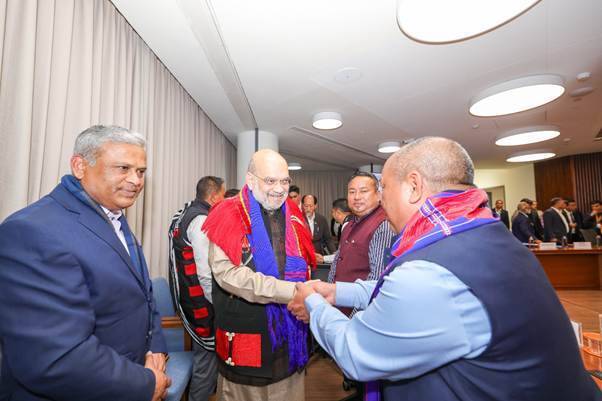
In a significant development, the Government of India has signed a landmark agreement with the Government of Nagaland, along with the Eastern Nagaland Peoples’ Organisation (ENPO), to establish the Frontier Nagaland Territorial Authority (FNTA). This agreement aims to boost development in the region, particularly for the tribes in Eastern Nagaland, and is expected to have far-reaching consequences for the socio-economic landscape of the area.
The FNTA will cover six districts in Eastern Nagaland, including Mon, Noklak, Shamator, Tuensang, Kiphire, and Longleng. The agreement transfers powers over 46 subjects to the FNTA, giving it significant autonomy to govern and develop the region. This move is expected to address the long-standing demands of the people of Eastern Nagaland for greater autonomy and self-governance.
One of the key features of the agreement is the provision of annual funding by the Centre to the FNTA. This funding will be used to support various development projects and initiatives in the region, including infrastructure development, healthcare, education, and economic empowerment. The Centre will also provide a mini-secretariat to the FNTA, which will serve as the administrative headquarters for the authority.
The establishment of the FNTA is a significant step towards addressing the developmental gaps in Eastern Nagaland. The region has historically been one of the most underdeveloped parts of the country, with limited access to basic amenities like healthcare, education, and infrastructure. The FNTA is expected to play a crucial role in bridging these gaps and ensuring that the people of Eastern Nagaland have access to the same opportunities and services as the rest of the country.
The agreement has been welcomed by various stakeholders, including the Eastern Nagaland Peoples’ Organisation (ENPO), which has been at the forefront of the demand for greater autonomy and self-governance in the region. The ENPO has expressed its gratitude to the Government of India for taking this significant step towards addressing the developmental needs of the region.
The establishment of the FNTA is also expected to have significant implications for the security landscape of the region. Eastern Nagaland has historically been prone to insurgency and militant activity, with various armed groups operating in the area. The FNTA is expected to play a key role in addressing these security concerns, by providing a platform for dialogue and negotiation with various stakeholders, including militant groups.
The agreement is also significant because it marks a new chapter in the relationship between the Government of India and the Government of Nagaland. The two governments have historically had a complex and often fraught relationship, with disagreements over issues like autonomy, self-governance, and resource sharing. The establishment of the FNTA is expected to help improve this relationship, by providing a framework for cooperation and collaboration on key issues.
In conclusion, the agreement between the Government of India, the Government of Nagaland, and the Eastern Nagaland Peoples’ Organisation (ENPO) to establish the Frontier Nagaland Territorial Authority (FNTA) is a significant development that is expected to have far-reaching consequences for the socio-economic landscape of Eastern Nagaland. The FNTA is expected to play a crucial role in addressing the developmental gaps in the region, and in providing a platform for dialogue and negotiation with various stakeholders, including militant groups. As the FNTA begins its work, it is hoped that it will be able to deliver on its promises and help bring peace, prosperity, and development to the people of Eastern Nagaland.
The success of the FNTA will depend on various factors, including the ability of the authority to deliver on its promises, the level of support and cooperation it receives from the Centre and the state government, and the ability of various stakeholders to work together towards a common goal. However, for now, the establishment of the FNTA is a significant step in the right direction, and a testament to the commitment of the Government of India to addressing the developmental needs of the people of Eastern Nagaland.
As the FNTA begins its work, it is expected to face various challenges, including the need to build trust and confidence among various stakeholders, the need to address the significant developmental gaps in the region, and the need to navigate the complex security landscape of the area. However, with the support of the Centre and the state government, and with the active participation of various stakeholders, including the Eastern Nagaland Peoples’ Organisation (ENPO), it is hoped that the FNTA will be able to overcome these challenges and achieve its goals.
In the coming months and years, it will be important to monitor the progress of the FNTA, and to assess its impact on the socio-economic landscape of Eastern Nagaland. It will also be important to provide ongoing support and cooperation to the FNTA, to help it achieve its goals and deliver on its promises. With the establishment of the FNTA, a new chapter has begun in the history of Eastern Nagaland, and it is hoped that this chapter will be marked by peace, prosperity, and development.
News Source: https://www.pib.gov.in/PressReleasePage.aspx
About the Author