Kharge stopped from quoting book in Rajya Sabha, Opp’n walks out
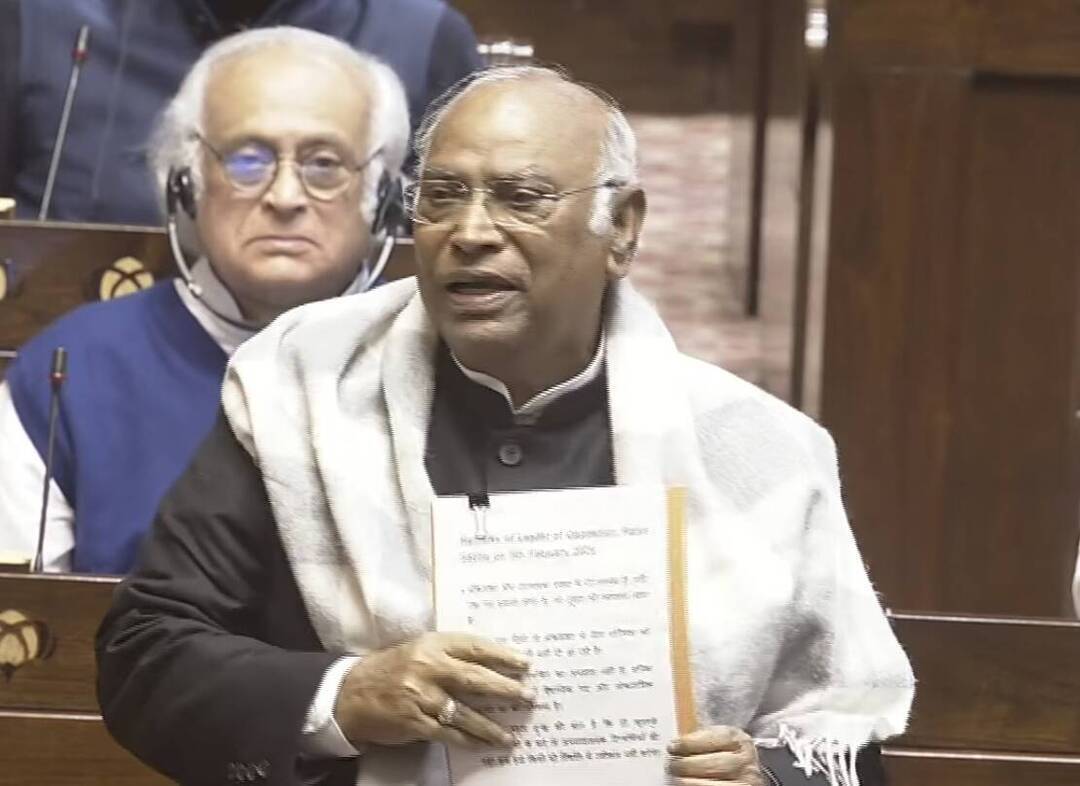
In a dramatic turn of events, Congress MP Mallikarjun Kharge was stopped from quoting an unpublished memoir by former Army Chief General Manoj Mukund Naravane in the Rajya Sabha. This incident led to a walkout by the Opposition MPs, who expressed their discontent and frustration with the ruling party’s attempts to stifle free speech and debate in the Parliament.
The controversy began when Kharge raised the issue of Congress MP Rahul Gandhi not being allowed to quote the same book in the Lok Sabha. Kharge argued that the book, which is an unpublished memoir by General Naravane, contains important information and insights that are relevant to the current debate on national security and defense. However, as soon as Kharge started quoting from the book, he was interrupted by the Rajya Sabha Chairman, CP Radhakrishnan, who stopped him from proceeding further.
The Chairman’s decision to stop Kharge from quoting the book was met with strong objections from the Opposition MPs, who argued that the ruling party was trying to suppress the truth and prevent the Parliament from discussing important issues. The Opposition MPs contended that the book contains valuable information that is essential for the Parliament to know, and that the ruling party’s attempts to prevent its discussion are undemocratic and authoritarian.
The walkout by the Opposition MPs was a clear indication of their displeasure and frustration with the ruling party’s tactics. The Opposition MPs argued that the Parliament is a place for debate and discussion, and that the ruling party’s attempts to stifle free speech and suppress the truth are a threat to the very foundations of democracy.
The incident has sparked a heated debate on the role of the Parliament and the limits of free speech in the country. While the ruling party has argued that the book is unpublished and therefore cannot be quoted in the Parliament, the Opposition MPs have countered that the information contained in the book is of great public interest and must be discussed and debated in the Parliament.
The issue has also raised questions about the power and authority of the Parliament and its members. The Opposition MPs have argued that the Parliament is a sovereign body, and that its members have the right to discuss and debate any issue that is of public interest. The ruling party, on the other hand, has argued that the Parliament must follow certain rules and procedures, and that the discussion of unpublished books is not permitted.
The controversy has also highlighted the importance of transparency and accountability in governance. The Opposition MPs have argued that the ruling party’s attempts to suppress the truth and prevent the discussion of important issues are a threat to transparency and accountability, and that the Parliament must be allowed to function freely and independently.
In conclusion, the incident in the Rajya Sabha has highlighted the importance of free speech and debate in the Parliament. The Opposition MPs’ walkout is a clear indication of their frustration and displeasure with the ruling party’s tactics, and the issue has sparked a heated debate on the role of the Parliament and the limits of free speech in the country. The incident has also raised questions about the power and authority of the Parliament and its members, and has highlighted the importance of transparency and accountability in governance.
As the controversy continues to unfold, it remains to be seen how the issue will be resolved. Will the Opposition MPs be allowed to quote from the book, or will the ruling party succeed in suppressing the truth? Only time will tell, but one thing is clear: the incident has highlighted the importance of free speech and debate in the Parliament, and has sparked a heated debate on the role of the Parliament and the limits of free speech in the country.
The incident has also raised questions about the relationship between the Parliament and the executive, and the extent to which the executive can influence the Parliament. The Opposition MPs have argued that the executive is trying to exert undue influence over the Parliament, and that this is a threat to the independence and autonomy of the Parliament.
The controversy has also highlighted the importance of a free and independent media, which can play a crucial role in holding the government accountable and promoting transparency and accountability. The media has a critical role to play in reporting on the controversy and highlighting the issues at stake, and in promoting a nuanced and informed debate on the role of the Parliament and the limits of free speech in the country.
In the end, the incident in the Rajya Sabha has highlighted the importance of free speech and debate in the Parliament, and has sparked a heated debate on the role of the Parliament and the limits of free speech in the country. The controversy has also raised questions about the power and authority of the Parliament and its members, and has highlighted the importance of transparency and accountability in governance.
News source: https://x.com/PTI_News/status/2019299438746091906
About the Author