West Antarctic ice melt could weaken ocean carbon absorption
The West Antarctic Ice Sheet has been a subject of concern for scientists and climate experts in recent years. The ice sheet, which is one of the largest in the world, has been melting at an alarming rate due to climate change. While the consequences of this melting are multifaceted, a recent study has highlighted a particularly worrying aspect: the potential weakening of the Southern Ocean’s ability to absorb carbon dioxide.
The Southern Ocean, which surrounds Antarctica, plays a crucial role in the global carbon cycle. It is responsible for absorbing a significant portion of the carbon dioxide released into the atmosphere, helping to mitigate the effects of climate change. However, the melting of the West Antarctic Ice Sheet could disrupt this process, making it more challenging to slow down climate change.
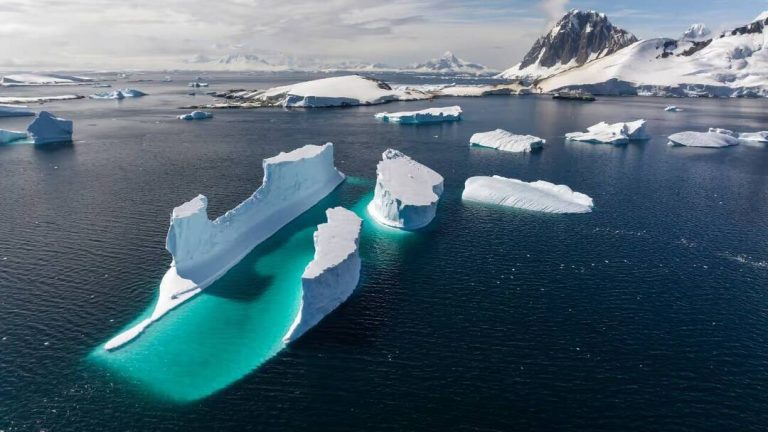
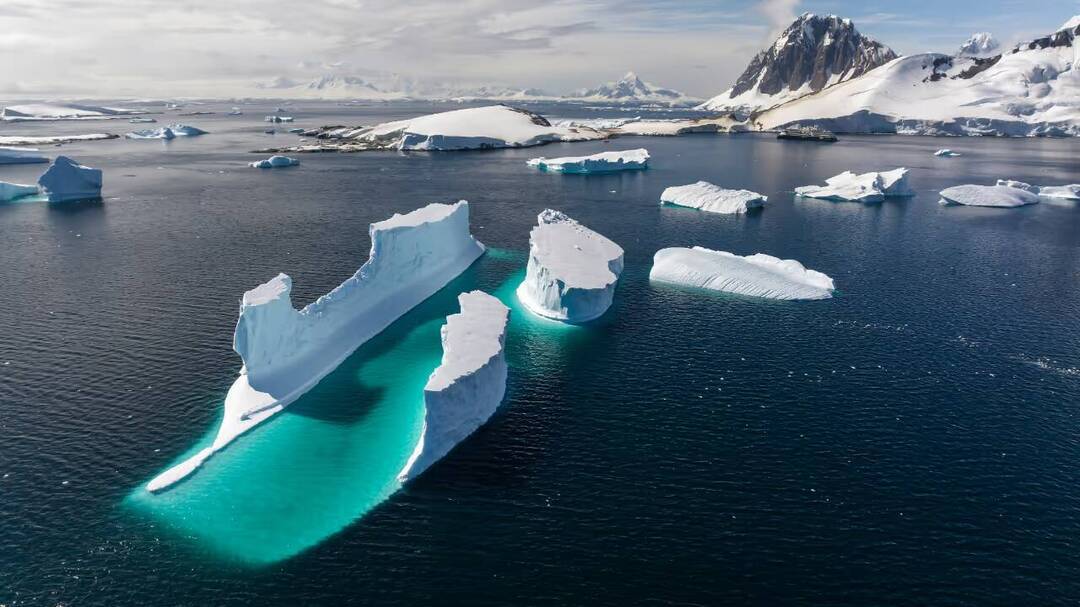
The main culprit behind this disruption is iron. Icebergs that break off from the melting ice sheet release iron into the ocean, which is essential for the growth of algae. Algae, in turn, absorb carbon dioxide from the atmosphere through photosynthesis, helping to reduce the amount of greenhouse gases in the atmosphere. However, the iron released by icebergs is not always usable by algae.
According to scientists, much of the iron released by icebergs is in a form that is not readily available to algae. This means that while the iron is present in the ocean, it is not necessarily contributing to the growth of algae, which is necessary for carbon capture. As a result, the melting of the West Antarctic Ice Sheet could lead to a reduction in the Southern Ocean’s ability to absorb carbon dioxide, making it more challenging to mitigate the effects of climate change.
The sensitivity of the West Antarctic Ice Sheet to past warming events is a clear indication of its vulnerability to future climate change. During the last interglacial period, which occurred around 125,000 years ago, the ice sheet melted significantly, contributing to a rise in global sea levels. This event is a stark reminder of the ice sheet’s potential to respond to changes in the climate, and the consequences that could follow.
The potential consequences of the West Antarctic Ice Sheet’s melting are far-reaching. If the ice sheet were to melt completely, it would contribute to a significant rise in global sea levels, displacing millions of people and causing widespread devastation. Moreover, the weakening of the Southern Ocean’s ability to absorb carbon dioxide would create a feedback loop, making it even more challenging to slow down climate change.
This feedback loop would work as follows: as the ice sheet melts, it would release more iron into the ocean, but much of it would be unusable by algae. As a result, the ocean’s ability to absorb carbon dioxide would be reduced, leading to an increase in atmospheric greenhouse gases. This, in turn, would accelerate climate change, causing the ice sheet to melt even further, and so on.
The implications of this study are clear: the melting of the West Antarctic Ice Sheet is not just a concern for the ice sheet itself, but also for the entire planet. The Southern Ocean’s ability to absorb carbon dioxide is a critical component of the global carbon cycle, and any disruption to this process could have far-reaching consequences.
In conclusion, the melting of the West Antarctic Ice Sheet is a pressing concern that requires immediate attention. The potential weakening of the Southern Ocean’s ability to absorb carbon dioxide is a stark reminder of the complex and interconnected nature of the Earth’s systems. As we continue to navigate the challenges of climate change, it is essential that we prioritize the protection of the West Antarctic Ice Sheet and the Southern Ocean, not just for the sake of these ecosystems, but for the future of our planet.
About the Author