West Antarctic ice melt could weaken ocean carbon absorption
The West Antarctic Ice Sheet has been a subject of concern for climate scientists in recent years, and a new study has shed light on yet another alarming consequence of its melting. According to researchers, the loss of the West Antarctic Ice Sheet could significantly weaken the Southern Ocean’s ability to absorb carbon dioxide, a critical component in the fight against climate change. This finding has significant implications for our understanding of the complex relationships between the Earth’s oceans, atmosphere, and ice sheets.
The Southern Ocean, which surrounds Antarctica, plays a vital role in the global carbon cycle. It absorbs approximately 40% of the carbon dioxide released into the atmosphere, making it a crucial component in regulating the Earth’s climate. However, the melting of the West Antarctic Ice Sheet could disrupt this process, leading to a reduction in the ocean’s ability to absorb carbon dioxide. This, in turn, could accelerate climate change, making it even more challenging to slow down the rate of global warming.
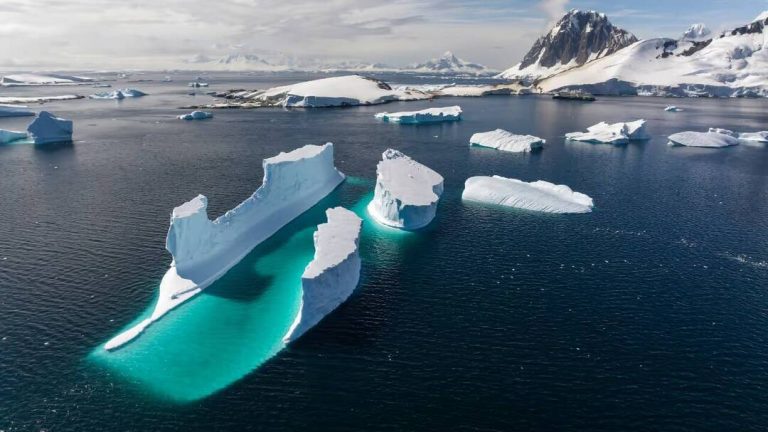
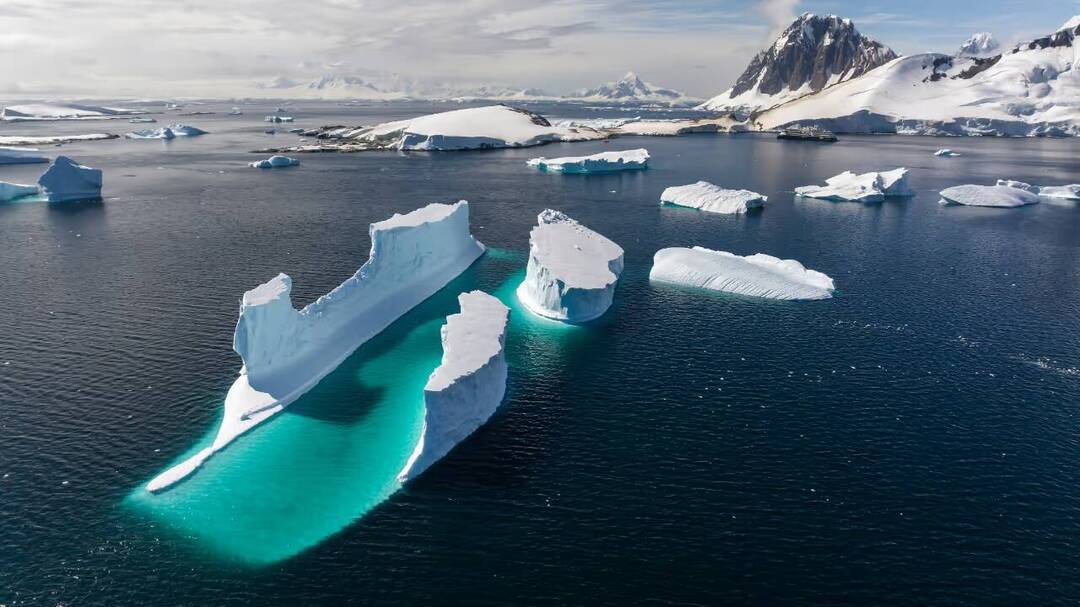
One of the primary reasons for this reduction in carbon absorption is the release of iron into the ocean by melting icebergs. Iron is a vital nutrient for phytoplankton, the tiny plants that form the base of the ocean’s food web. Phytoplankton absorb carbon dioxide during photosynthesis, which helps to reduce the amount of carbon dioxide in the atmosphere. However, the iron released by melting icebergs is often in a form that is not readily available to phytoplankton, limiting its ability to stimulate carbon capture.
This finding is based on a study of past warming events, which showed that the West Antarctic Ice Sheet is highly sensitive to changes in temperature. During these events, the ice sheet underwent significant melting, leading to the release of large amounts of iron into the ocean. While this iron did stimulate the growth of phytoplankton, much of it was in a form that was not usable by these tiny plants. As a result, the expected increase in carbon capture did not occur, and the ocean’s ability to absorb carbon dioxide was reduced.
The implications of this study are profound. If the West Antarctic Ice Sheet continues to melt at its current rate, it could create a feedback loop that accelerates climate change. As the ice sheet melts, it releases iron into the ocean, which stimulates the growth of phytoplankton. However, if much of this iron is not usable by phytoplankton, the expected increase in carbon capture will not occur, leading to a reduction in the ocean’s ability to absorb carbon dioxide. This, in turn, could lead to an increase in atmospheric carbon dioxide levels, which would further accelerate the melting of the ice sheet.
This feedback loop is a classic example of a self-reinforcing cycle, where a change in one component of the system (in this case, the melting of the ice sheet) triggers a response in another component (the reduction in carbon absorption), which in turn amplifies the original change. This type of feedback loop is particularly concerning, as it can lead to rapid and irreversible changes in the Earth’s climate system.
The study’s findings are also a reminder of the complex and interconnected nature of the Earth’s climate system. The melting of the West Antarctic Ice Sheet is not just a local issue; it has far-reaching implications for the global carbon cycle and the ability of the oceans to absorb carbon dioxide. This highlights the need for a comprehensive and integrated approach to understanding and addressing climate change, one that takes into account the complex relationships between the Earth’s oceans, atmosphere, and ice sheets.
In conclusion, the melting of the West Antarctic Ice Sheet is a pressing concern that requires immediate attention. The potential for this melting to weaken the Southern Ocean’s ability to absorb carbon dioxide is a significant threat to our ability to slow down climate change. As the world continues to grapple with the challenges of global warming, it is essential that we prioritize research and action to mitigate the effects of climate change. This includes reducing greenhouse gas emissions, protecting and preserving natural carbon sinks, and supporting research into the complex relationships between the Earth’s oceans, atmosphere, and ice sheets.
About the Author