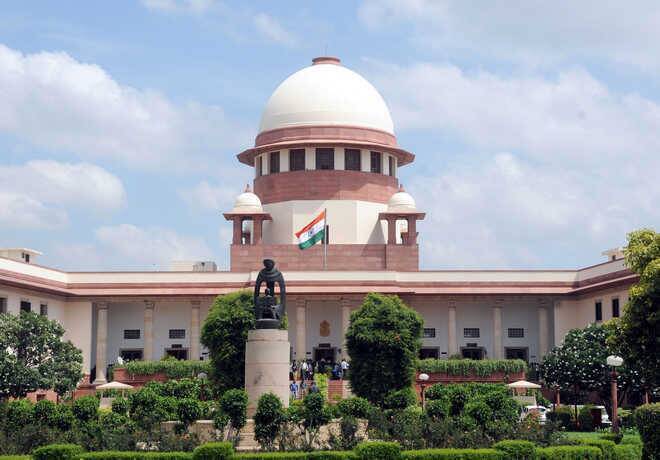
Where’s your father, country waiting to give him red carpet: SC to Choksi’s son
The Supreme Court of India has made a scathing remark against Mehul Choksi, the fugitive businessman and accused in the Punjab National Bank scam, while dismissing a petition filed by his son. The court’s comment has sent shockwaves across the country, with many interpreting it as a strong message to those who think they can evade the law and escape accountability.
The petition was filed by Mehul Choksi’s son, who was seeking to exclude himself from a ₹937-crore recovery suit filed by the National Spot Exchange Limited. However, the Supreme Court was not convinced by the arguments presented by Choksi’s son and dismissed the petition. While doing so, the court made a caustic remark, asking, “Where’s your respected father nowadays? The country is waiting to give him a red-carpet welcome.”
The comment is a clear indication of the court’s frustration with Mehul Choksi, who has been on the run for several years, evading the law and avoiding extradition to India. Choksi is accused of being involved in the Punjab National Bank scam, one of the biggest banking scams in Indian history, and is being pursued by the Indian authorities for his role in the scam.
The Punjab National Bank scam, which was uncovered in 2018, involved the fraudulent issuance of letters of undertaking (LoUs) by the bank’s officials, which were used by Choksi and his associates to secure loans from other banks. The scam is estimated to have caused a loss of over ₹13,000 crore to the bank, and Choksi is accused of being one of the masterminds behind the scam.
Choksi has been on the run since 2018, and his whereabouts are currently unknown. He is believed to be living in Antigua and Barbuda, a Caribbean island nation, where he has been granted citizenship. The Indian government has been trying to extradite Choksi to India, but he has been resisting the efforts, citing health reasons and other grounds.
The Supreme Court’s comment is a clear indication that the Indian judiciary is not willing to tolerate those who think they can evade the law and escape accountability. The court’s remark is also a message to other fugitive businessmen and individuals who are on the run, that they will not be spared and will be brought to justice.
The case has also highlighted the need for stronger laws and regulations to prevent such scams from happening in the future. The Indian government has taken several steps to prevent such scams, including the introduction of new laws and regulations, such as the Fugitive Economic Offenders Act, which allows the government to confiscate the assets of fugitive economic offenders.
The case has also raised questions about the role of regulators and law enforcement agencies in preventing such scams. The Reserve Bank of India, which is the regulator of the banking sector, has been criticized for its failure to detect the scam earlier. The Central Bureau of Investigation (CBI) and the Enforcement Directorate (ED), which are the agencies responsible for investigating economic crimes, have also been criticized for their slow pace of investigation.
In conclusion, the Supreme Court’s comment is a strong message to those who think they can evade the law and escape accountability. The case highlights the need for stronger laws and regulations to prevent such scams from happening in the future. It also raises questions about the role of regulators and law enforcement agencies in preventing such scams.
The Indian government and the judiciary must work together to ensure that those who are responsible for such scams are brought to justice and that the country’s financial system is protected from such scams. The case is a reminder that the country will not tolerate those who think they can cheat and escape accountability, and that the law will catch up with them eventually.
About the Author