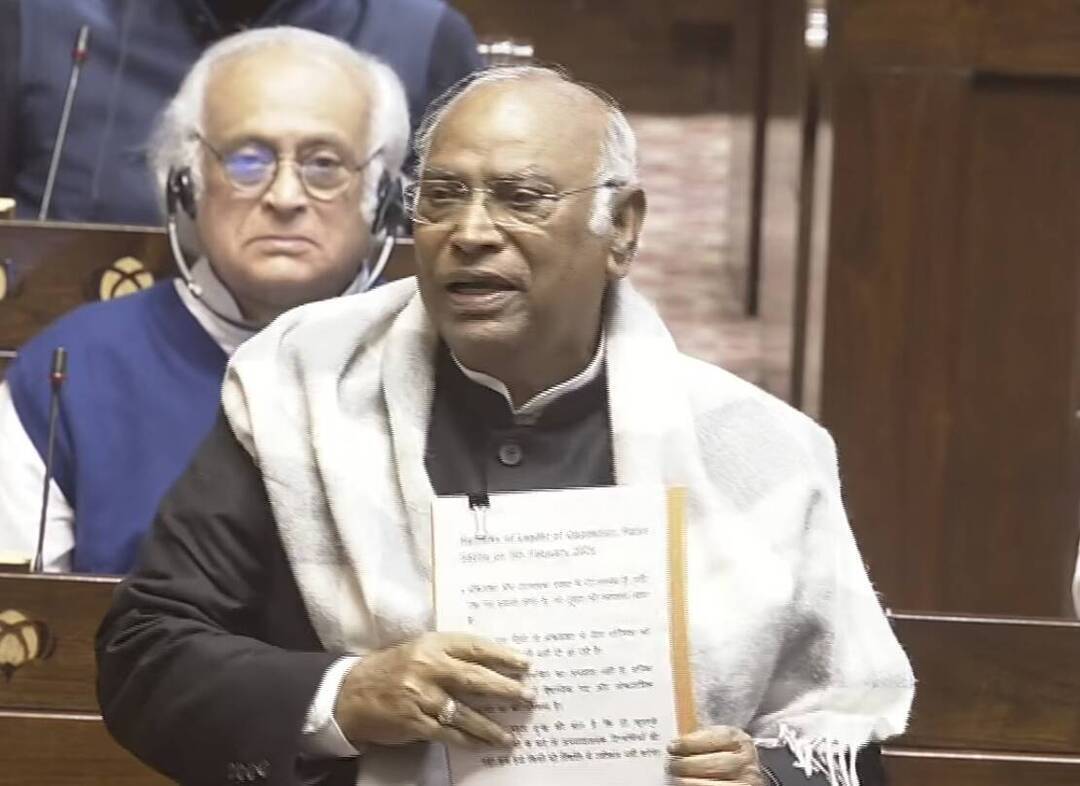
Kharge stopped from quoting book in Rajya Sabha, Opp’n walks out
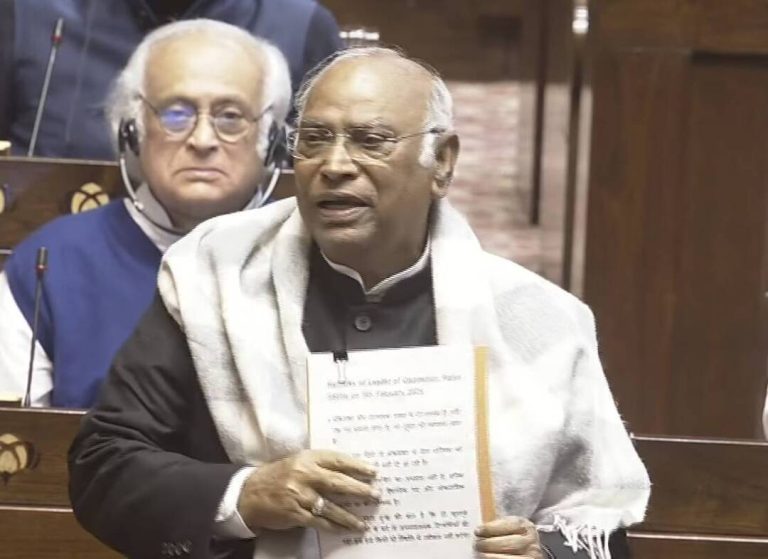
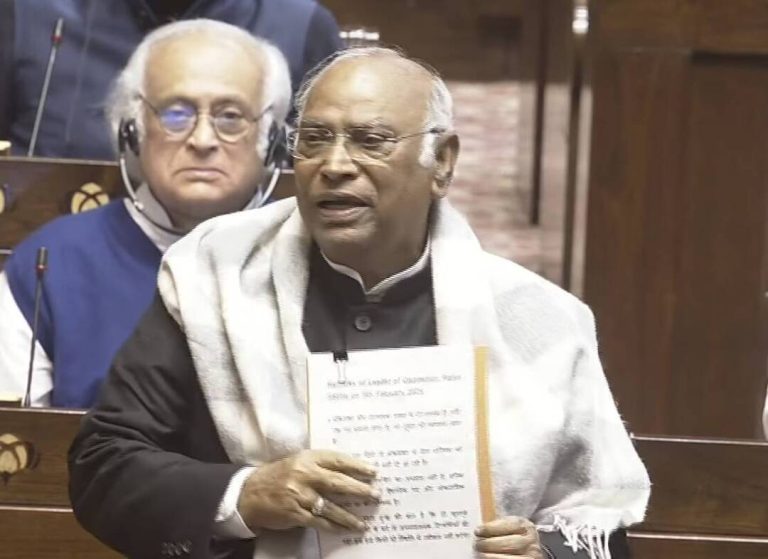
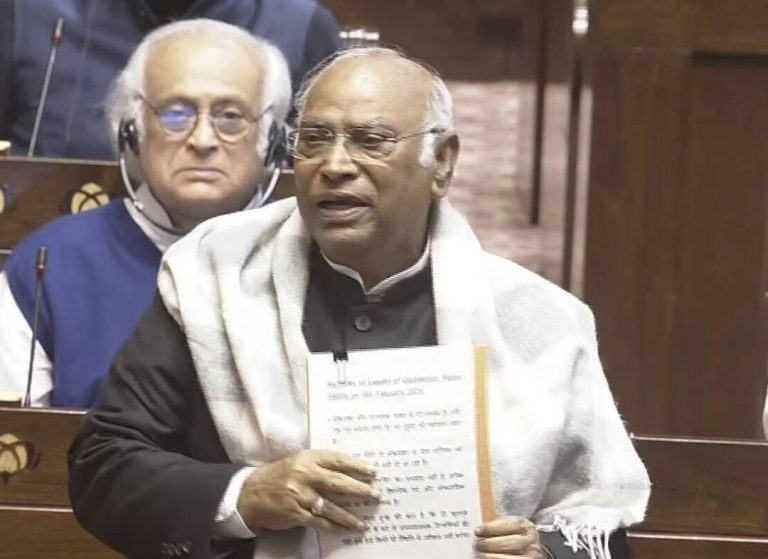
In a dramatic turn of events, Congress MP Mallikarjun Kharge was stopped from quoting an unpublished memoir by former Army Chief General Manoj Mukund Naravane in Rajya Sabha. The incident led to a walkout by Opposition MPs, who protested against the restriction on quoting the book. The controversy began when Kharge raised the issue of Congress MP Rahul Gandhi not being allowed to quote the same book in Lok Sabha.
Kharge, who is a senior leader of the Congress party, was attempting to quote from the memoir during a discussion in Rajya Sabha. However, he was interrupted by Rajya Sabha Chairman CP Radhakrishnan, who stopped him from quoting the book. The Chairman’s decision was based on the fact that the book is still unpublished and therefore, its contents cannot be quoted in the House.
The Opposition MPs were quick to react to the Chairman’s decision, with many of them protesting against the restriction. They argued that the book’s contents are relevant to the discussion at hand and should be allowed to be quoted. However, their protests were in vain, as the Chairman remained firm on his decision.
The walkout by Opposition MPs was a clear indication of their dissatisfaction with the Chairman’s decision. The MPs felt that the restriction on quoting the book was unfair and would hinder their ability to participate in the discussion. The walkout was also seen as a show of solidarity with Rahul Gandhi, who was not allowed to quote the book in Lok Sabha.
The unpublished memoir by General Manoj Mukund Naravane has been at the center of controversy in recent days. The book is expected to reveal several sensitive details about the country’s defense establishment and its operations. The government has been keen to restrict the book’s contents from being quoted in Parliament, citing national security concerns.
The incident has sparked a debate about the freedom of speech in Parliament. The Opposition MPs have argued that they should be allowed to quote from any book, regardless of its publication status. They have also questioned the government’s motives in restricting the book’s contents from being quoted.
On the other hand, the government has maintained that the restriction is necessary to protect national security. They have argued that the book’s contents are sensitive and should not be revealed in public. The government has also pointed out that the book is still unpublished and therefore, its contents are not in the public domain.
The controversy surrounding the book has also raised questions about the role of Parliament in holding the government accountable. The Opposition MPs have argued that they have a right to question the government on any issue, including those related to national security. They have also pointed out that the government’s attempt to restrict the book’s contents from being quoted is an attempt to stifle dissent and avoid accountability.
In conclusion, the incident in Rajya Sabha has highlighted the ongoing tensions between the government and the Opposition. The restriction on quoting the unpublished memoir by General Manoj Mukund Naravane has sparked a debate about the freedom of speech in Parliament. While the government has maintained that the restriction is necessary to protect national security, the Opposition MPs have argued that it is an attempt to stifle dissent and avoid accountability.
As the controversy continues to unfold, it remains to be seen how the situation will play out. The Opposition MPs have made it clear that they will continue to protest against the restriction, while the government has maintained that it will not allow the book’s contents to be quoted in Parliament. The incident has also raised questions about the role of Parliament in holding the government accountable and the limits of freedom of speech in the House.
The incident is a clear indication of the ongoing power struggle between the government and the Opposition. The Opposition MPs are determined to hold the government accountable, while the government is keen to restrict any information that it deems sensitive. The controversy surrounding the book has also highlighted the importance of transparency and accountability in governance.
As the debate continues, it is essential to consider the implications of the restriction on quoting the book. The Opposition MPs have argued that the restriction will hinder their ability to participate in discussions and hold the government accountable. They have also pointed out that the restriction is an attempt to stifle dissent and avoid accountability.
In the end, the incident has highlighted the need for a balanced approach to freedom of speech in Parliament. While national security concerns are important, they should not be used to restrict the ability of MPs to participate in discussions and hold the government accountable. The government and the Opposition must work together to find a solution that balances the need for national security with the need for transparency and accountability.
News Source: https://x.com/PTI_News/status/2019299438746091906
About the Author