$700 bn total imports, $500 bn from US alone?: Tharoor on trade deal
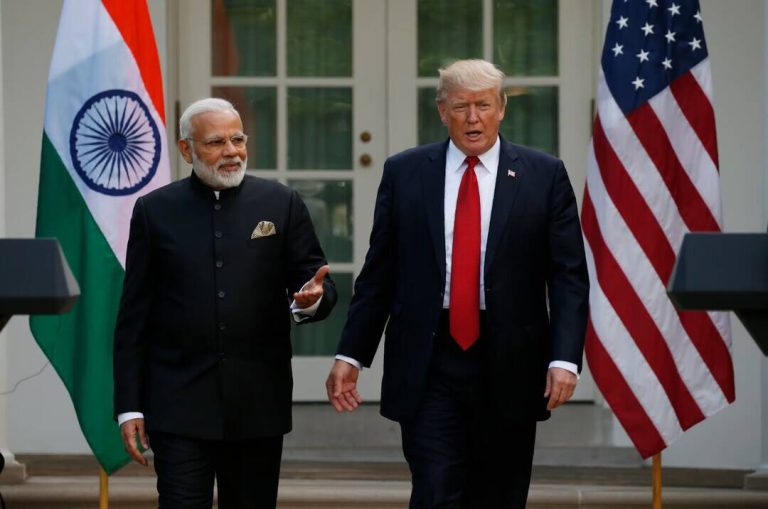
The recent trade deal between India and the United States has sparked a lot of interest and debate among policymakers, economists, and the general public. While announcing the trade deal, US President Donald Trump claimed that Prime Minister Narendra Modi committed to buying “$500 billion worth of US energy, technology, agricultural, coal, and many other products”. This statement has raised eyebrows, with many questioning the feasibility and implications of such a massive commitment.
Seeking clarity on this, Congress MP Shashi Tharoor expressed his concerns, saying, “Our entire import bill is $700 billion, so are we going to stop buying from every other country?” This statement highlights the enormity of the claimed commitment and the potential consequences for India’s trade relationships with other countries.
To put this into perspective, India’s total imports for the year 2020-21 were approximately $700 billion. This includes a wide range of products such as crude oil, electronics, machinery, and fertilizers, among others. The idea that India would commit to buying $500 billion worth of products from the US alone is staggering, and it raises several questions about the country’s trade policy and its relationships with other nations.
If India were to indeed buy $500 billion worth of products from the US, it would mean that the country would have to significantly reduce its imports from other countries. This could have far-reaching consequences, including straining relationships with other trade partners and potentially disrupting global supply chains. It is also worth noting that India has trade agreements with several other countries, including the European Union, China, and the Association of Southeast Asian Nations (ASEAN), among others. Would India be able to fulfill its commitments under these agreements if it were to buy such a large proportion of its imports from the US?
Furthermore, there are also concerns about the potential impact on India’s economy. If the country were to import such a large quantity of products from the US, it could lead to a significant outflow of foreign exchange, which could put pressure on the rupee and affect India’s balance of payments. Additionally, it could also lead to a decline in domestic industries, as Indian manufacturers may struggle to compete with cheaper imports from the US.
It is also worth examining the products that the US is offering to India. While the US is a significant producer of energy, technology, and agricultural products, it is not clear whether these products would be competitive in the Indian market. India has its own domestic industries in these sectors, and it is unclear whether the US products would be able to offer better value to Indian consumers.
In light of these concerns, it is essential to seek clarity on the trade deal and the claimed commitment of $500 billion. The Indian government needs to provide more information on the terms of the deal and how it plans to fulfill its commitments. The government also needs to consider the potential implications of such a deal on India’s trade relationships with other countries and the potential impact on the domestic economy.
In conclusion, the claimed commitment of $500 billion worth of US imports is a significant development that requires careful consideration and scrutiny. While the trade deal with the US has the potential to bring benefits to India, it is essential to ensure that the country’s trade policy is aligned with its national interests and that the deal does not harm India’s relationships with other trade partners. As Shashi Tharoor said, “Our entire import bill is $700 billion, so are we going to stop buying from every other country?” This is a question that the Indian government needs to answer, and it is essential to have a transparent and informed debate on this issue.
News source: https://x.com/ANI/status/2018584610888937726
About the Author