NASA’s Perseverance rover completes 1st AI-planned drive on Mars
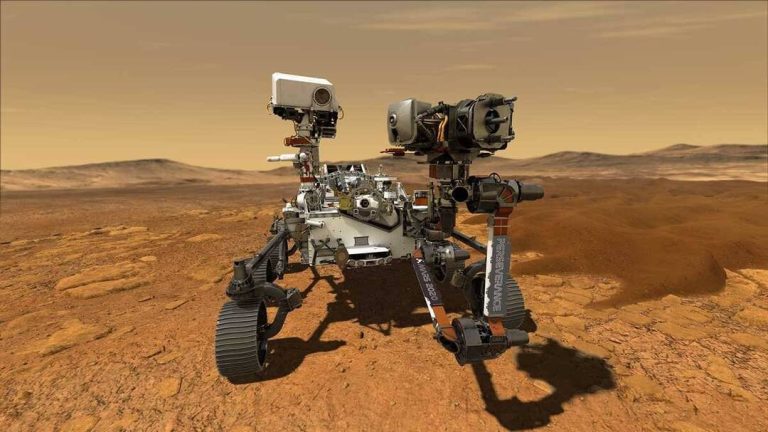
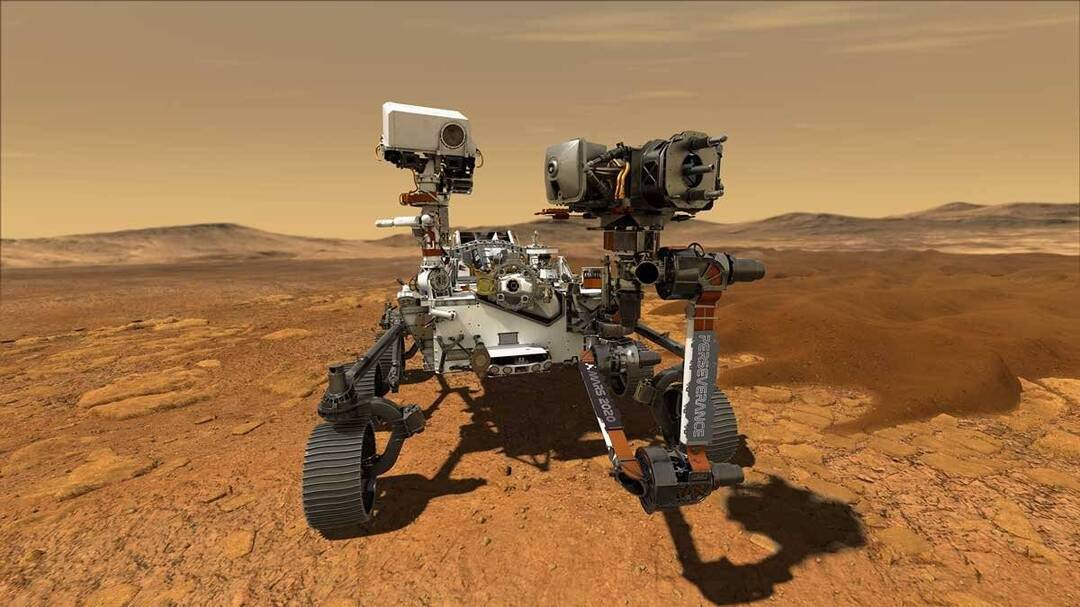
In a groundbreaking achievement, NASA’s Perseverance rover has successfully completed its first drive on Mars that was planned by artificial intelligence. The demonstration, which took place on December 8 and 10, was led by NASA’s Jet Propulsion Laboratory in Southern California. This milestone marks a significant advancement in the use of AI in space exploration and paves the way for more efficient and autonomous missions to other planets.
According to NASA, the AI-planned drive was a result of a collaboration between the space agency and industry partners, who worked together to develop and test the AI system. The system uses a combination of machine learning algorithms and computer vision to analyze the Martian terrain and plan the most efficient and safe route for the rover. The AI system takes into account various factors such as the terrain’s slope, rockiness, and elevation, as well as the rover’s power and communication constraints.
The demonstration was a huge success, with the Perseverance rover completing a 109-meter drive across the Martian terrain without any human intervention. The AI system planned the route in real-time, taking into account the changing terrain and adjusting the route as needed. The rover’s instruments and systems performed flawlessly, collecting valuable data and images of the Martian landscape.
“This demonstration shows how far our capabilities have advanced and broadens how we will explore other worlds,” NASA Administrator Jared Isaacman said. “The use of AI in space exploration has the potential to revolutionize the way we explore the universe, enabling us to cover more ground, collect more data, and make new discoveries that would be impossible with human-planned missions alone.”
The Perseverance rover is equipped with a suite of advanced instruments, including cameras, spectrometers, and radar, which allow it to study the Martian geology, search for signs of past or present life, and assess the planet’s habitability. The rover’s AI system is designed to work in tandem with these instruments, using the data they collect to inform its decision-making and planning.
The success of the AI-planned drive on Mars has significant implications for future space missions. As NASA and other space agencies plan to send humans to the Moon, Mars, and beyond, the use of AI will become increasingly important. AI can help to optimize mission planning, reduce the risk of accidents, and improve the overall efficiency of space travel.
One of the key benefits of using AI in space exploration is its ability to process vast amounts of data in real-time. As spacecraft and rovers collect more and more data, the need for human analysts to interpret and act on that data becomes increasingly impractical. AI systems can analyze the data, identify patterns and trends, and make decisions based on that analysis, freeing up human mission controllers to focus on higher-level tasks.
Another benefit of AI in space exploration is its ability to adapt to changing circumstances. In space, unexpected events can occur at any time, such as a sudden change in weather or a malfunctioning instrument. AI systems can respond to these events in real-time, adjusting the mission plan as needed to ensure the success of the mission.
The use of AI in space exploration also has the potential to enable more autonomous missions. As spacecraft and rovers become more advanced, they will be able to operate for longer periods without human intervention. AI systems can help to extend the lifespan of these missions by optimizing their operations, reducing the risk of accidents, and improving their overall efficiency.
In conclusion, the completion of the first AI-planned drive on Mars by NASA’s Perseverance rover is a significant milestone in the use of AI in space exploration. The demonstration shows how far our capabilities have advanced and broadens how we will explore other worlds. As NASA and other space agencies continue to push the boundaries of space travel, the use of AI will become increasingly important. With its ability to process vast amounts of data, adapt to changing circumstances, and enable more autonomous missions, AI has the potential to revolutionize the way we explore the universe.
About the Author