NASA’s Perseverance rover completes 1st AI-planned drive on Mars
In a historic milestone for space exploration, NASA’s Perseverance rover has successfully completed its first drive on Mars that was planned by artificial intelligence. The demonstration, which took place on December 8 and 10, was led by NASA’s Jet Propulsion Laboratory in Southern California and marks a significant advancement in the use of AI in space exploration.
According to NASA, the demonstration showed how far the agency’s capabilities have advanced and broadens the possibilities for exploring other worlds. “This demonstration shows how far our capabilities have advanced and broadens how we will explore other worlds,” NASA Administrator Jared Isaacman said. The use of AI in planning the rover’s drive is a significant step forward, as it allows for more efficient and effective exploration of the Martian surface.
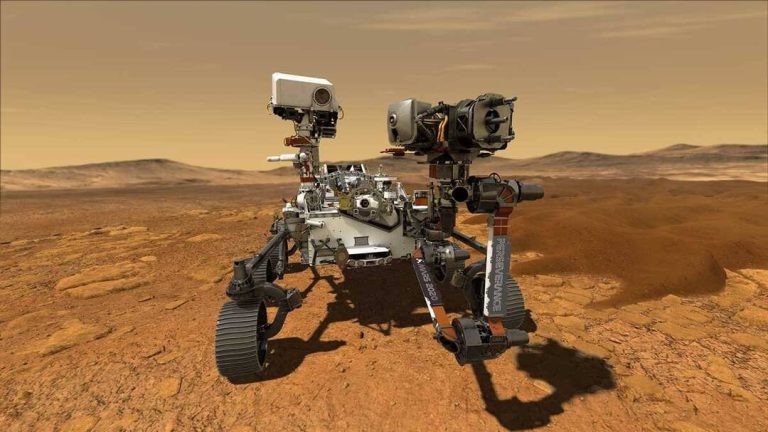
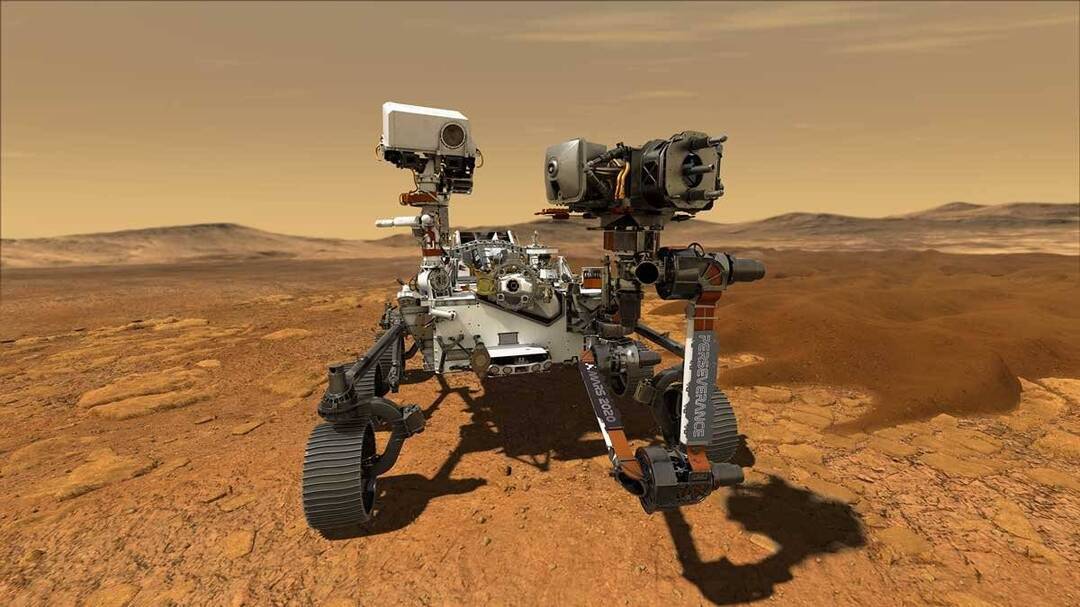
The Perseverance rover, which landed on Mars in February 2021, is equipped with a range of instruments and technologies designed to help it navigate and explore the Martian surface. The rover’s AI system uses data from these instruments, including cameras and sensors, to plan its route and avoid obstacles. The AI system is able to analyze the terrain and identify the safest and most efficient route, taking into account factors such as rock formations, sand dunes, and other hazards.
The demonstration was a complex process that involved several stages. First, the AI system analyzed data from the rover’s instruments to identify potential routes and obstacles. The system then used this data to plan a route that would allow the rover to navigate the terrain safely and efficiently. Once the route was planned, the rover executed the drive, using its instruments and sensors to navigate and avoid obstacles.
The successful completion of the AI-planned drive is a significant achievement for NASA and demonstrates the agency’s commitment to pushing the boundaries of space exploration. The use of AI in space exploration has the potential to revolutionize the way we explore other worlds, allowing for more efficient and effective use of resources and enabling scientists to gather more data and insights than ever before.
The Perseverance rover is just one example of how NASA is using AI to advance space exploration. The agency is also using AI to analyze data from other spacecraft and instruments, such as the Mars Reconnaissance Orbiter and the Curiosity rover. AI is also being used to develop new technologies and systems, such as autonomous navigation and robotic arms.
The use of AI in space exploration is not limited to NASA. Other space agencies and private companies are also using AI to advance their missions and goals. For example, the European Space Agency is using AI to analyze data from its Mars Express orbiter, while private companies such as SpaceX and Blue Origin are using AI to develop new spacecraft and technologies.
As NASA continues to push the boundaries of space exploration, the use of AI is likely to play an increasingly important role. The agency’s plans for future missions, such as the Artemis program, which aims to return humans to the Moon by 2024, will rely heavily on AI and other advanced technologies. The successful completion of the AI-planned drive on Mars is a significant step forward for NASA and demonstrates the agency’s commitment to using AI to advance space exploration.
In conclusion, the completion of the first AI-planned drive on Mars by NASA’s Perseverance rover is a historic milestone for space exploration. The use of AI in planning the rover’s drive demonstrates the agency’s commitment to pushing the boundaries of space exploration and using advanced technologies to achieve its goals. As NASA continues to explore other worlds, the use of AI is likely to play an increasingly important role, enabling scientists to gather more data and insights than ever before and paving the way for future missions to the Moon, Mars, and beyond.
About the Author