NASA’s Perseverance rover completes 1st AI-planned drive on Mars
In a groundbreaking achievement, NASA’s Perseverance rover has successfully completed its first drive on Mars that was planned by artificial intelligence (AI). This milestone marks a significant step forward in the exploration of the Red Planet and demonstrates the capabilities of AI in space exploration. The demonstration took place on December 8 and 10 and was led by NASA’s Jet Propulsion Laboratory in Southern California.
According to NASA, the AI-planned drive was a complex operation that involved navigating the rover through a challenging terrain. The rover had to avoid obstacles, climb steep slopes, and traverse rough terrain, all while being controlled by an AI system. The success of this demonstration shows how far NASA’s capabilities have advanced and broadens the possibilities for exploring other worlds.
“This demonstration shows how far our capabilities have advanced and broadens how we will explore other worlds,” NASA Administrator Jared Isaacman said. “The use of AI in space exploration is a game-changer, and we are excited to see the potential it holds for future missions.”
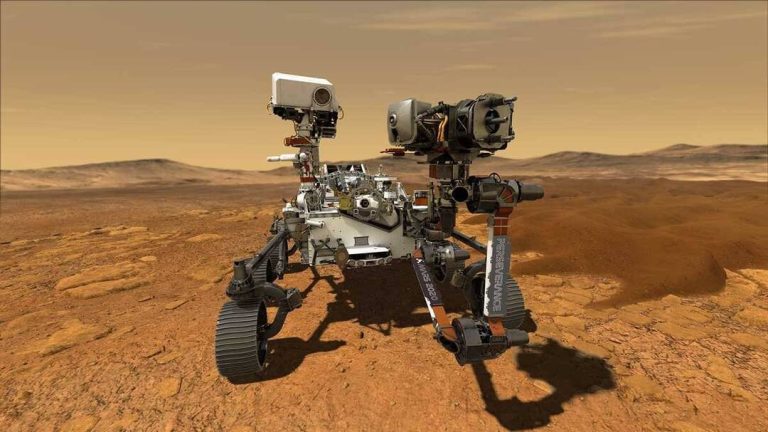
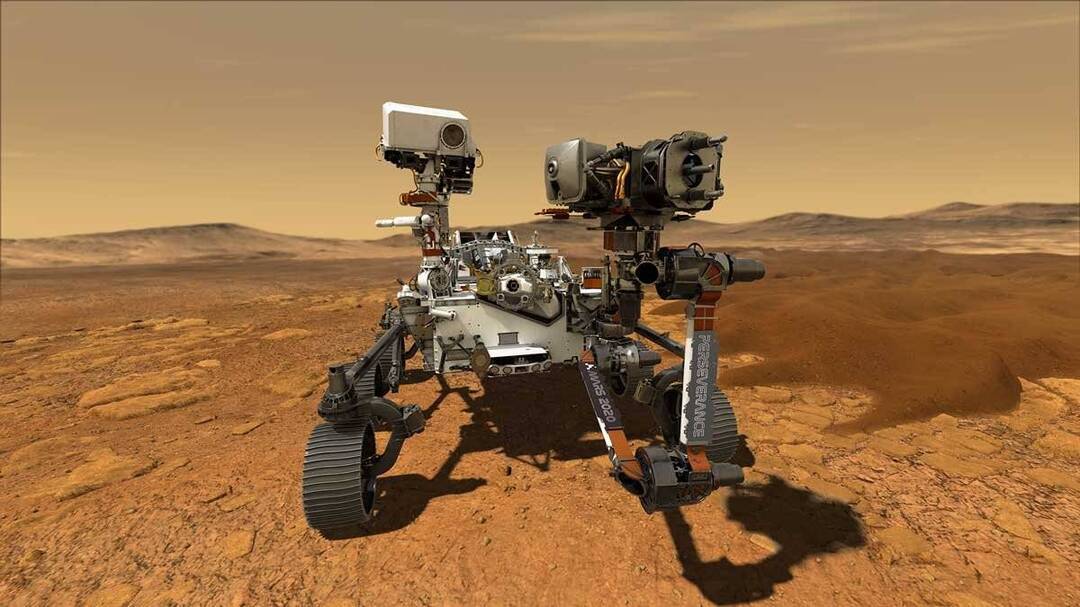
The Perseverance rover is equipped with a range of advanced instruments and technologies, including a sophisticated AI system that enables it to navigate and explore the Martian terrain. The rover’s AI system uses a combination of machine learning algorithms and sensor data to plan and execute its drives. The system takes into account a range of factors, including the terrain, the rover’s energy levels, and the communication schedule with Earth.
The AI-planned drive was a complex operation that involved several stages. First, the rover’s AI system created a detailed map of the terrain, using data from its sensors and cameras. The system then used this map to plan a route that would allow the rover to reach its destination while avoiding obstacles and minimizing energy consumption. Once the route was planned, the rover’s AI system executed the drive, using its sensors and cameras to navigate the terrain and make any necessary adjustments.
The success of the AI-planned drive is a significant achievement for NASA and demonstrates the potential of AI in space exploration. The use of AI can greatly enhance the efficiency and effectiveness of space missions, allowing rovers and other spacecraft to explore more territory and gather more data. AI can also help to reduce the risk of accidents and improve the safety of spacecraft and their crews.
The Perseverance rover is part of NASA’s Mars 2020 mission, which aims to explore the Martian surface and search for signs of past or present life. The rover is equipped with a range of advanced instruments, including a rock coring system, a radar system, and a suite of scientific instruments. The rover’s primary mission is to explore the Jezero crater, a 45-kilometer-wide impact crater that is believed to have been home to a lake billions of years ago.
The success of the AI-planned drive is a significant milestone in the Perseverance rover’s mission and demonstrates the capabilities of NASA’s robotic spacecraft. The use of AI in space exploration is a rapidly evolving field, and NASA is at the forefront of this development. The agency is currently working on a range of AI-related projects, including the development of autonomous spacecraft and the use of machine learning algorithms to analyze data from space missions.
In conclusion, the completion of the first AI-planned drive on Mars is a significant achievement for NASA and demonstrates the potential of AI in space exploration. The use of AI can greatly enhance the efficiency and effectiveness of space missions, allowing rovers and other spacecraft to explore more territory and gather more data. As NASA continues to push the boundaries of space exploration, the use of AI is likely to play an increasingly important role.
About the Author