NASA’s Perseverance rover completes 1st AI-planned drive on Mars
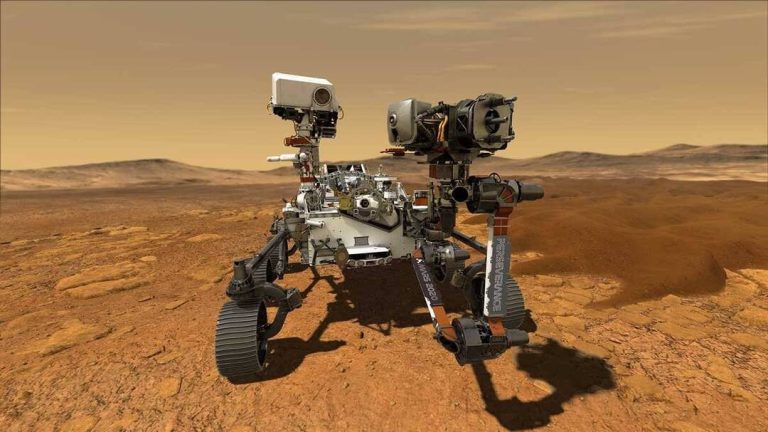
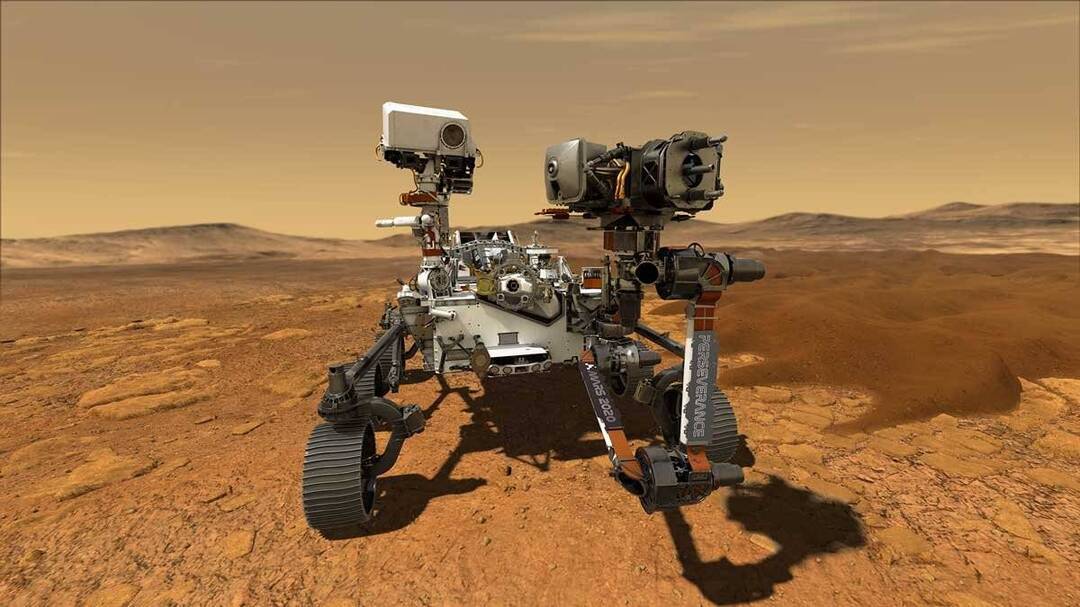
In a groundbreaking achievement, NASA’s Perseverance rover has successfully completed its first drive on Mars that was planned by artificial intelligence. This significant milestone was announced by NASA, with the demonstration taking place on December 8 and 10, led by its Jet Propulsion Laboratory in Southern California. The use of artificial intelligence in planning the rover’s drive marks a major advancement in the field of space exploration and paves the way for more efficient and autonomous exploration of other worlds.
According to NASA, the demonstration was a testament to the agency’s commitment to pushing the boundaries of technological innovation. “This demonstration shows how far our capabilities have advanced and broadens how we will explore other worlds,” NASA Administrator Jared Isaacman said. The successful completion of the AI-planned drive is a significant step forward in the development of autonomous systems that can operate on other planets, where communication with Earth is delayed or unreliable.
The Perseverance rover, which landed on Mars in February 2021, is equipped with a range of advanced instruments and technologies designed to enable it to operate autonomously. The rover’s autonomous navigation system uses a combination of sensors, including cameras, lidar, and radar, to build a detailed map of its surroundings and plan its route. The AI system used to plan the drive is based on a complex algorithm that takes into account a range of factors, including the rover’s position, velocity, and orientation, as well as the terrain and obstacles in its path.
The demonstration involved the rover driving a total distance of approximately 100 meters, with the AI system planning the route and executing the drive. The rover’s performance was monitored in real-time by NASA engineers, who were able to intervene if necessary. However, the drive was completed without any issues, and the rover successfully navigated the terrain using the AI-planned route.
The use of artificial intelligence in space exploration has the potential to revolutionize the way we explore other worlds. By enabling rovers and other spacecraft to operate autonomously, AI can significantly reduce the risk of accidents and improve the efficiency of exploration missions. Additionally, AI can help to overcome the challenges of communicating with Earth from distant planets, where signal delays can make real-time communication impossible.
The Perseverance rover’s AI-planned drive is just the beginning of a new era in space exploration. As NASA continues to push the boundaries of technological innovation, we can expect to see even more advanced autonomous systems being developed and deployed on future missions. The agency’s Artemis program, which aims to return humans to the Moon by 2025, will rely heavily on autonomous systems and AI to enable the safe and efficient operation of spacecraft and lunar bases.
The success of the Perseverance rover’s AI-planned drive is a testament to the power of collaboration and innovation in the field of space exploration. The demonstration was the result of a partnership between NASA’s Jet Propulsion Laboratory, the California Institute of Technology, and other industry partners. The use of AI in space exploration is a rapidly evolving field, and NASA is working closely with academia and industry to develop new technologies and capabilities.
As we look to the future of space exploration, it is clear that artificial intelligence will play an increasingly important role. From autonomous rovers and spacecraft to intelligent systems that can analyze vast amounts of data, AI has the potential to transform the way we explore and understand other worlds. The Perseverance rover’s AI-planned drive is a significant milestone in this journey, and we can expect to see many more exciting developments in the years to come.
In conclusion, the completion of the Perseverance rover’s first AI-planned drive on Mars is a major achievement that marks a significant step forward in the development of autonomous systems for space exploration. As NASA continues to push the boundaries of technological innovation, we can expect to see even more exciting developments in the field of AI and space exploration. With the potential to revolutionize the way we explore other worlds, AI is set to play an increasingly important role in the future of space travel.
About the Author