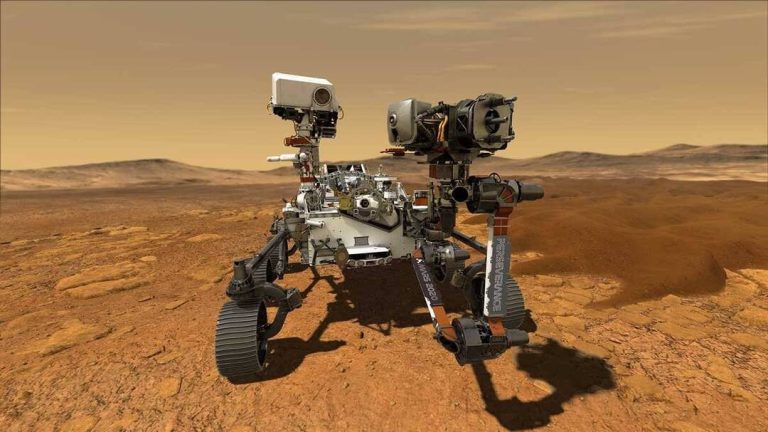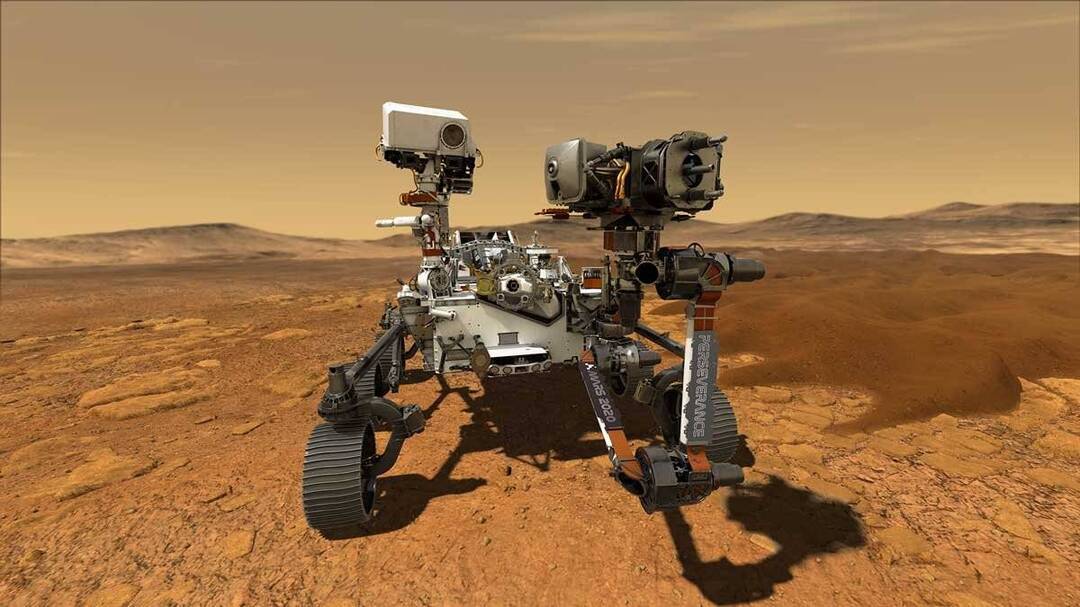
NASA’s Perseverance rover completes 1st AI-planned drive on Mars
In a groundbreaking achievement, NASA’s Perseverance rover has successfully completed its first drive on Mars that was planned by artificial intelligence. This significant milestone marks a major step forward in the use of AI in space exploration, and it has far-reaching implications for future missions to other planets and celestial bodies.
According to NASA, the demonstration took place on December 8 and 10, and it was led by the Jet Propulsion Laboratory in Southern California. The Perseverance rover, which landed on Mars in February 2021, has been equipped with advanced navigation and communication systems that enable it to receive commands from Earth and execute them autonomously.
The AI-planned drive was a complex operation that involved the use of sophisticated algorithms and machine learning techniques to plan the rover’s route and navigate through the Martian terrain. The AI system analyzed data from the rover’s instruments, including its cameras, spectrometers, and radar, to identify the safest and most efficient route to the target location.
“This demonstration shows how far our capabilities have advanced and broadens how we will explore other worlds,” NASA Administrator Jared Isaacman said. “The use of AI in space exploration has the potential to revolutionize the way we explore the universe, and we are excited to see the impact it will have on future missions.”
The Perseverance rover’s AI-planned drive was a significant achievement because it demonstrated the ability of the rover to operate autonomously and make decisions based on real-time data. This capability is critical for future missions to Mars and other planets, where communication delays between Earth and the spacecraft can be significant.
For example, when a spacecraft is on the other side of Mars, it can take up to 20 minutes for a signal to travel from Earth to the spacecraft, and another 20 minutes for the response to come back. This means that if a spacecraft encounters an unexpected obstacle or hazard, it may not be able to receive instructions from Earth in time to avoid it.
By using AI to plan and execute drives, NASA can overcome this challenge and enable spacecraft to operate more autonomously and respond to changing conditions on the fly. This capability will be particularly important for future missions to Mars, where the terrain can be rugged and unpredictable.
The Perseverance rover’s AI-planned drive also demonstrated the ability of the rover to adapt to changing conditions and navigate through complex terrain. The rover used its advanced navigation system to avoid obstacles and find the safest route to the target location, and it was able to adjust its route in real-time based on new data from its instruments.
The success of the Perseverance rover’s AI-planned drive is a testament to the advanced technologies and capabilities that NASA has developed in recent years. The agency has made significant investments in AI and machine learning, and it has established a number of research and development programs to explore the use of these technologies in space exploration.
One of the key technologies that enabled the Perseverance rover’s AI-planned drive is the Terrain Relative Navigation (TRN) system. This system uses a combination of cameras, lidar, and other sensors to build a 3D map of the terrain and navigate the rover through it. The TRN system is capable of operating in real-time, and it can adjust the rover’s route based on new data from its instruments.
The Perseverance rover’s AI-planned drive also demonstrated the ability of the rover to use machine learning algorithms to analyze data and make decisions. The rover used a type of machine learning called reinforcement learning, which involves training an algorithm on a set of data and then using it to make decisions based on new data.
The use of machine learning algorithms in space exploration has the potential to revolutionize the way we explore the universe. By enabling spacecraft to analyze data and make decisions autonomously, machine learning can help us to overcome the challenges of space travel and explore new worlds in a more efficient and effective way.
In conclusion, the Perseverance rover’s completion of its first AI-planned drive on Mars is a significant achievement that marks a major step forward in the use of AI in space exploration. The success of this demonstration shows how far our capabilities have advanced and broadens how we will explore other worlds. As NASA continues to push the boundaries of what is possible with AI and machine learning, we can expect to see even more exciting developments in the years to come.
About the Author