NASA’s Perseverance rover completes 1st AI-planned drive on Mars
In a groundbreaking achievement, NASA’s Perseverance rover has completed its first drive on Mars that was planned by artificial intelligence. This milestone marks a significant step forward in the exploration of the Red Planet and demonstrates the advanced capabilities of AI in space exploration. The demonstration took place on December 8 and 10 and was led by NASA’s Jet Propulsion Laboratory in Southern California.
According to NASA, the AI-planned drive was a major success, with the Perseverance rover navigating through the Martian terrain with ease and precision. The drive was planned using a combination of AI algorithms and machine learning techniques, which enabled the rover to adapt to changing conditions on the Martian surface. This capability is crucial for future missions to Mars and other planets, where the terrain can be unpredictable and hostile.
“This demonstration shows how far our capabilities have advanced and broadens how we will explore other worlds,” said NASA Administrator Jared Isaacman. “The use of AI in space exploration is a game-changer, and we are excited to see the potential it holds for future missions.”
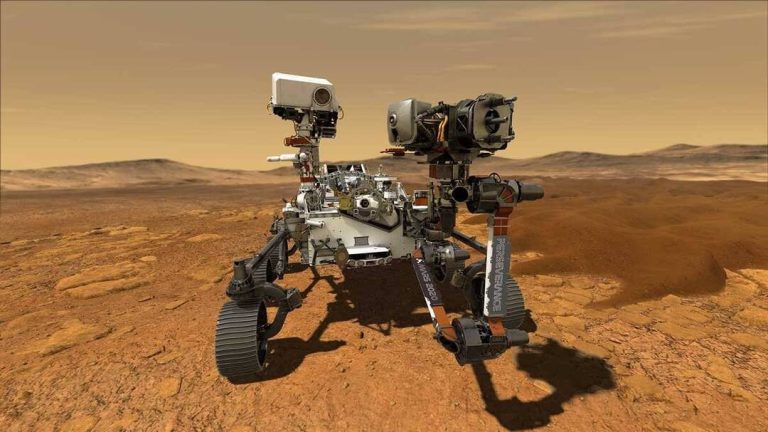
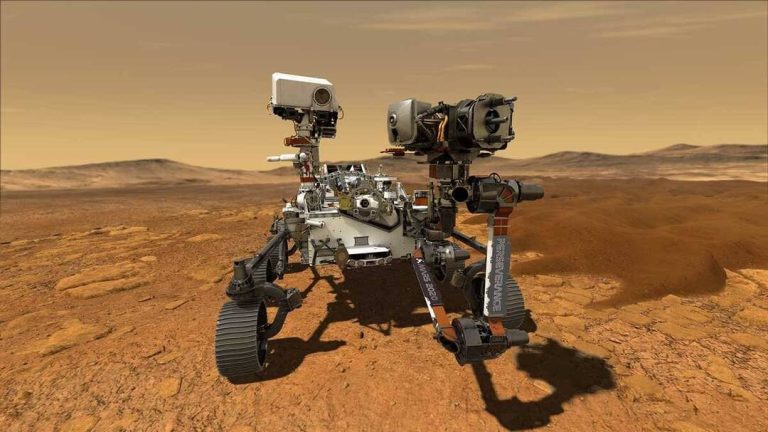
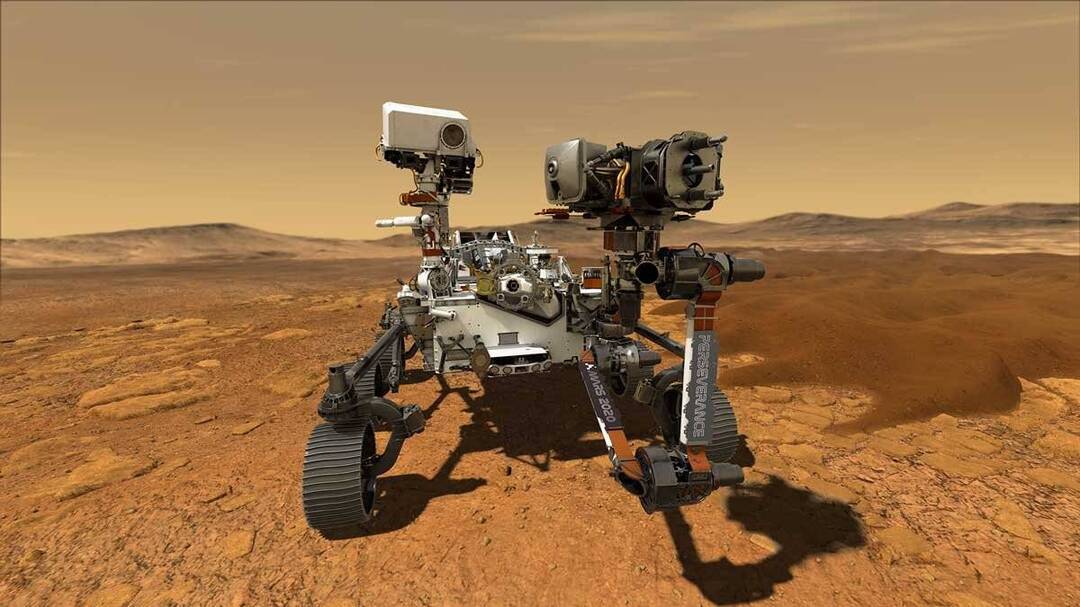
The Perseverance rover is equipped with a range of advanced instruments and technologies, including a robotic arm, a drill, and a suite of scientific instruments. The rover is designed to explore the Martian surface and search for signs of past or present life on the planet. The AI-planned drive is a key component of the rover’s mission, as it enables the rover to navigate through the Martian terrain and reach areas that would be difficult or impossible to access using traditional navigation methods.
The use of AI in space exploration is not new, but the Perseverance rover’s AI-planned drive is a significant milestone in the development of autonomous systems for space exploration. AI algorithms and machine learning techniques have been used in a range of space missions, from the Mars Curiosity rover to the Voyager spacecraft. However, the Perseverance rover’s AI-planned drive is one of the most advanced examples of AI in space exploration to date.
The demonstration of the AI-planned drive on Mars is a major achievement for NASA and its partners, and it paves the way for future missions to the Red Planet and beyond. The use of AI in space exploration has the potential to revolutionize the way we explore the universe, enabling spacecraft to navigate through unfamiliar terrain and make decisions in real-time.
One of the key benefits of AI in space exploration is its ability to adapt to changing conditions. The Martian surface is a hostile and unpredictable environment, with temperatures ranging from -125°C to 20°C and a thin atmosphere that offers little protection from radiation and extreme weather conditions. The AI-planned drive on the Perseverance rover is designed to navigate through this terrain with ease, using a range of sensors and instruments to detect and respond to changing conditions.
The AI-planned drive is also a significant step forward in the development of autonomous systems for space exploration. Autonomous systems are capable of making decisions in real-time, without the need for human intervention. This capability is crucial for future missions to Mars and other planets, where the distance between the spacecraft and Earth can make communication difficult or impossible.
The Perseverance rover’s AI-planned drive is a major achievement for NASA and its partners, and it demonstrates the advanced capabilities of AI in space exploration. The use of AI in space exploration has the potential to revolutionize the way we explore the universe, enabling spacecraft to navigate through unfamiliar terrain and make decisions in real-time.
In conclusion, the Perseverance rover’s AI-planned drive on Mars is a significant milestone in the exploration of the Red Planet and demonstrates the advanced capabilities of AI in space exploration. The use of AI in space exploration has the potential to revolutionize the way we explore the universe, enabling spacecraft to navigate through unfamiliar terrain and make decisions in real-time. As NASA and its partners continue to push the boundaries of space exploration, the use of AI is likely to play an increasingly important role in the discovery of new worlds and the advancement of our understanding of the universe.
About the Author