NASA’s Perseverance rover completes 1st AI-planned drive on Mars
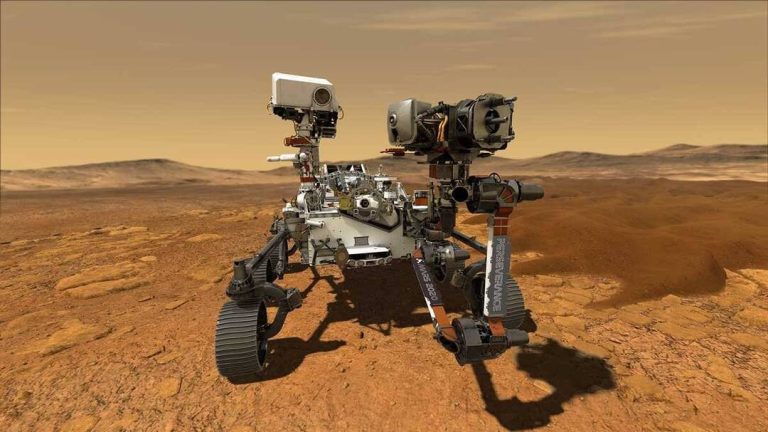
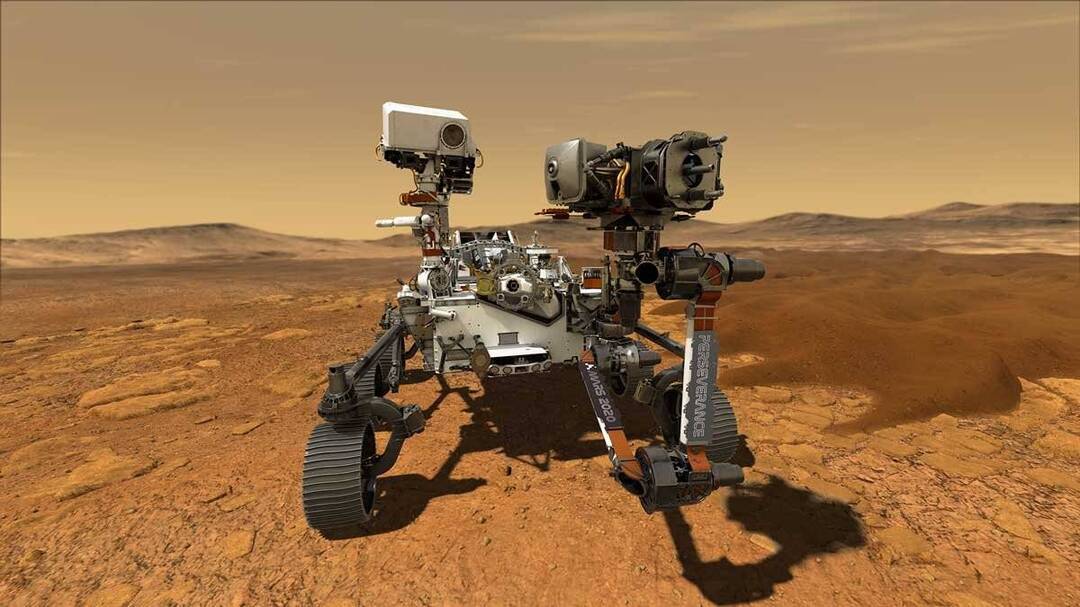
In a groundbreaking achievement, NASA’s Perseverance rover has successfully completed its first drive on Mars that was planned by artificial intelligence. The demonstration, which took place on December 8 and 10, was led by NASA’s Jet Propulsion Laboratory in Southern California. This milestone marks a significant advancement in the use of AI in space exploration and paves the way for more efficient and effective exploration of other worlds.
According to NASA, the AI-planned drive was a complex process that involved the use of advanced algorithms and machine learning techniques to navigate the Martian terrain. The rover’s AI system analyzed the terrain and identified the safest and most efficient route to take, taking into account factors such as terrain roughness, slope, and rockiness. The AI system then transmitted the planned route to the rover, which executed the drive without human intervention.
The demonstration was a resounding success, with the rover completing the drive as planned and without encountering any significant obstacles. The success of this demonstration shows how far NASA’s capabilities have advanced and broadens the possibilities for exploring other worlds. As NASA Administrator Jared Isaacman noted, “This demonstration shows how far our capabilities have advanced and broadens how we will explore other worlds.”
The use of AI in space exploration is not new, but the level of autonomy demonstrated by the Perseverance rover is a significant step forward. In the past, AI has been used to analyze data and make decisions in real-time, but the planning and execution of a drive on another planet is a much more complex task. The success of this demonstration shows that AI can be used to plan and execute complex tasks, even in the harsh and unforgiving environment of another planet.
The Perseverance rover is equipped with a range of advanced instruments and sensors, including cameras, spectrometers, and radar systems. These instruments provide a wealth of data about the Martian environment, which is then analyzed by the rover’s AI system. The AI system uses this data to make decisions about navigation, sampling, and other tasks, and can even adapt to changing circumstances on the fly.
The use of AI in space exploration has many benefits, including increased efficiency, improved safety, and enhanced scientific discovery. By automating routine tasks and allowing the rover to make decisions in real-time, AI can free up human operators to focus on more complex and high-level tasks. This can lead to faster and more efficient exploration of other worlds, and can even enable the discovery of new and unexpected phenomena.
The Perseverance rover is just one example of the many ways in which NASA is using AI to advance space exploration. The agency is also using AI to analyze data from other spacecraft and instruments, and to plan and execute future missions. For example, NASA’s Mars 2020 mission used AI to select the landing site for the Perseverance rover, and the agency is also using AI to plan and execute the upcoming Artemis mission to the Moon.
In conclusion, the completion of the first AI-planned drive on Mars by the Perseverance rover is a significant achievement that demonstrates the power and potential of AI in space exploration. The use of AI to plan and execute complex tasks on other worlds is a major step forward, and paves the way for more efficient and effective exploration of the solar system. As NASA continues to push the boundaries of space exploration, the use of AI will play an increasingly important role in enabling the agency to achieve its goals.
The success of the Perseverance rover’s AI-planned drive is a testament to the ingenuity and expertise of the team at NASA’s Jet Propulsion Laboratory, and demonstrates the agency’s commitment to advancing the state-of-the-art in space exploration. As we look to the future of space exploration, it is clear that AI will play an increasingly important role in enabling us to explore and understand other worlds.
For more information about NASA’s Perseverance rover and its AI-planned drive on Mars, visit the NASA website. The agency’s website provides a wealth of information about the mission, including updates, images, and videos.
About the Author