When you meet an Indian and a snake, kill the Indian first: Norway leader in Epstein files email
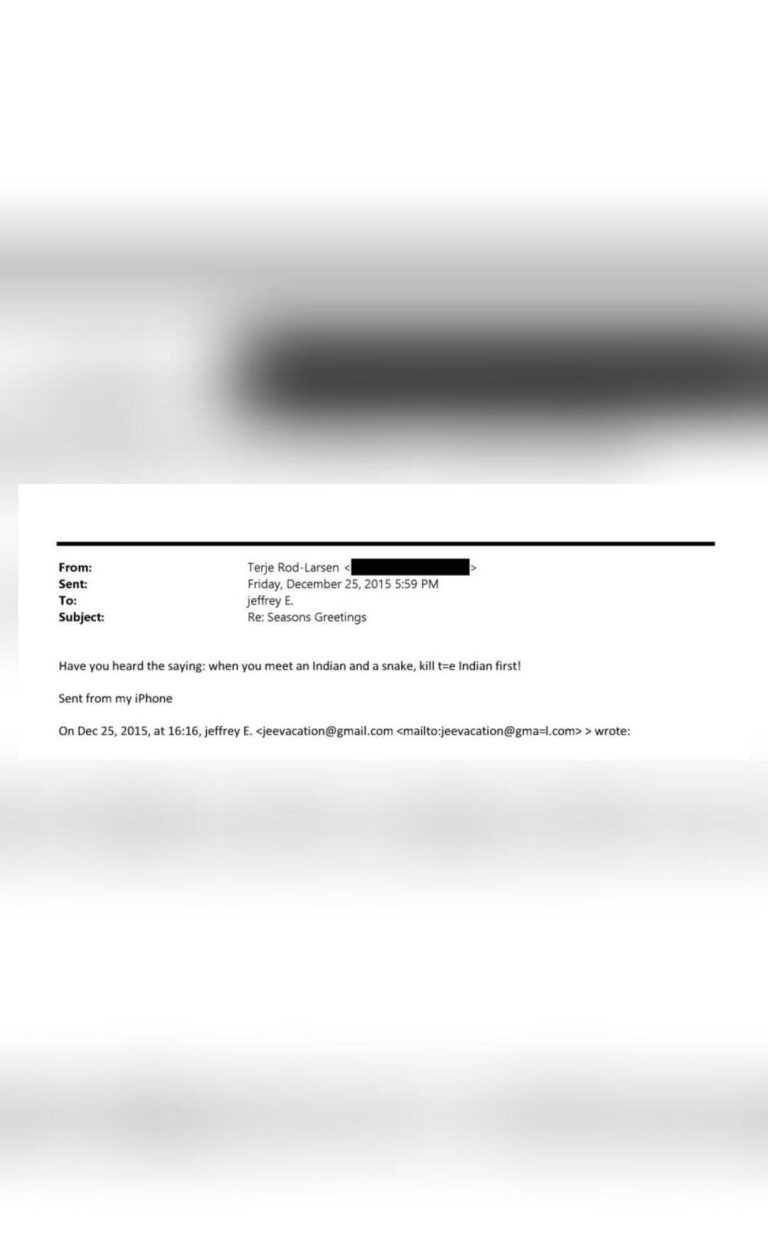
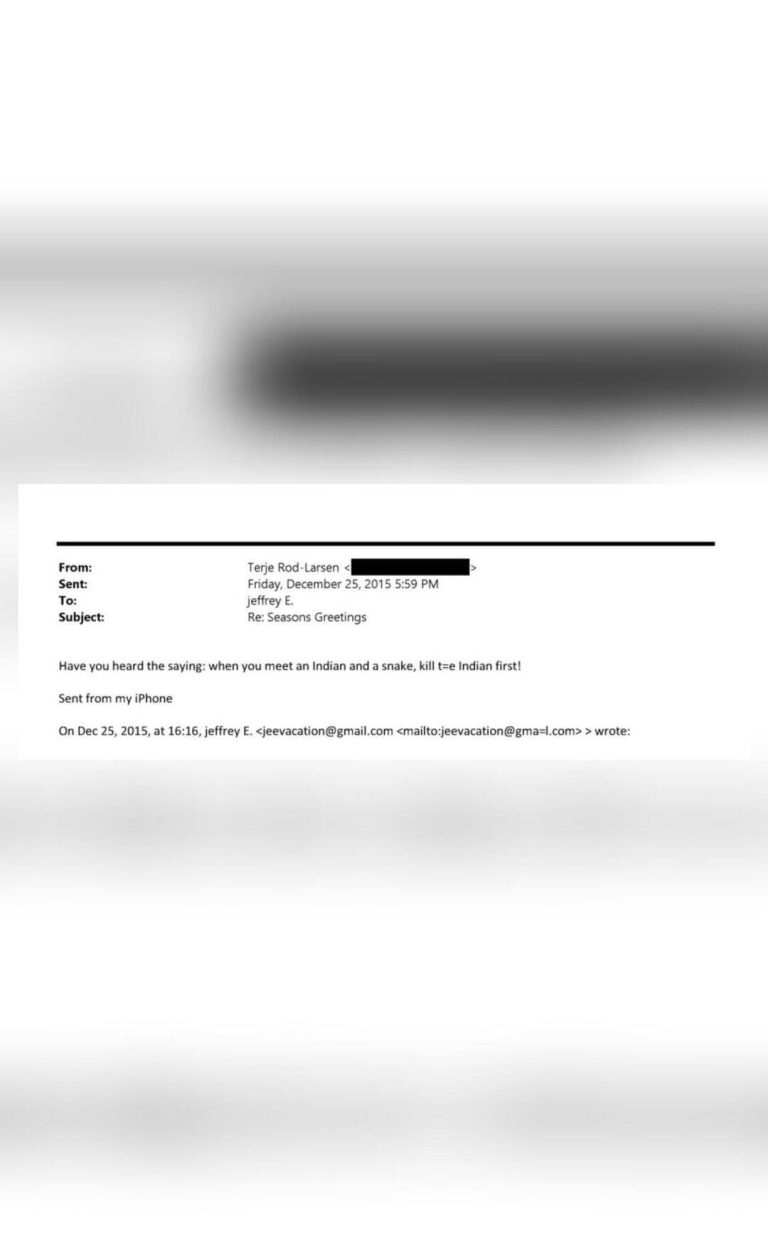
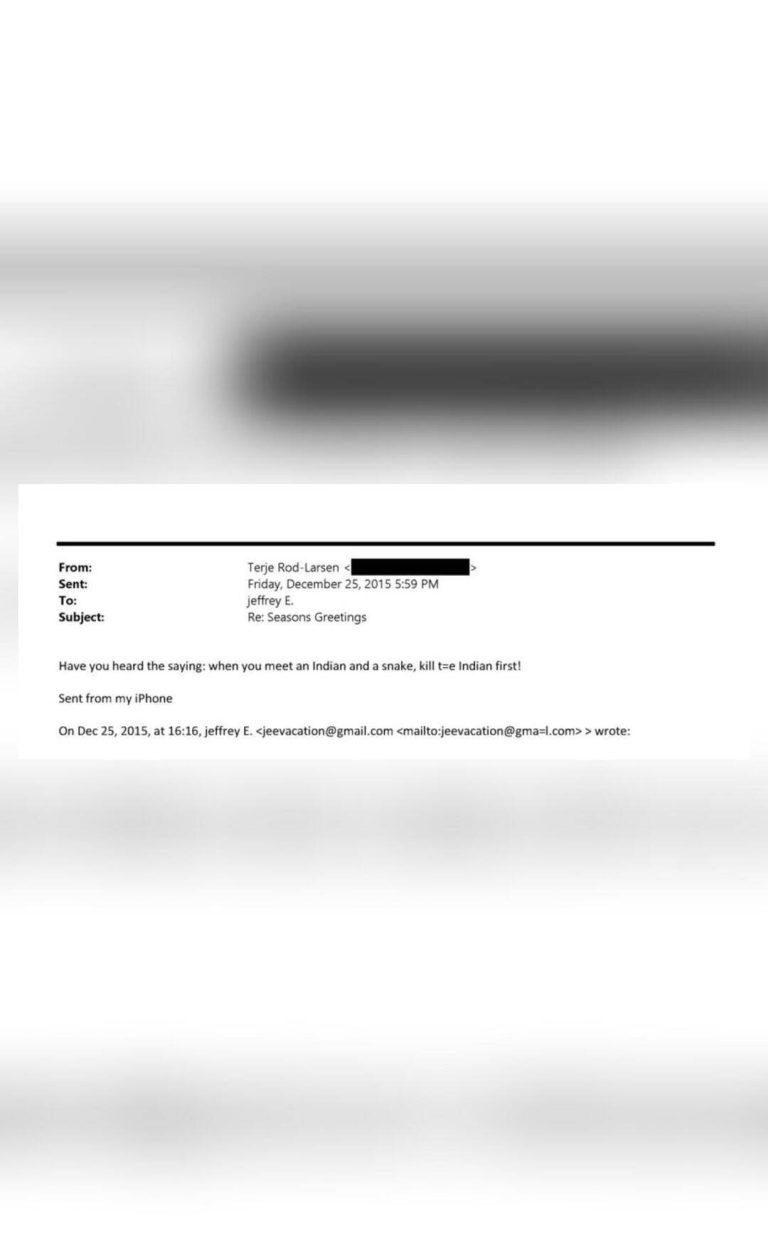
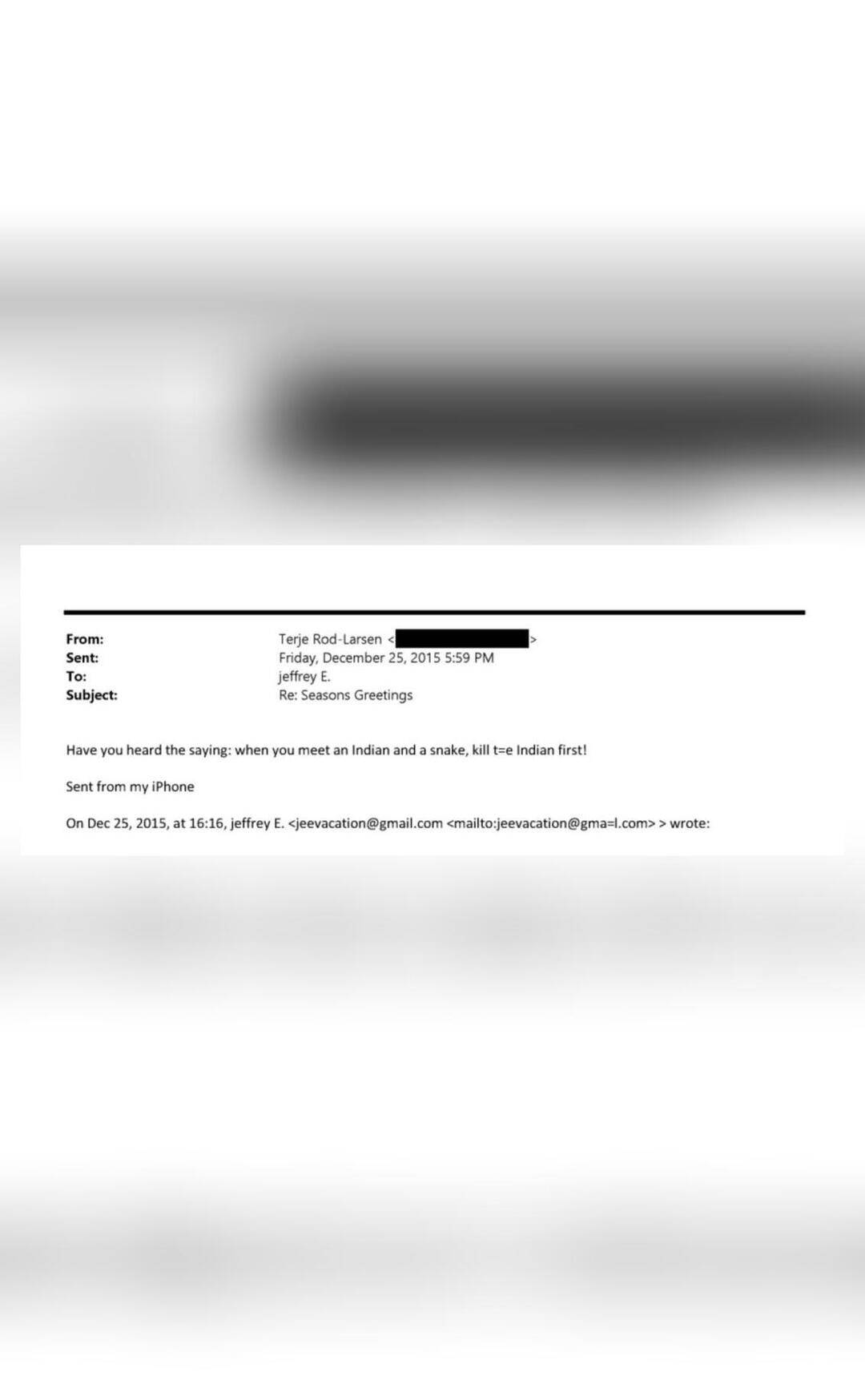
In a shocking revelation, an email sent by Norwegian diplomat Terje Rod-Larsen to convicted sex offender Jeffrey Epstein has come to light, containing a derogatory remark about Indians. The email, which is part of the Epstein files, quotes Rod-Larsen as saying, “Have you heard the saying: when you meet an Indian and a snake, kill the Indian first.” This racist comment has sparked outrage on social media, with many users condemning the diplomat’s words.
The email, which was sent by Rod-Larsen to Epstein, has been widely circulated on social media, with many expressing their disgust and anger at the diplomat’s remark. One user wrote, “Aah Norwegians, the famously racist white lot.” This comment reflects the widespread perception that Rod-Larsen’s remark is not only racist but also reflective of a broader cultural problem in Norway.
The Epstein files, which were released as part of an investigation into Epstein’s sex trafficking ring, have revealed a number of shocking and disturbing details about the wealthy financier and his associates. However, Rod-Larsen’s email stands out as a particularly egregious example of racism and bigotry.
It is worth noting that Rod-Larsen is a prominent figure in Norwegian politics and has held a number of high-profile positions, including serving as a diplomat and a politician. His remark, therefore, is not only a personal reflection of his own biases but also a reflection of the broader cultural and societal attitudes that exist in Norway.
The reaction to Rod-Larsen’s remark on social media has been swift and condemning. Many users have expressed their outrage and disgust at the diplomat’s words, with some calling for him to be held accountable for his actions. Others have pointed out that Rod-Larsen’s remark is not only racist but also reflective of a broader cultural problem in Norway, where racism and bigotry are often tolerated or ignored.
The incident has also sparked a wider conversation about racism and bigotry in Norway and around the world. Many have pointed out that Rod-Larsen’s remark is not an isolated incident, but rather a symptom of a broader cultural problem. Others have called for greater awareness and education about racism and bigotry, as well as greater accountability for those who perpetuate these attitudes.
In response to the controversy, Rod-Larsen has not publicly commented on his remark. However, the Norwegian government has distanced itself from the diplomat’s words, saying that they do not reflect the values or attitudes of the Norwegian people.
The incident has also raised questions about the relationship between Norway and India, as well as the broader cultural and economic ties between the two countries. India is a significant economic partner for Norway, and the two countries have a number of cultural and educational exchange programs. However, Rod-Larsen’s remark has raised concerns about the potential for racism and bigotry to undermine these relationships.
In conclusion, the email sent by Norwegian diplomat Terje Rod-Larsen to Jeffrey Epstein is a shocking example of racism and bigotry. The remark, which quotes a saying that suggests killing an Indian before a snake, is a disturbing reflection of the diplomat’s personal biases and attitudes. The reaction to the remark on social media has been swift and condemning, with many calling for Rod-Larsen to be held accountable for his actions.
The incident has also sparked a wider conversation about racism and bigotry in Norway and around the world. It has raised concerns about the potential for racism and bigotry to undermine cultural and economic relationships between countries, and has highlighted the need for greater awareness and education about these issues.
Ultimately, the incident serves as a reminder that racism and bigotry are still pervasive problems in many parts of the world. It is only by acknowledging and addressing these attitudes that we can work towards creating a more just and equitable society.
About the Author