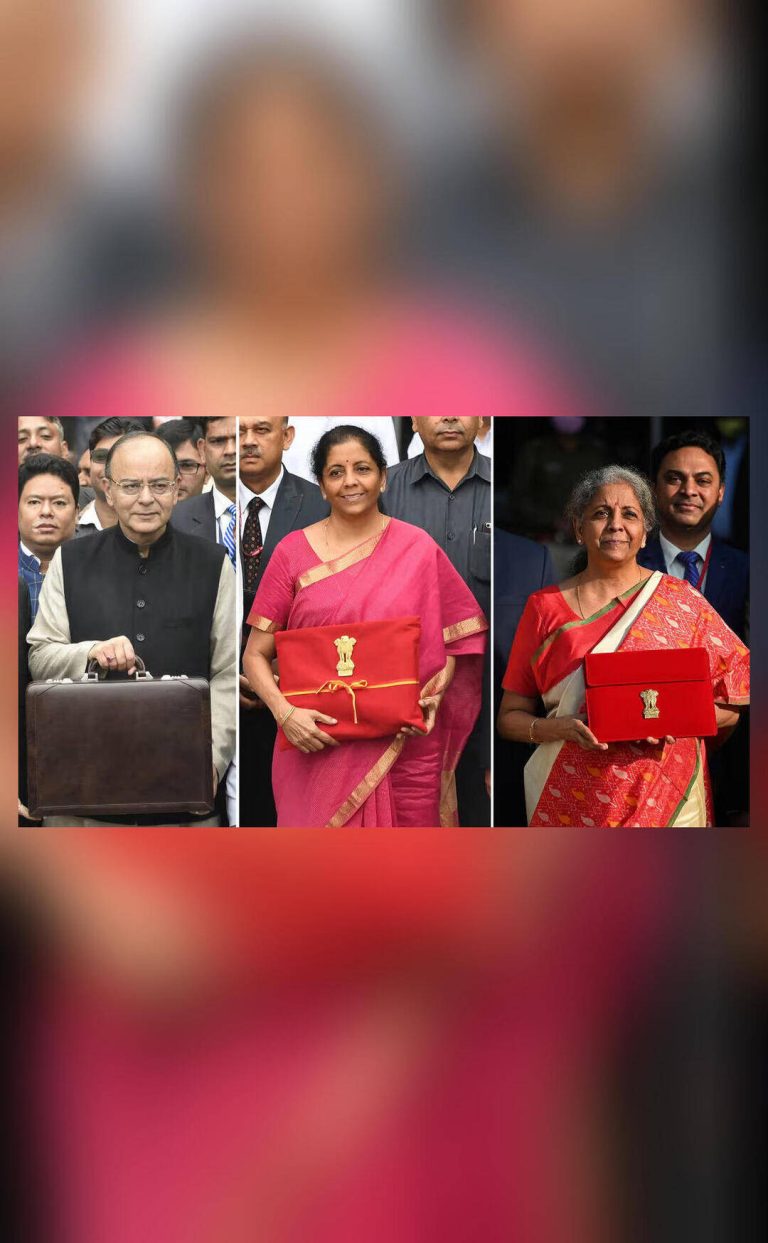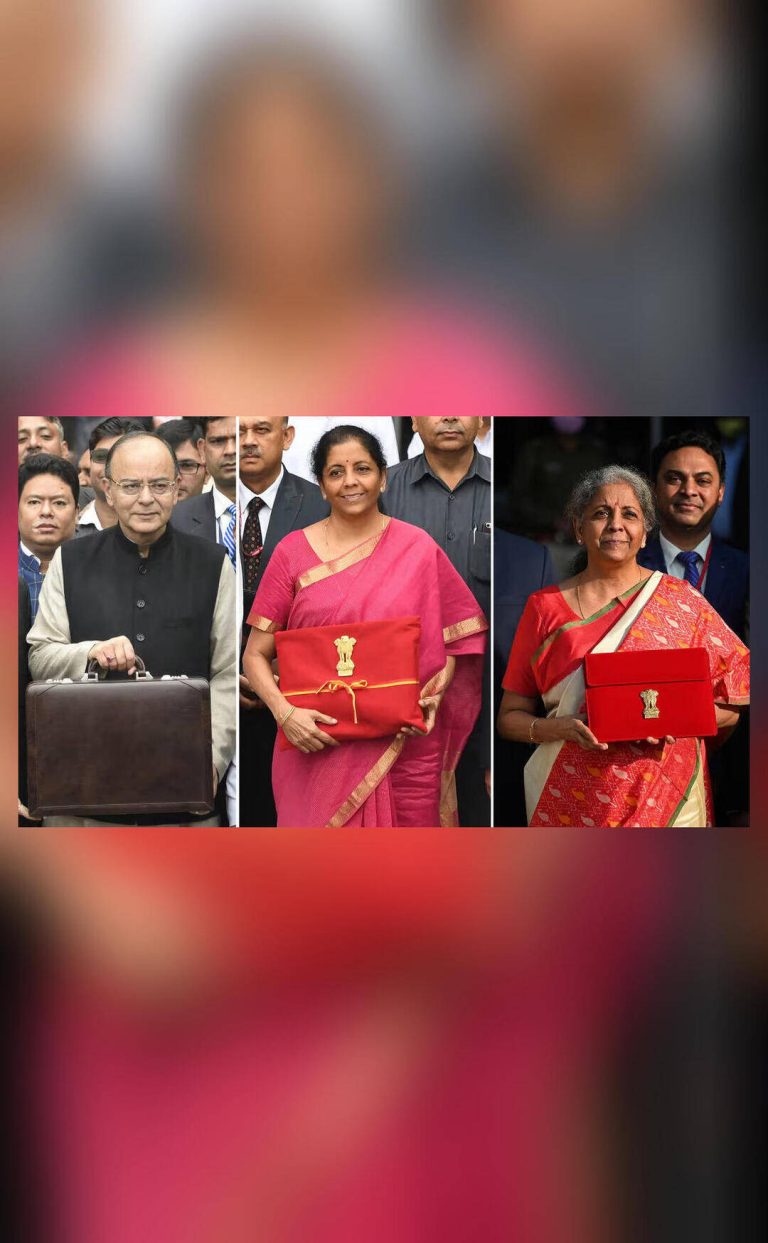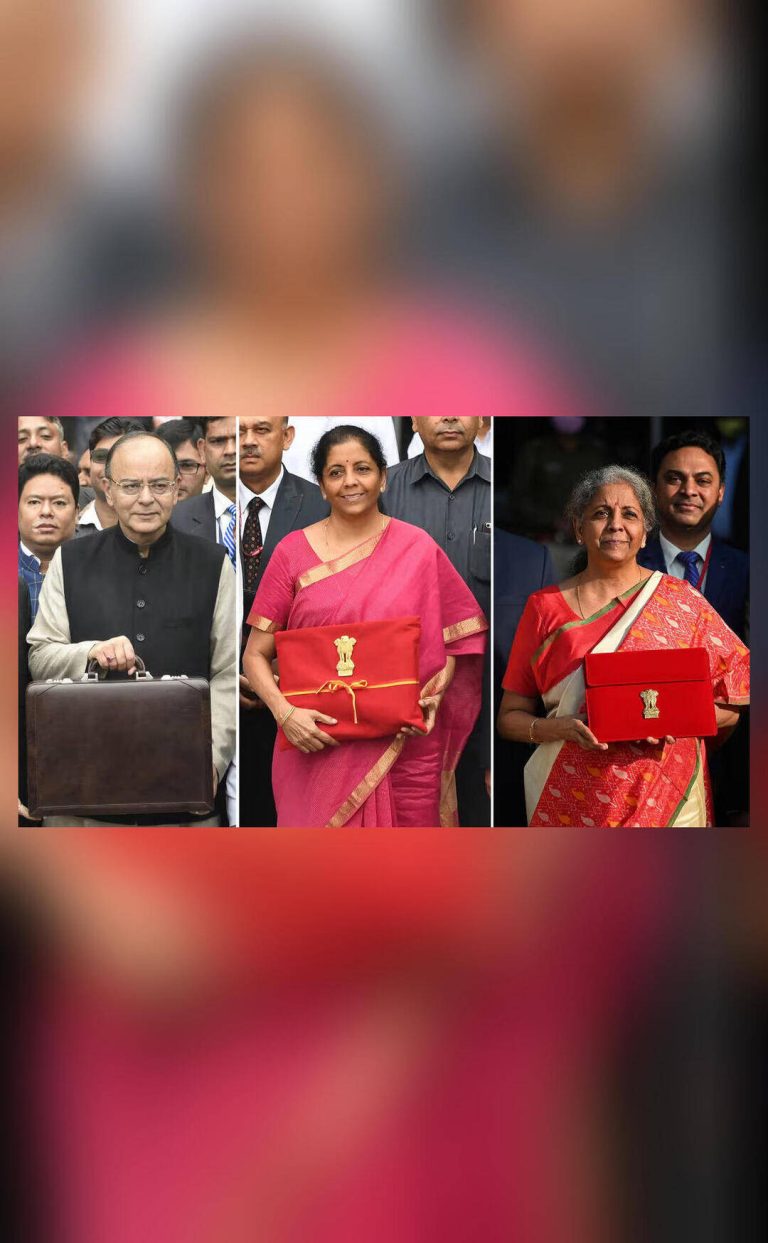
How has Union Budget’s presentation changed over the years, from a briefcase to a tablet?
The Union Budget, one of the most significant economic events in India, has undergone significant changes in its presentation over the years. From the traditional briefcase to a cloth-wrapped ‘bahi khata’ and finally to a Made-in-India tablet, the way the Budget is presented has transformed dramatically. In this blog post, we will explore the evolution of the Union Budget’s presentation and the key changes that have taken place in recent years.
The Union Budget is presented annually by the Finance Minister of India, and it outlines the government’s financial plans and policies for the upcoming fiscal year. The Budget presentation is a highly anticipated event, and it has traditionally been presented on the last day of February at 5:00 pm. However, in 1999, the presentation time was changed to 11:00 am, and in 2017, the date was changed to February 1.
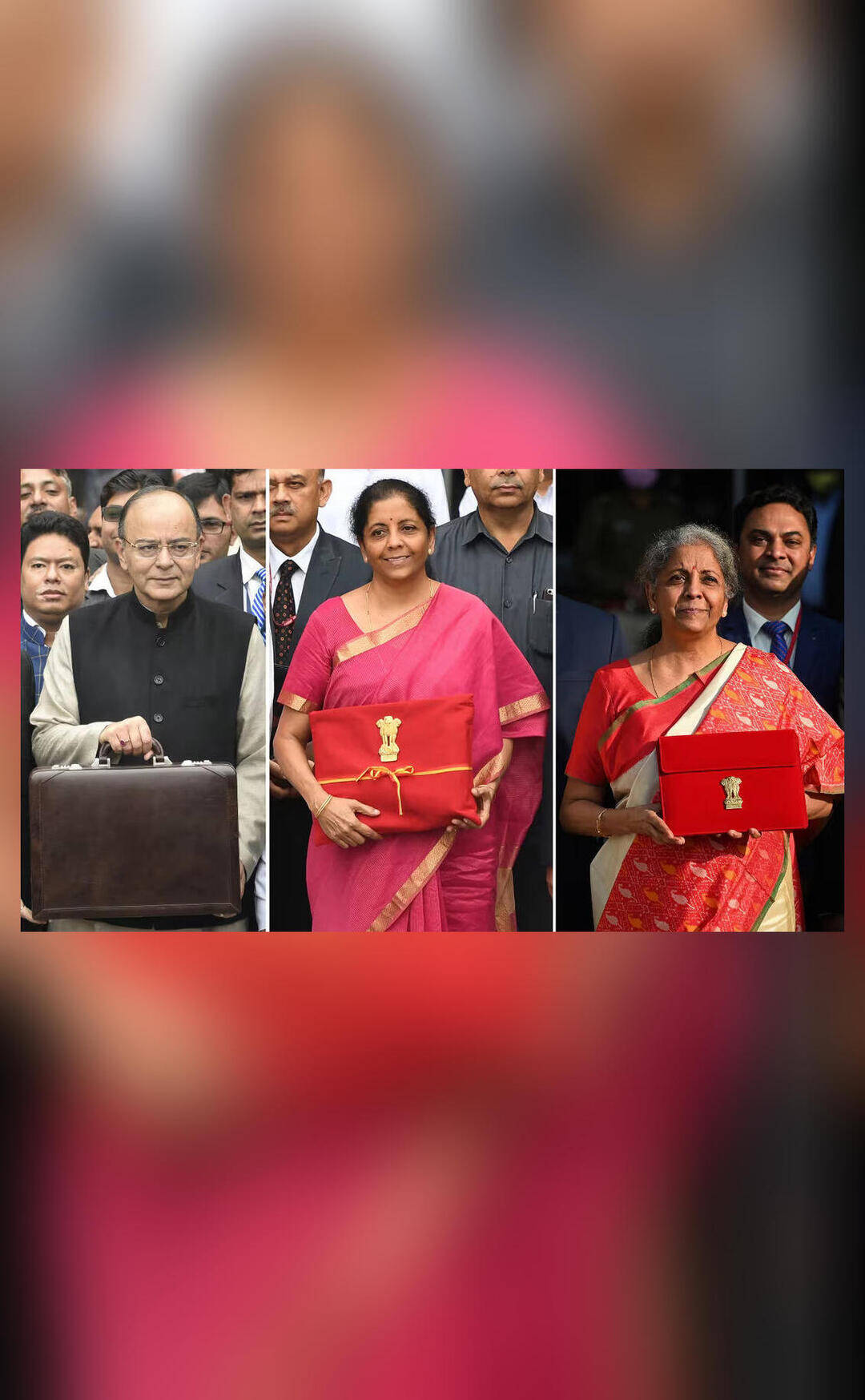
One of the most significant changes in the presentation of the Union Budget was the switch from a briefcase to a cloth-wrapped ‘bahi khata’ in 2019. Finance Minister Nirmala Sitharaman, who presented the Budget that year, chose to carry the Budget documents in a traditional ‘bahi khata’ instead of the traditional briefcase. This move was seen as a departure from the colonial-era tradition of carrying the Budget in a briefcase.
The use of a ‘bahi khata’ to carry the Budget documents was a nod to India’s rich cultural heritage and its traditional accounting practices. A ‘bahi khata’ is a traditional Indian ledger book used for accounting and bookkeeping, and it has been an integral part of Indian commerce and trade for centuries. By using a ‘bahi khata’ to carry the Budget documents, the Finance Minister was making a statement about India’s commitment to its cultural roots and its desire to move away from colonial-era traditions.
Another significant change in the presentation of the Union Budget was the switch to a paperless Budget in 2021. Finance Minister Nirmala Sitharaman presented India’s first paperless Budget on a Made-in-India tablet, marking a significant departure from the traditional practice of printing and distributing physical copies of the Budget documents. The move to a paperless Budget was seen as a step towards a more digital and sustainable future, and it was in line with the government’s efforts to promote digitalization and reduce its carbon footprint.
The use of a Made-in-India tablet to present the Budget was also significant, as it highlighted the government’s commitment to promoting domestic manufacturing and reducing its dependence on foreign technology. The tablet used to present the Budget was designed and manufactured in India, and it was a testament to the country’s growing capabilities in the field of technology and innovation.
In addition to these changes, the Union Budget has also undergone significant changes in terms of its content and structure. The Budget has become more comprehensive and inclusive, with a greater focus on social welfare, infrastructure development, and economic growth. The government has also made efforts to simplify the tax code and reduce compliance burdens, making it easier for businesses and individuals to navigate the tax system.
The last 10 Budgets presented during the Modi regime have been significant, with key highlights including the introduction of the Goods and Services Tax (GST), the implementation of the Insolvency and Bankruptcy Code (IBC), and the launch of various social welfare schemes such as the Pradhan Mantri Jan Dhan Yojana (PMJDY) and the Pradhan Mantri Awas Yojana (PMAY). These initiatives have had a significant impact on the economy and have helped to promote growth, development, and inclusivity.
In conclusion, the presentation of the Union Budget has undergone significant changes over the years, from the traditional briefcase to a cloth-wrapped ‘bahi khata’ and finally to a Made-in-India tablet. These changes reflect the government’s commitment to promoting digitalization, sustainability, and domestic manufacturing, and they highlight the country’s growing capabilities in the field of technology and innovation. As we look to the future, it will be interesting to see how the Union Budget continues to evolve and adapt to changing times.
About the Author