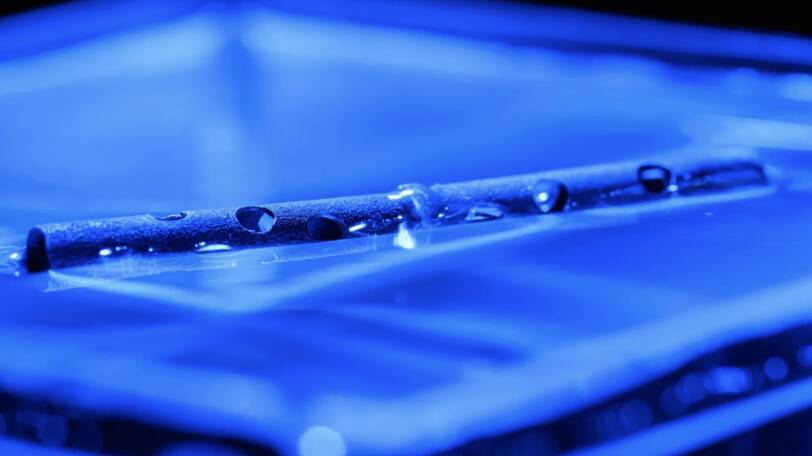
Scientists develop metal tubes that could enable unsinkable ships
The concept of unsinkable ships has long been a topic of interest in the maritime industry, with many attempts to create vessels that can withstand even the most extreme conditions. While some have come close, none have been able to fully achieve this goal. However, a recent breakthrough by scientists may change this narrative. By developing a highly buoyant metal tube structure, researchers have taken a significant step towards creating ships that can stay afloat even in the most adverse situations.
The innovative technology involves processing aluminium to create a unique tube structure that can float even when submerged for extended periods or damaged with holes. The key to this breakthrough lies in the addition of nanometer-scale grooves to the aluminium tubes, making them superhydrophobic. This characteristic allows the tubes to stably maintain air bubbles on their inner surface, effectively reducing the density of the metal and enabling it to float.
The idea of using metal tubes to create unsinkable ships may seem counterintuitive, as metals are typically denser than water and would be expected to sink. However, the researchers’ clever use of nanotechnology has allowed them to overcome this limitation. By creating a superhydrophobic surface, the aluminium tubes are able to repel water and maintain a layer of air bubbles, which provides the necessary buoyancy to keep the metal afloat.
The potential applications of this technology are vast and exciting. The most obvious use case is in the creation of unsinkable ships, which could revolutionize the maritime industry. No longer would vessels be at risk of sinking due to damage or adverse weather conditions, saving countless lives and reducing the economic impact of maritime disasters. Additionally, this technology could also be used to create floating structures, such as offshore platforms or even entire cities, that could provide a sustainable and safe living environment for people.
The development of this technology is also a testament to the power of interdisciplinary research. By combining materials science, nanotechnology, and engineering, the researchers were able to create a truly innovative solution to a long-standing problem. This approach highlights the importance of collaboration and knowledge-sharing between different fields of study, as it can often lead to breakthroughs that might not have been possible otherwise.
Furthermore, the use of aluminium as the primary material in this technology is also significant. Aluminium is a widely available and relatively inexpensive metal, making it an attractive choice for large-scale applications. Additionally, aluminium is also a highly recyclable material, which reduces the environmental impact of this technology and makes it a more sustainable option.
While this technology is still in its early stages, the potential benefits are undeniable. The creation of unsinkable ships could have a significant impact on the maritime industry, saving lives and reducing economic losses. Moreover, the use of this technology in other applications, such as floating structures, could provide a sustainable and safe living environment for people.
In conclusion, the development of metal tubes that can enable unsinkable ships is a groundbreaking achievement that has the potential to revolutionize the maritime industry. By using nanotechnology to create a superhydrophobic surface, researchers have been able to overcome the limitations of traditional metals and create a highly buoyant structure that can float even in the most adverse conditions. As this technology continues to evolve, it will be exciting to see the impact it has on the world and the many potential applications it may have.
The future of maritime transportation and exploration may be about to change forever, thanks to the innovative work of these scientists. As we look to the future, it will be interesting to see how this technology is developed and implemented, and the many benefits it may bring to society.
For more information on this groundbreaking research, please visit: https://www.sciencedaily.com/releases/2026/01/260130041105.htm
About the Author