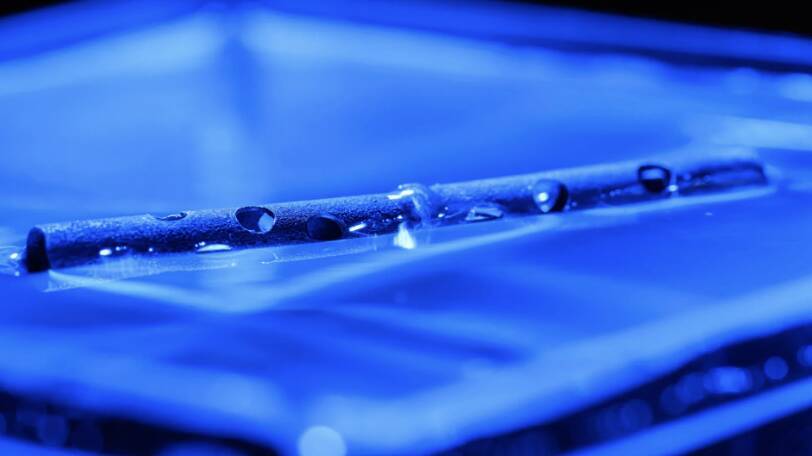
Scientists develop metal tubes that could enable unsinkable ships
The concept of unsinkable ships has long been a topic of fascination and debate among naval architects, engineers, and scientists. While the idea of a ship that can withstand any amount of damage and remain afloat may seem like the stuff of science fiction, a team of researchers has made a groundbreaking discovery that could make this vision a reality. By developing a highly buoyant metal tube structure, scientists have created a material that can float even when submerged for long periods or damaged with holes. This innovative technology has the potential to revolutionize the maritime industry and pave the way for the creation of unsinkable ships.
The breakthrough was achieved by processing aluminium, a metal that is commonly used in shipbuilding due to its high strength-to-weight ratio, corrosion resistance, and affordability. However, aluminium is not typically known for its buoyancy, which is a critical factor in the development of unsinkable ships. To overcome this limitation, the researchers added nanometer-scale grooves to aluminium tubes, making them superhydrophobic. This means that the surface of the metal tubes is extremely resistant to water, causing it to bead up and roll off easily.
The addition of nanometer-scale grooves to the aluminium tubes had a profound effect on their buoyancy. When submerged in water, the tubes were able to stably maintain air bubbles on their inner surface, which helped to reduce their overall density and increase their buoyancy. This phenomenon is known as the “lotus effect,” named after the lotus leaf, which has a similar self-cleaning and water-repelling property.
The researchers conducted a series of experiments to test the buoyancy of the metal tubes under various conditions. They found that the tubes were able to float even when submerged for long periods, and they remained afloat even when damaged with holes. This is a critical factor in the development of unsinkable ships, as it would allow them to withstand damage from collisions, explosions, or other catastrophic events.
The potential applications of this technology are vast and far-reaching. Unsinkable ships could be used for a variety of purposes, including naval vessels, cargo ships, and passenger liners. They could also be used in offshore oil and gas platforms, where the risk of sinking or damage is particularly high. Additionally, the technology could be used in the development of amphibious vehicles, such as hovercraft or landing craft, which could be used for military or civilian purposes.
The development of unsinkable ships could also have a significant impact on the environment. By reducing the risk of sinking or damage, ships could be designed to be more fuel-efficient and environmentally friendly. This could be achieved by using lighter materials, optimizing hull design, and reducing the amount of ballast water required. Additionally, unsinkable ships could be used to transport hazardous materials, such as oil or chemicals, with reduced risk of spillage or leakage.
While the development of unsinkable ships is still in its infancy, the potential benefits are enormous. The technology could save lives, reduce environmental damage, and increase the efficiency and safety of maritime transportation. As researchers continue to develop and refine this technology, we can expect to see significant advancements in the field of naval architecture and engineering.
In conclusion, the development of metal tubes that can float even when submerged for long periods or damaged with holes is a groundbreaking discovery that could enable the creation of unsinkable ships. By adding nanometer-scale grooves to aluminium tubes, scientists have created a superhydrophobic surface that can stably maintain air bubbles on the inner surface, reducing the overall density and increasing the buoyancy of the metal. This technology has the potential to revolutionize the maritime industry and pave the way for the development of unsinkable ships. As researchers continue to develop and refine this technology, we can expect to see significant advancements in the field of naval architecture and engineering.
News source: https://www.sciencedaily.com/releases/2026/01/260130041105.htm
About the Author