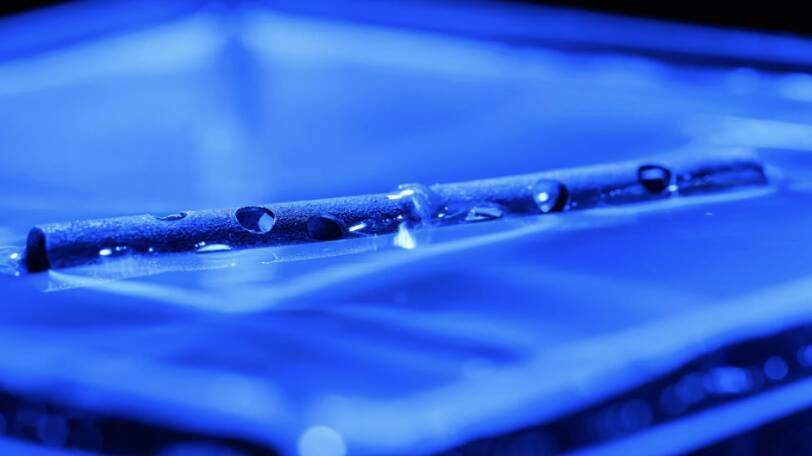
Scientists develop metal tubes that could enable unsinkable ships
The concept of unsinkable ships has long been a topic of fascination and debate among scientists, engineers, and maritime enthusiasts. While we have made significant advancements in shipbuilding technology, the risk of sinking remains a persistent threat, especially in harsh weather conditions or in the event of damage. However, a recent breakthrough in materials science may change the game forever. Scientists have developed a highly buoyant metal tube structure by processing aluminium that can float even when submerged for long periods or damaged with holes. This innovative technology has the potential to revolutionize the shipping industry and make unsinkable ships a reality.
The key to this breakthrough lies in the unique properties of the metal tubes developed by the scientists. By adding nanometer-scale grooves to aluminium tubes, they created a superhydrophobic surface that is able to stably maintain air bubbles on the inner surface. This property allows the tubes to remain buoyant even when submerged in water, making them ideal for use in shipbuilding. The scientists’ innovative approach to processing aluminium has resulted in a material that is not only incredibly lightweight but also exceptionally strong and durable.
The potential applications of this technology are vast and exciting. Imagine a ship that can withstand even the most extreme weather conditions, including hurricanes and tsunamis, without sinking. The development of unsinkable ships could save countless lives, reduce the risk of environmental disasters, and transform the shipping industry as we know it. The economic benefits of such a technology would be substantial, as it would enable ships to operate in a wider range of conditions, reducing the need for costly repairs and maintenance.
But how exactly do these metal tubes work? The secret lies in the nanometer-scale grooves that are etched into the surface of the aluminium tubes. These grooves create a unique texture that repels water, allowing air bubbles to form and remain stable on the inner surface of the tube. This property, known as superhydrophobicity, is the key to the tubes’ buoyancy and makes them ideal for use in underwater applications.
The scientists’ use of nanotechnology to create this superhydrophobic surface is a testament to the power of innovative materials science. By manipulating the properties of materials at the nanoscale, scientists can create materials with unique properties that were previously unimaginable. In this case, the addition of nanometer-scale grooves to the aluminium tubes has resulted in a material that is both incredibly strong and exceptionally buoyant.
The development of unsinkable ships is not just a matter of creating a new type of ship; it also has significant implications for the environment. The risk of oil spills and other environmental disasters is a major concern in the shipping industry, and the development of unsinkable ships could help to mitigate this risk. By reducing the likelihood of ships sinking, we can also reduce the risk of environmental damage and protect our oceans and coastlines.
While the development of unsinkable ships is still in its early stages, the potential benefits are undeniable. The shipping industry is a critical component of the global economy, and any technology that can improve its safety and efficiency is worth exploring. As scientists continue to refine and develop this technology, we can expect to see significant advancements in the coming years.
In conclusion, the development of metal tubes that can enable unsinkable ships is a groundbreaking achievement that has the potential to transform the shipping industry. By creating a superhydrophobic surface on aluminium tubes, scientists have developed a material that is both incredibly strong and exceptionally buoyant. The potential applications of this technology are vast and exciting, and we can expect to see significant advancements in the coming years. As we continue to push the boundaries of materials science and innovation, we may soon see the development of unsinkable ships that can withstand even the most extreme weather conditions.
News source: https://www.sciencedaily.com/releases/2026/01/260130041105.htm
About the Author