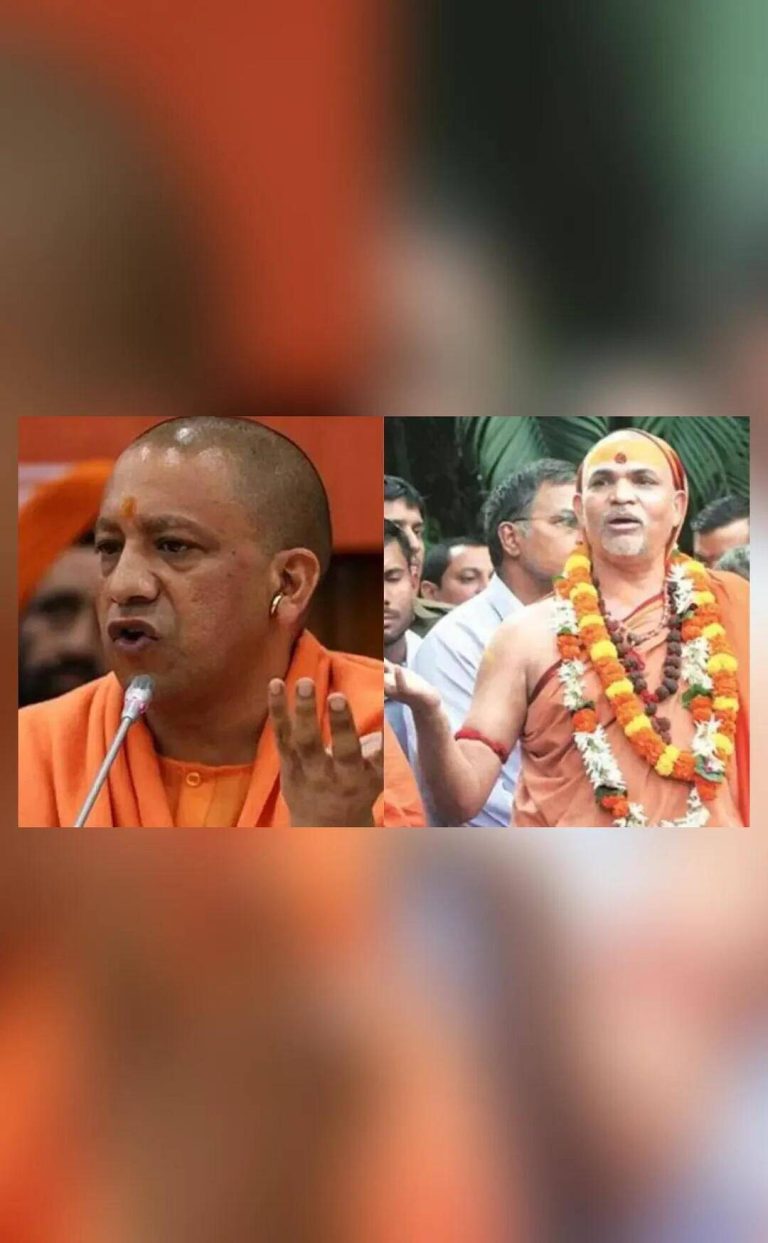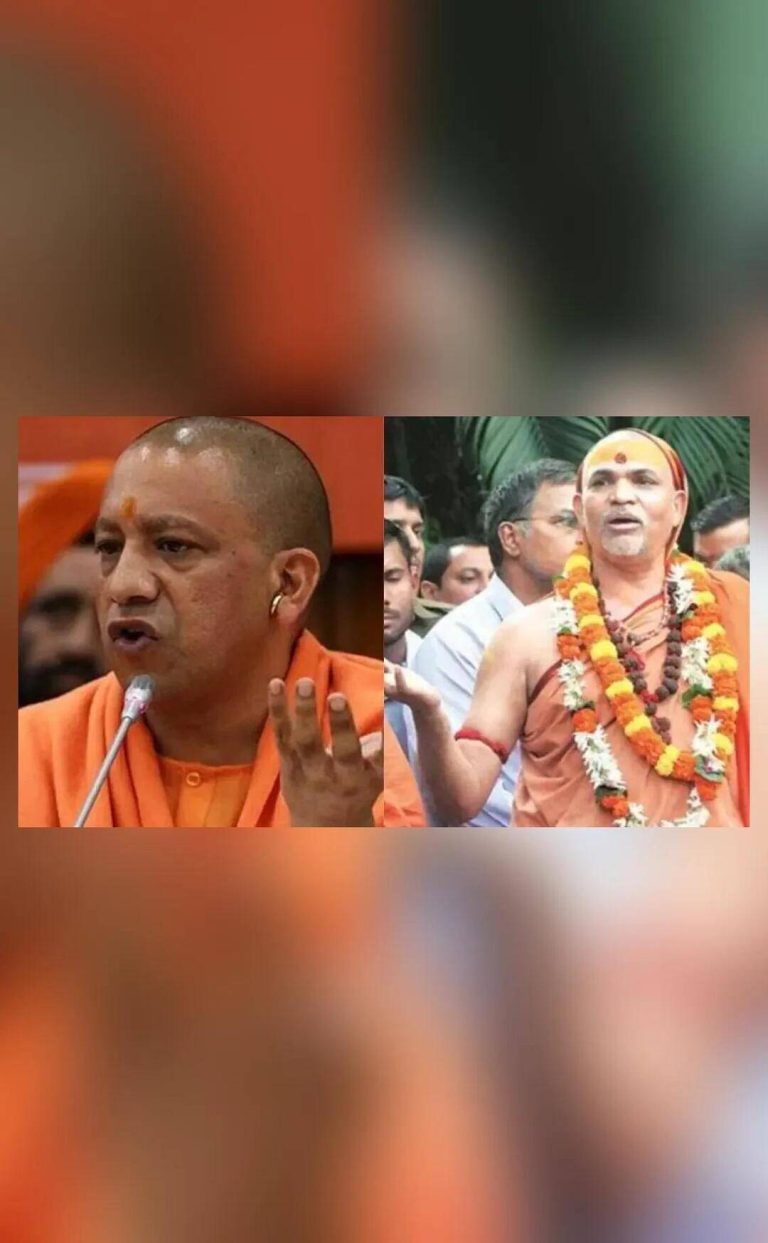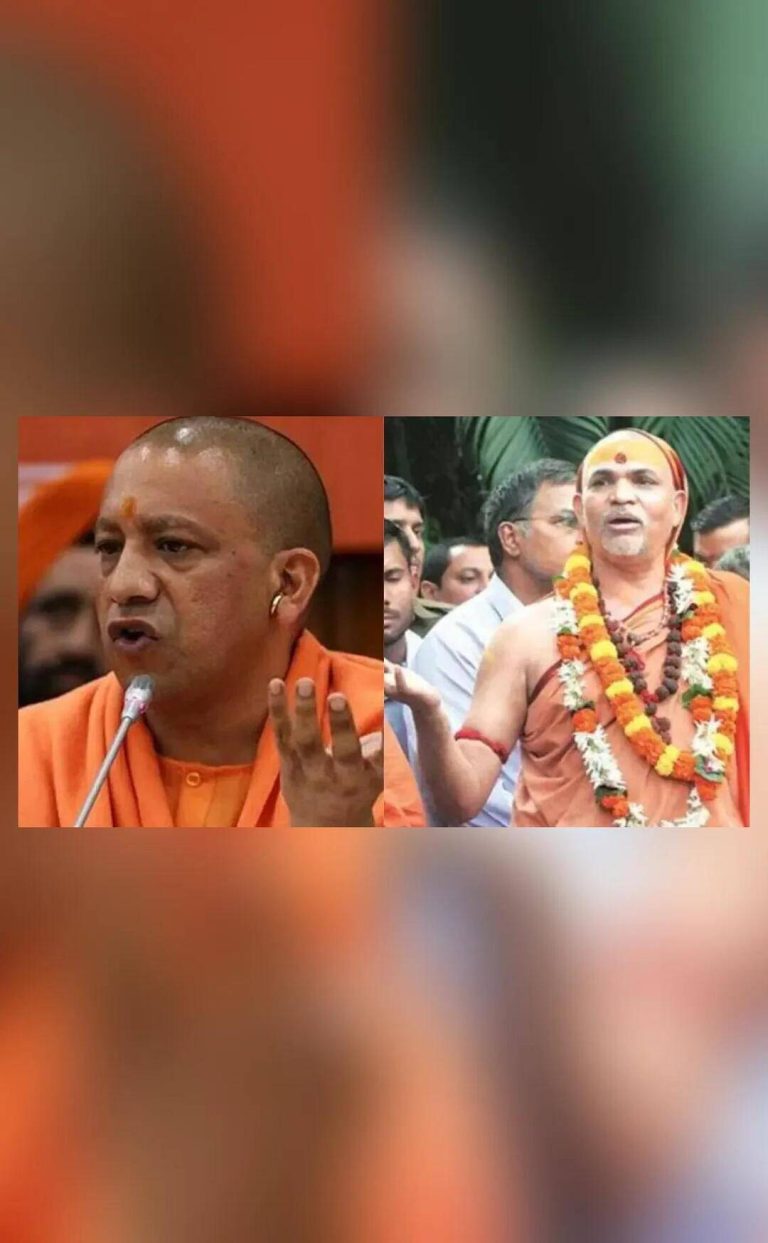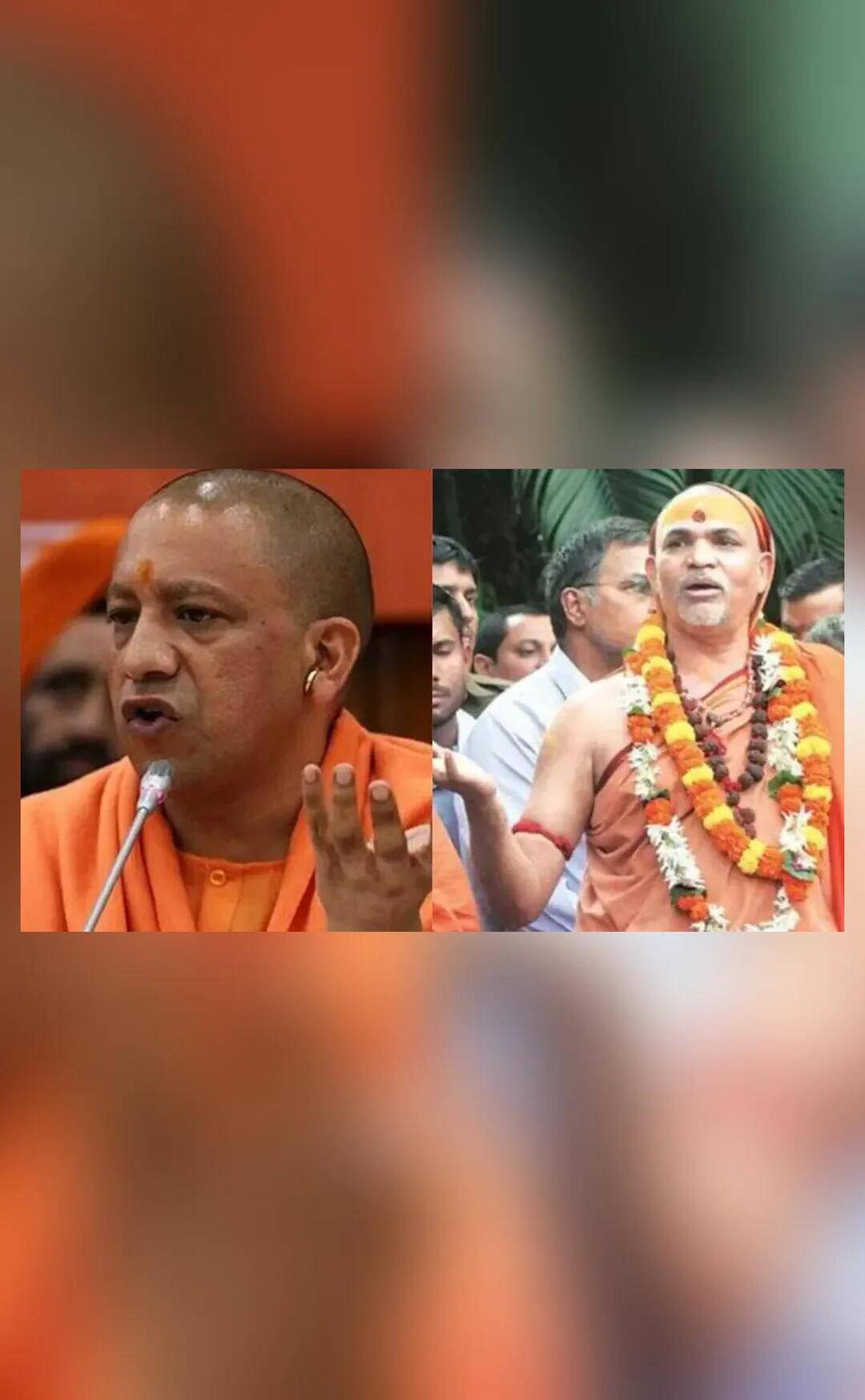
Prove you are Hindu, ban beef export: Shankaracharya to CM Yogi
In a bold and provocative statement, Shankaracharya Swami Avimukteshwaranad Saraswati has given a 40-day “ultimatum” to Uttar Pradesh Chief Minister Yogi Adityanath to prove his commitment to Hindu values. The ultimatum comes with two key demands: halting beef exports from the state of Uttar Pradesh and declaring the cow as ‘Rajya Mata’ (Mother of the State). This move has sparked a significant debate in the country, with many questioning the role of religious leaders in influencing government policies.
The Shankaracharya’s demands come after he returned to his Varanasi math (monastery) following a prolonged protest during the Prayagraj Magh Mela. The protest was sparked by allegations that the administration had stopped him from taking a holy dip in the Ganges River during the festival. The incident has been seen as a confrontation between the spiritual leader and the state government, with the Shankaracharya determined to assert his authority and influence.
At the heart of the Shankaracharya’s demands is the issue of cow protection, a sensitive topic in India where the cow is considered sacred by many Hindus. The demand to ban beef export from Uttar Pradesh is seen as a test of the state government’s commitment to Hindu values and its willingness to take concrete steps to protect the cow. The declaration of the cow as ‘Rajya Mata’ is also symbolic of the reverence and respect that many Hindus have for the animal.
The 40-day ultimatum has been seen as a challenge to the state government, with many wondering how the Chief Minister will respond to the demands. While the government has not yet officially responded to the ultimatum, it is likely that the issue will be debated and discussed in the coming days. The outcome of this debate will have significant implications for the state government and its relationship with the Hindu community.
The role of the Shankaracharya in Indian society is that of a spiritual leader and guide. As the head of a prominent monastery, he is revered by many Hindus who seek his guidance and wisdom. However, his foray into politics and his demands on the state government have raised questions about the separation of religion and politics. While some argue that religious leaders have a right to influence government policies, others see this as an overreach and an attempt to impose religious values on the state.
The issue of beef export is also a complex one, with significant economic implications for the state. Uttar Pradesh is a major producer of beef, and a ban on exports could have a significant impact on the livelihoods of many people involved in the industry. The state government will need to carefully weigh the pros and cons of such a move, considering both the economic and social implications.
In conclusion, the Shankaracharya’s ultimatum to the Uttar Pradesh government has sparked a significant debate in the country. The demands to ban beef export and declare the cow as ‘Rajya Mata’ are seen as a test of the state government’s commitment to Hindu values. While the outcome of this debate is uncertain, one thing is clear: the role of religious leaders in influencing government policies will continue to be a topic of discussion and debate in the coming days.
The incident has also raised questions about the relationship between the state government and the Hindu community. The Chief Minister, Yogi Adityanath, is known for his strong Hindu nationalist credentials, and his response to the Shankaracharya’s demands will be closely watched. The state government will need to balance its commitment to Hindu values with the need to maintain a secular and inclusive approach to governance.
As the 40-day ultimatum comes to an end, all eyes will be on the state government and its response to the Shankaracharya’s demands. Will the government bow to pressure and impose a ban on beef export? Will it declare the cow as ‘Rajya Mata’? Only time will tell. One thing is certain, however: the debate sparked by the Shankaracharya’s ultimatum will continue to shape the discourse on religion, politics, and governance in India.
About the Author