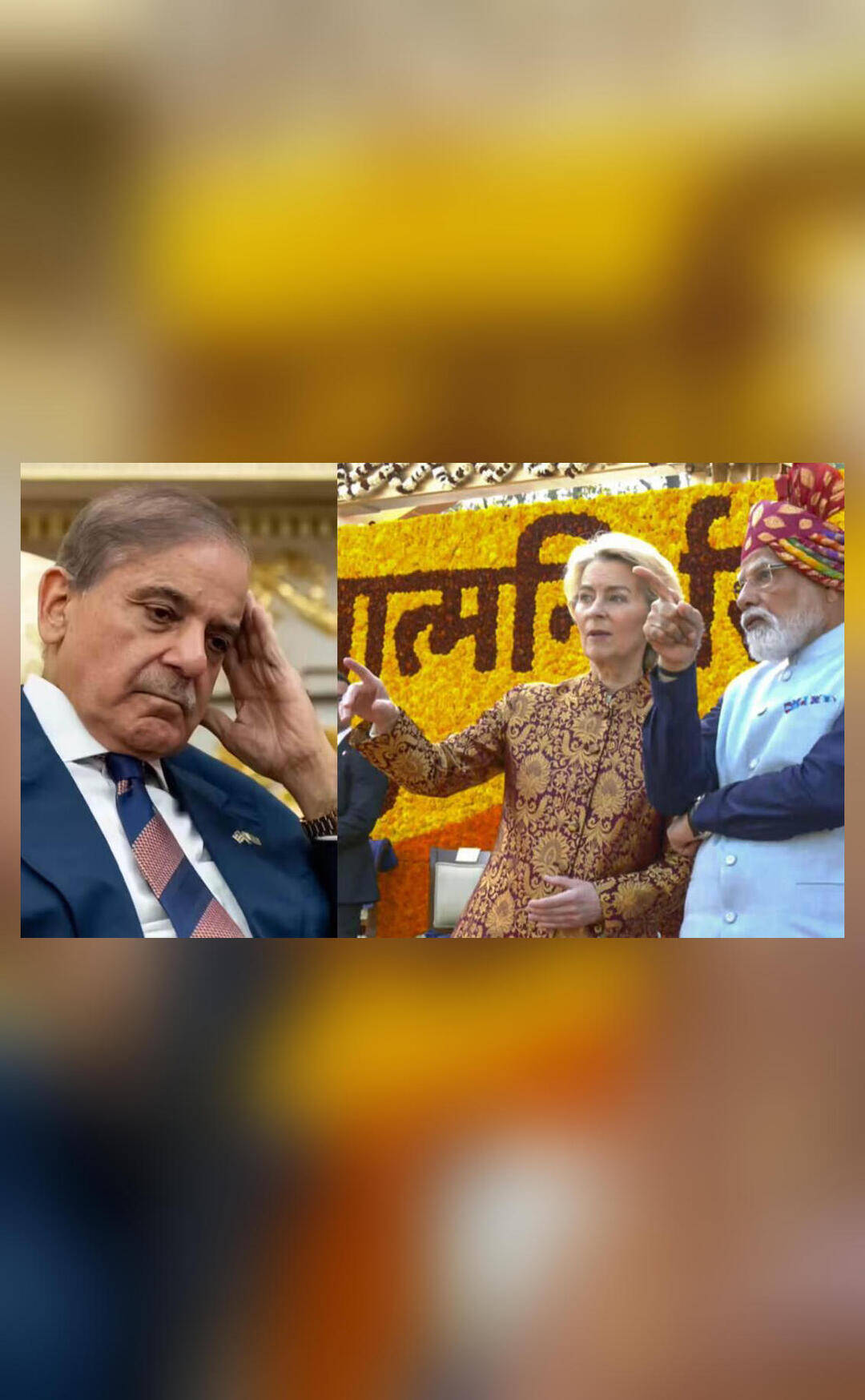
Pakistan releases statement after India and EU announce ‘mother of all trade deals’
In a recent development, India and the European Union (EU) have announced a landmark trade deal, touted as the “mother of all trade deals”. This move has sent ripples across the global trade landscape, with neighboring countries taking notice. Pakistan, in particular, has been keenly observing the situation, given its own trade relations with the EU. In a statement, Pakistan has acknowledged the agreement, emphasizing its long-standing friendly relations with the EU and highlighting the benefits of their existing trade partnership.
The statement from Pakistan noted, “We are aware of this agreement. We have seen reports and as well as the content.” This suggests that Pakistan is closely monitoring the situation and is aware of the potential implications of the India-EU trade deal. Pakistan’s response is measured, and the country is choosing to focus on its own trade relationship with the EU, rather than directly commenting on the India-EU agreement.
Pakistan’s statement went on to emphasize the strong trade ties between Pakistan and the EU, stating, “Pakistan maintains long standing friendly…relations with EU…The EU GSP+ scheme for Pakistan has proven to be a win-win…for bilateral cooperation…The total volume between our two sides stands at €12 billion.” This highlights the significant trade volume between Pakistan and the EU, which has been facilitated by the EU’s Generalized System of Preferences Plus (GSP+) scheme. The GSP+ scheme provides preferential access to the EU market for Pakistani exports, and has been instrumental in boosting trade between the two sides.
The EU’s GSP+ scheme is designed to support developing countries like Pakistan, by providing them with preferential access to the EU market. The scheme allows Pakistani exporters to benefit from reduced tariffs and other trade concessions, making their products more competitive in the EU market. In return, Pakistan is required to implement certain conventions and standards related to human rights, labor rights, and environmental protection.
The total trade volume between Pakistan and the EU stands at an impressive €12 billion, making the EU one of Pakistan’s largest trading partners. The EU is a significant market for Pakistani exports, with products like textiles, leather goods, and agricultural products being major export items. The GSP+ scheme has played a crucial role in promoting Pakistani exports to the EU, and has helped to create jobs and stimulate economic growth in Pakistan.
However, the India-EU trade deal has raised concerns in Pakistan about the potential loss of its tariff edge in the EU market. With India and the EU negotiating a free trade agreement (FTA), there are fears that Pakistani exports may become less competitive in the EU market. The FTA is expected to reduce tariffs and other trade barriers between India and the EU, making Indian exports more competitive.
To safeguard its exports, Pakistan is engaging with the EU to protect its trade interests. According to reports, Pakistan is seeking assurances from the EU that its existing trade preferences will be maintained, even if the India-EU FTA is implemented. Pakistan is also exploring other options, such as negotiating its own FTA with the EU, to ensure that its trade relations with the EU remain strong.
In conclusion, Pakistan’s statement on the India-EU trade deal highlights the country’s awareness of the situation and its commitment to maintaining strong trade ties with the EU. The EU’s GSP+ scheme has been a significant factor in promoting Pakistani exports to the EU, and Pakistan is keen to ensure that its trade preferences are protected. As the India-EU FTA negotiations progress, Pakistan will be closely watching the situation, seeking to safeguard its trade interests and maintain its competitive edge in the EU market.
About the Author