Social beliefs drive rural water adoption: Study
Access to clean drinking water is a fundamental human right, yet millions of people in rural India still lack this basic necessity. The Indian government has implemented various initiatives to improve access to safe drinking water, including the installation of community water purification systems. However, the adoption of these systems has been inconsistent, with some communities embracing them wholeheartedly while others have been more resistant. New research has shed light on the factors that influence the adoption of household water purification systems in rural India, and the findings are surprising.
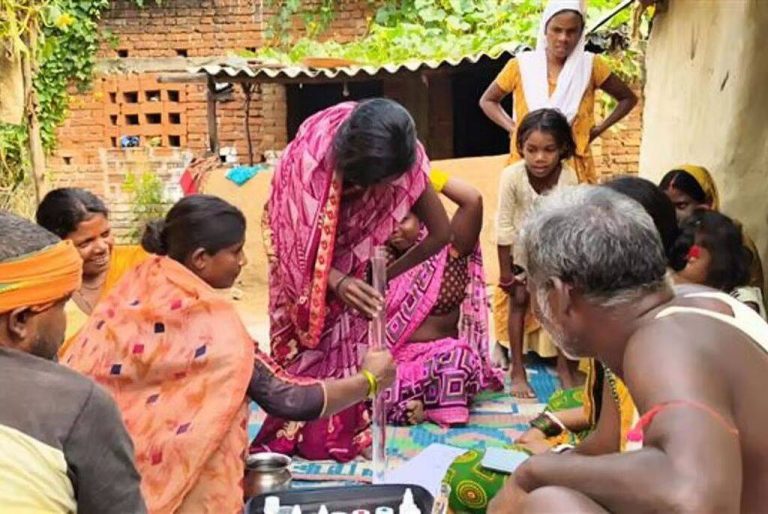
According to the study, the adoption of household water purification systems in rural India depends more on social trust and collective norms than infrastructure access. Communities with stronger peer influence and shared beliefs reported higher uptake of low-cost purification methods. This suggests that water programs must align with local social dynamics in order to be successful.
The study found that social beliefs and norms play a significant role in shaping the adoption of water purification systems. In communities where there is a strong sense of social trust and collective responsibility, people are more likely to adopt and use water purification systems. This is because social trust and collective norms create an environment where individuals feel more comfortable adopting new technologies and practices.
On the other hand, communities with weaker social bonds and less collective responsibility tend to have lower adoption rates. This is because individuals in these communities may be more skeptical of new technologies and practices, and may be less likely to trust their neighbors and community leaders.
The study also found that the influence of social norms and trust can be seen in the way that communities respond to water purification systems. In communities where social norms and trust are strong, people are more likely to share information and knowledge about water purification systems, and to encourage their neighbors to adopt them. This creates a positive feedback loop, where the adoption of water purification systems becomes a self-reinforcing phenomenon.
In contrast, communities with weaker social norms and trust may experience a negative feedback loop, where skepticism and mistrust of water purification systems become self-reinforcing. This can make it much harder for water programs to gain traction, and can limit the effectiveness of interventions aimed at improving access to safe drinking water.
The findings of this study have important implications for water programs and policies in rural India. They suggest that simply providing access to water purification systems is not enough to ensure their adoption and use. Instead, water programs must also take into account the social dynamics of the communities they are serving, and work to build trust and social norms that support the adoption of water purification systems.
This can involve working with community leaders and influencers to promote the benefits of water purification systems, and to build a sense of collective responsibility for maintaining and using these systems. It can also involve providing education and training on the proper use and maintenance of water purification systems, and creating incentives for communities to adopt and use these systems.
Ultimately, the study suggests that improving access to safe drinking water in rural India will require a nuanced and multifaceted approach that takes into account the complex social dynamics of the communities being served. By aligning water programs with local social norms and trust, it may be possible to increase the adoption and use of water purification systems, and to improve the health and well-being of millions of people in rural India.
The study’s findings are also consistent with other research on the importance of social norms and trust in shaping behavior and decision-making. This research has shown that social norms and trust can have a powerful influence on a wide range of behaviors, from energy consumption and conservation to health and hygiene practices.
In the context of water purification systems, social norms and trust can play a critical role in shaping adoption and use. By understanding the social dynamics of the communities being served, water programs can design more effective interventions that take into account the complex social factors that influence behavior and decision-making.
In conclusion, the adoption of household water purification systems in rural India is a complex phenomenon that is influenced by a range of social, cultural, and economic factors. The study’s findings suggest that social trust and collective norms play a critical role in shaping the adoption of these systems, and that water programs must align with local social dynamics in order to be successful.
By taking into account the social norms and trust that shape behavior and decision-making, water programs can increase the adoption and use of water purification systems, and improve the health and well-being of millions of people in rural India.
About the Author