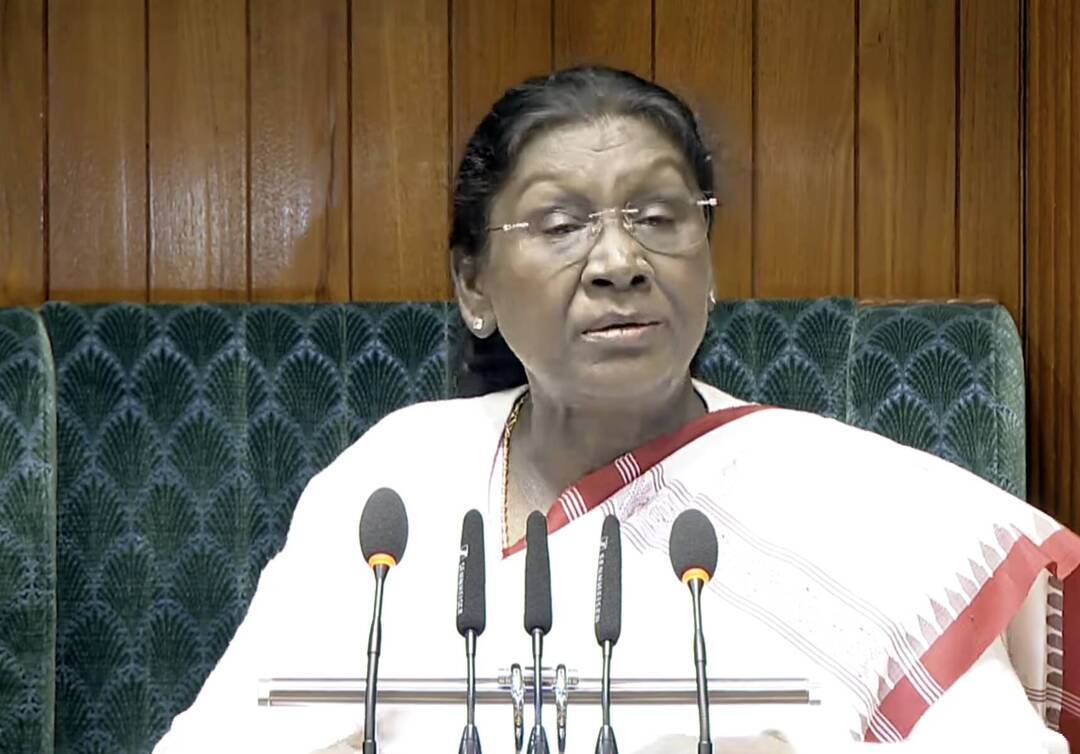
Budget session begins in Parliament, President Murmu notes govt’s achievements
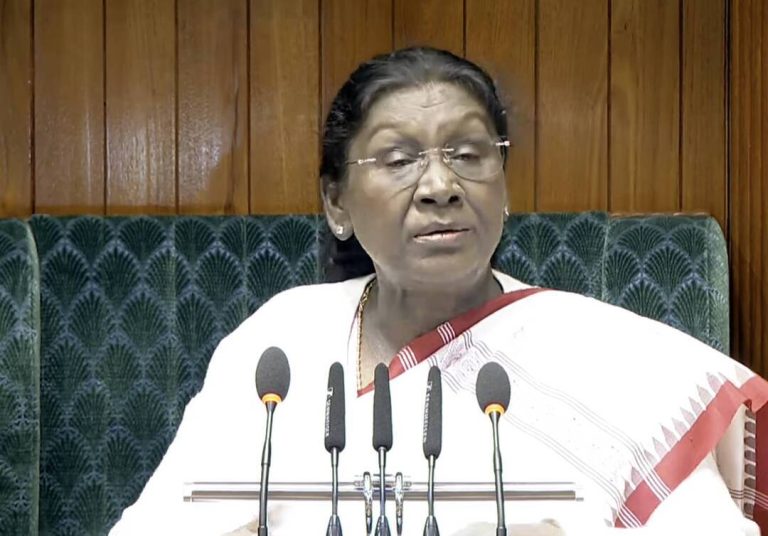
The proceedings of the Budget session for 2026 have begun in the Indian Parliament, marking the start of a crucial period in the country’s legislative calendar. The session commenced with a joint sitting of both Lok Sabha and Rajya Sabha members, where President Droupadi Murmu addressed the gathering. In her speech, President Murmu highlighted the government’s achievements over the past years, showcasing the progress made in various sectors.
One of the significant accomplishments noted by President Murmu was the improvement in road connectivity across the country. She mentioned that every village in India is now connected by roads, facilitating easier access to remote areas and promoting economic development. This achievement is a testament to the government’s efforts to enhance infrastructure and bridge the gap between urban and rural India.
Another notable achievement highlighted by President Murmu was India’s emergence as a significant player in the global electric vehicle (EV) market. She announced that India has started exporting electric vehicles, marking a major milestone in the country’s journey towards becoming a hub for EV manufacturing. This development is expected to boost India’s economy, create new job opportunities, and contribute to the country’s commitment to reducing carbon emissions.
The Budget session, which will continue over the next few weeks, is expected to be a busy period for lawmakers. The government will present the Economic Survey on Thursday, which will provide an overview of the country’s economic performance and outline the challenges and opportunities that lie ahead. The survey is expected to highlight the government’s efforts to promote economic growth, reduce poverty, and improve the overall standard of living in India.
The opposition parties are also expected to raise several key issues during the session, including the implementation of the Mahatma Gandhi National Rural Employment Guarantee Act (MGNREGA) and electoral reforms. The MGNREGA, which aims to provide guaranteed employment to rural laborers, has been a subject of debate in recent years, with many arguing that the scheme needs to be strengthened to address the growing issue of rural unemployment. The opposition parties are likely to press the government to increase funding for the scheme and improve its implementation.
Electoral reforms are another critical issue that is expected to be raised during the session. The opposition parties have been demanding changes to the electoral laws to make the election process more transparent and accountable. They are likely to push for the introduction of electoral bonds, which would allow voters to purchase bonds that can be used to fund political parties. This move is expected to reduce the influence of black money in politics and promote greater transparency in election funding.
The Budget session is also expected to see a heated debate on various other issues, including the government’s handling of the economy, the impact of the COVID-19 pandemic, and the country’s foreign policy. The opposition parties are likely to criticize the government’s policies and demand greater accountability, while the ruling party will seek to defend its record and highlight its achievements.
In conclusion, the Budget session of the Indian Parliament has begun, marking the start of a critical period in the country’s legislative calendar. President Murmu’s address highlighted the government’s achievements in various sectors, including road connectivity and electric vehicle exports. The session is expected to be a busy period for lawmakers, with the presentation of the Economic Survey, debates on key issues, and a heated exchange between the ruling and opposition parties. As the session progresses, it will be interesting to see how the government responds to the opposition’s demands and how the country’s legislative landscape evolves.
About the Author