Didn’t feel like watching R-Day parade for 1st time: Wangchuk’s wife
As India celebrated its 74th Republic Day, a sense of patriotism and nationalism filled the air. The traditional Republic Day parade, which is a symbol of the country’s military might, cultural diversity, and democratic values, was watched by millions of Indians across the globe. However, for Gitanjali, the wife of renowned educator and innovator Sonam Wangchuk, this year’s parade was different. For the first time, she didn’t feel motivated to watch the parade, and her reasons are both poignant and thought-provoking.
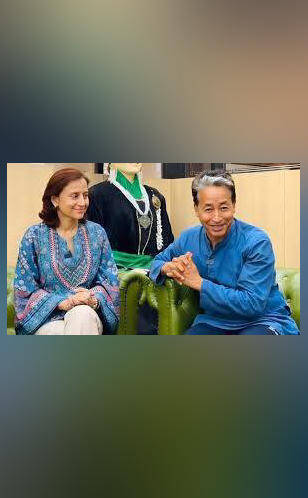
In a recent social media post, Gitanjali expressed her feelings, saying, “I didn’t feel like watching the R-Day parade for the first time. I have never missed watching it, but this time, it’s sad, but I don’t know how much to feel proud of what’s showcased anymore! What to believe and what not to!” Her statement comes at a time when her husband, Sonam Wangchuk, has been in Jodhpur jail since September 2025.
Sonam Wangchuk, the founder of the Students’ Educational and Cultural Movement of Ladakh (SECMOL), has been a vocal advocate for environmental and social causes. His work in promoting sustainable development, education, and cultural preservation has earned him numerous awards and recognition, including the Ramon Magsaysay Award. However, his recent incarceration has raised concerns about the freedom of speech and the treatment of social activists in India.
Gitanjali’s statement reflects the growing sense of disillusionment and skepticism among many Indians who are questioning the values and principles that the Republic Day parade represents. The parade, which is meant to showcase the country’s progress, diversity, and military strength, has become a symbol of the government’s priorities and policies. With the increasing polarization and politicization of various issues, many people are wondering what to believe and what not to, as Gitanjali so eloquently put it.
The Republic Day parade is a grand spectacle that showcases the country’s rich cultural heritage, military might, and technological advancements. However, behind the glittering façade, there are many questions that need to be asked. What about the rights of marginalized communities, the plight of farmers, the state of the environment, and the freedom of speech? Are these values and principles being upheld and protected, or are they being compromised for the sake of political expediency?
Gitanjali’s statement is a reflection of the growing unease and discontent among many Indians who are no longer convinced by the rhetoric and symbolism of the Republic Day parade. They are seeking answers to the many questions that plague the country, and they are demanding accountability from those in power. As the country celebrates its democratic values and principles, it is essential to remember that these values are not just meant to be showcased on a single day but are meant to be upheld and protected every day.
The incarceration of Sonam Wangchuk and the silencing of dissenting voices are a stark reminder of the challenges that India faces in upholding its democratic values. The country’s founding fathers envisioned a nation that would be built on the principles of justice, equality, and freedom. However, the reality on the ground is far from this vision. The increasing polarization, the erosion of institutions, and the suppression of dissenting voices are all threats to the very foundations of India’s democracy.
As Gitanjali so poignantly put it, “What to believe and what not to!” is a question that many Indians are asking themselves. The answer lies in seeking the truth, demanding accountability, and upholding the values and principles that the country’s founding fathers envisioned. The Republic Day parade may be a grand spectacle, but it is essential to look beyond the symbolism and rhetoric to the reality on the ground.
In conclusion, Gitanjali’s statement is a reflection of the growing sense of disillusionment and skepticism among many Indians. The Republic Day parade may be a celebration of the country’s military might, cultural diversity, and democratic values, but it is essential to remember that these values are not just meant to be showcased on a single day. They are meant to be upheld and protected every day, and it is the responsibility of every citizen to demand accountability from those in power and to seek the truth.
News source: https://x.com/GitanjaliAngmo/status/2015790605637747092
About the Author