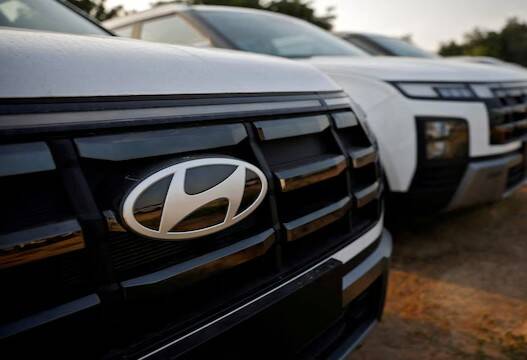
Hyundai Stock Falls 4% After Trump Imposes 25% Tariff on S-Korea
The global trade landscape has been witnessing significant fluctuations in recent times, with various countries imposing tariffs on each other’s goods. The latest development in this regard is the imposition of a 25% tariff on South Korea by the United States, led by President Donald Trump. This move has sent shockwaves across the Asian nation, with one of its biggest automobile companies, Hyundai, bearing the brunt.
On Tuesday, the shares of Hyundai witnessed a sharp decline, falling as much as 4.77% according to CNBC TV18. This drastic drop in the stock price can be directly attributed to the uncertainty and fear that has gripped the market following Trump’s announcement. The subsidiary of Hyundai, Kia, also did not escape the wrath of the market, with its stock prices dropping nearly 3.5%. The affiliated company, Hyundai Mobis, suffered an even bigger loss, with its stock prices plummeting 5%.
The imposition of a 25% tariff on South Korean goods is expected to have far-reaching consequences for the country’s economy, particularly its automobile and pharmaceutical industries. Hyundai, being one of the largest automobile manufacturers in South Korea, is likely to be severely impacted by this move. The company exports a significant portion of its vehicles to the United States, and the increased tariff will make its products more expensive for American consumers. This, in turn, is expected to lead to a decline in sales and revenue for the company.
The news of the tariff imposition sent the stock market into a frenzy, with investors scrambling to sell off their shares in Hyundai and other affected companies. The decline in stock prices can be seen as a knee-jerk reaction to the uncertainty and fear that has gripped the market. However, it remains to be seen how the company will respond to this challenge and what measures it will take to mitigate the impact of the tariff on its business.
The implications of the tariff imposition go beyond just Hyundai and the automobile industry. The move is expected to have a ripple effect on the entire South Korean economy, with other industries such as electronics and textiles also likely to be impacted. The country’s exports to the United States are expected to decline, leading to a slowdown in economic growth and a potential rise in unemployment.
The trade tensions between the United States and South Korea have been escalating in recent times, with both countries engaging in a war of words over trade policies. The imposition of the 25% tariff on South Korean goods is seen as a significant escalation of this trade war, and it remains to be seen how the situation will unfold in the coming days.
In a statement, Hyundai said that it is closely monitoring the situation and is working to minimize the impact of the tariff on its business. The company has also expressed its hope that the two countries will be able to resolve their trade differences and find a mutually beneficial solution.
The decline in Hyundai’s stock price is a clear indication of the market’s sentiment towards the company’s prospects in the wake of the tariff imposition. However, it is worth noting that the long-term impact of the tariff on the company’s business remains to be seen. Hyundai has a strong presence in the global automobile market, and it is likely to take measures to mitigate the impact of the tariff on its sales and revenue.
In conclusion, the imposition of a 25% tariff on South Korean goods by the United States has sent shockwaves across the Asian nation, with Hyundai being one of the biggest casualties. The decline in the company’s stock price is a clear indication of the market’s sentiment towards its prospects, and it remains to be seen how the company will respond to this challenge. As the trade tensions between the two countries continue to escalate, it is likely that the situation will unfold in a complex and unpredictable manner.
About the Author