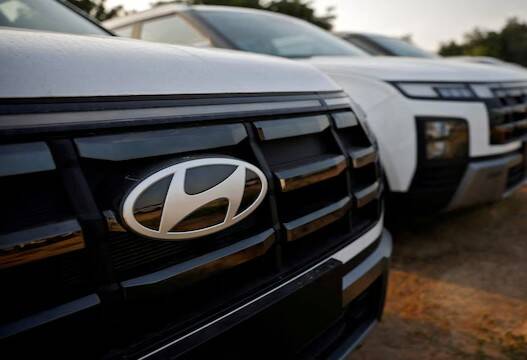
Hyundai Stock Falls 4% After Trump Imposes 25% Tariff on S-Korea
The global trade landscape has been witnessing significant shifts in recent times, with protectionist policies and tariffs being imposed by major economies. The latest development in this regard is the imposition of a 25% tariff on South Korea by the United States, under the presidency of Donald Trump. This move has sent shockwaves across the business world, particularly in the automotive sector, where Hyundai, one of the biggest automobile companies in South Korea, has been significantly impacted.
On Tuesday, the shares of Hyundai saw a sharp decline, falling as much as 4.77%, according to CNBC TV18. This downward trend was also reflected in the stock prices of its subsidiary Kia, which dropped nearly 3.5%, and the affiliated Hyundai Mobis, which was down 5%. The decline in the stock prices of these companies is a direct result of the uncertainty and fear that has gripped the market, following the imposition of the 25% tariff on South Korean goods.
The tariffs imposed by the Trump administration are aimed at protecting the domestic industries of the United States, particularly in the automotive and pharmaceutical sectors. However, this move is likely to have far-reaching consequences, not only for the companies directly affected but also for the global economy as a whole. The tariffs are expected to increase the cost of imports from South Korea, making them less competitive in the US market. This, in turn, could lead to a decline in sales and revenue for companies like Hyundai, which has a significant presence in the US market.
Hyundai is one of the largest automobile manufacturers in the world, with a significant presence in the global market. The company has a diverse range of products, including passenger cars, commercial vehicles, and automotive parts. Its subsidiary Kia is also a well-known brand, with a significant presence in the global market. The imposition of the 25% tariff on South Korean goods is likely to affect the competitiveness of these companies in the US market, which could have a significant impact on their sales and revenue.
The decline in the stock prices of Hyundai and its affiliates is a reflection of the uncertainty and fear that has gripped the market. Investors are concerned about the potential impact of the tariffs on the company’s sales and revenue, which could lead to a decline in its profitability. The company’s management has not yet commented on the impact of the tariffs, but it is likely that they will be closely monitoring the situation and exploring options to mitigate the effects of the tariffs.
The imposition of the 25% tariff on South Korean goods is not only a concern for Hyundai and its affiliates but also for the broader automotive industry. The tariffs are likely to increase the cost of imports from South Korea, making them less competitive in the US market. This could lead to a decline in sales and revenue for other automobile manufacturers that import vehicles and parts from South Korea.
The impact of the tariffs is not limited to the automotive industry. The pharmaceutical industry is also likely to be affected, as the US is a significant market for South Korean pharmaceutical companies. The tariffs could increase the cost of imports from South Korea, making them less competitive in the US market. This could lead to a decline in sales and revenue for pharmaceutical companies, which could have a significant impact on their profitability.
In conclusion, the imposition of the 25% tariff on South Korean goods by the Trump administration has sent shockwaves across the business world, particularly in the automotive sector. The decline in the stock prices of Hyundai and its affiliates is a reflection of the uncertainty and fear that has gripped the market. The tariffs are likely to have far-reaching consequences, not only for the companies directly affected but also for the global economy as a whole. As the situation continues to unfold, it will be interesting to see how companies like Hyundai respond to the challenges posed by the tariffs and how the global trade landscape evolves in the coming months.
About the Author