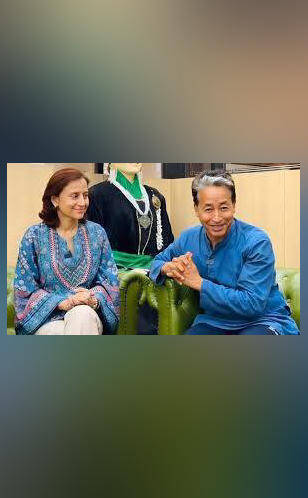
Didn’t feel like watching R-Day parade for 1st time: Wangchuk’s wife
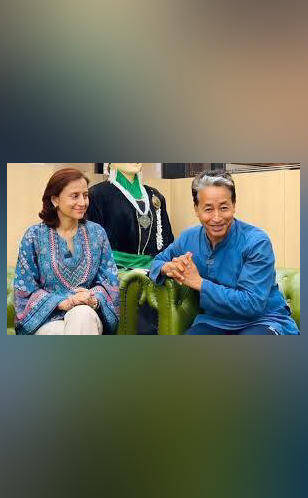
As India celebrated its 74th Republic Day on January 26, a sense of patriotism and nationalism filled the air. The annual Republic Day parade, which showcases the country’s military might, cultural diversity, and technological advancements, is an event that many Indians look forward to watching. However, for Gitanjali, the wife of renowned educationist and innovator Sonam Wangchuk, this year’s parade was different. For the first time, she didn’t feel motivated to watch the parade, and her reasons are both poignant and thought-provoking.
Gitanjali, who has always been an enthusiastic viewer of the Republic Day parade, expressed her sentiments on social media, stating that she didn’t feel like watching the parade this year. She mentioned that she had never missed watching the parade before, but this time, she felt a sense of disillusionment and disconnection. “It’s sad, but I don’t know how much to feel proud of what’s showcased anymore! What to believe and what not to!” she wrote, highlighting the confusion and uncertainty that many Indians are feeling today.
Gitanjali’s feelings are closely tied to the current situation of her husband, Sonam Wangchuk, who has been in Jodhpur jail since September 2025. Wangchuk, who is known for his innovative approaches to education and his work in the field of sustainable development, was arrested and detained without any clear charges or explanations. The lack of transparency and accountability in his case has raised many questions about the state of democracy and freedom in India.
As Gitanjali’s statement suggests, the Republic Day parade, which is meant to be a celebration of India’s democratic values and institutions, has become a reminder of the contradictions and challenges that the country is facing. The parade’s showcase of military might and technological advancements is juxtaposed with the reality of political repression, censorship, and human rights violations. The event, which is meant to inspire patriotism and national pride, has become a symbol of the disconnect between the government’s rhetoric and the people’s experiences.
Gitanjali’s feelings are not isolated, and many Indians are echoing her sentiments. The current political climate, marked by increasing polarization, intolerance, and authoritarianism, has created a sense of disillusionment and disaffection among many citizens. The erosion of democratic institutions, the suppression of dissenting voices, and the marginalization of minority communities have all contributed to a sense of unease and uncertainty.
In this context, the Republic Day parade, which is meant to be a celebration of India’s democratic values, has become a reminder of the gaps between the country’s ideals and its realities. The event’s emphasis on military might and national security is juxtaposed with the neglect of social welfare, education, and healthcare. The parade’s showcase of cultural diversity is contrasted with the rising tide of communalism and xenophobia.
As Gitanjali’s statement highlights, the Republic Day parade has become a complex and contested event, which reflects the contradictions and challenges of modern India. While it is meant to be a celebration of national pride and unity, it has become a symbol of the divisions and disparities that exist within the country. The event’s meaning and significance are being reinterpreted and reevaluated by citizens, who are questioning the values and principles that it represents.
In conclusion, Gitanjali’s statement about not feeling motivated to watch the Republic Day parade is a poignant reflection of the sentiments of many Indians. The current political climate, marked by increasing authoritarianism and repression, has created a sense of disillusionment and disaffection among citizens. The Republic Day parade, which is meant to be a celebration of India’s democratic values, has become a reminder of the gaps between the country’s ideals and its realities. As India continues to navigate the complexities and challenges of modernity, it is essential to reexamine the values and principles that underpin its democratic institutions and to work towards creating a more just, equitable, and inclusive society.
News source: https://x.com/GitanjaliAngmo/status/2015790605637747092
About the Author