Pits, Pores, and more: The science behind India’s newest mushrooms
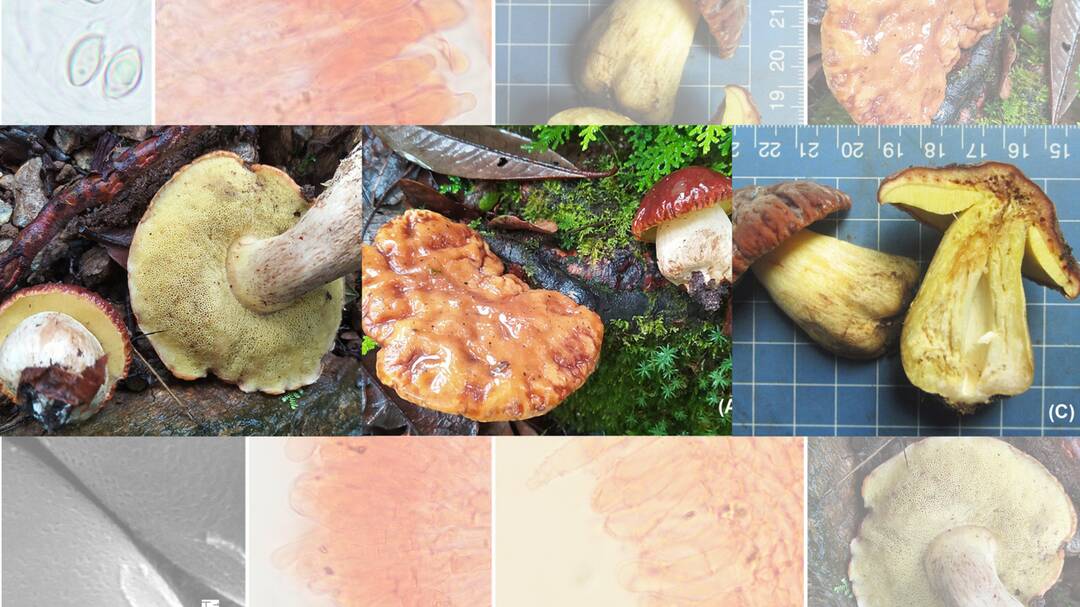
The world of mycology, the study of fungi, is a vast and wondrous place, full of mysteries waiting to be unraveled. In a recent breakthrough, researchers at St. Xavier’s College, Jharkhand, have identified a new species of mushroom, Hemileccinum indicum, in the oak forests of Uttarakhand, India. This discovery is significant not only because it marks the first time this genus has been recorded in India but also due to the unique characteristics of the mushroom’s spores.
The research team, using cutting-edge techniques such as DNA sequencing and electron microscopy, was able to identify the distinctive “pitted” spores of the Hemileccinum indicum. These spores, which are the reproductive units of the mushroom, are covered in small pits or pores, giving them a unique appearance under the microscope. This characteristic is not only aesthetically interesting but also provides valuable clues about the evolutionary history and relationships of this mushroom species.
The discovery of Hemileccinum indicum was made at an altitude of 2,600 meters, in the picturesque oak forests of Uttarakhand. This region, known for its rich biodiversity, is home to a wide range of plant and animal species, many of which are found nowhere else in the world. The fact that this new species of mushroom was found in this region highlights the importance of preserving and protecting these ecosystems, which are still largely unexplored and understudied.
The use of DNA sequencing in the identification of Hemileccinum indicum is a testament to the power of modern technology in advancing our understanding of the natural world. By analyzing the genetic material of the mushroom, researchers were able to determine its relationships to other species and gain insights into its evolutionary history. This information can be used to inform conservation efforts and to better understand the complex interactions between different species in an ecosystem.
Electron microscopy, another technique used in the study, allowed researchers to visualize the unique structure of the mushroom’s spores in exquisite detail. This level of resolution is essential for identifying the characteristic pits or pores that cover the surface of the spores. The combination of DNA sequencing and electron microscopy provides a powerful toolkit for mycologists, enabling them to study fungi in unprecedented detail and to make new discoveries that expand our knowledge of these fascinating organisms.
The discovery of Hemileccinum indicum is not only significant for the field of mycology but also has broader implications for our understanding of the natural world. Fungi, including mushrooms, play a crucial role in many ecosystems, serving as decomposers, symbionts, and food sources for other organisms. By studying these organisms, we can gain a deeper appreciation for the complex interactions that occur in nature and the importance of preserving biodiversity.
In addition to its scientific significance, the discovery of Hemileccinum indicum also highlights the importance of exploration and discovery in the natural world. There are still many regions of the world that are unexplored, and many species that remain undescribed. By continuing to explore and study these regions, we can gain a deeper understanding of the world around us and make new discoveries that can inform conservation efforts and advance our knowledge of the natural world.
In conclusion, the discovery of Hemileccinum indicum is an exciting development in the field of mycology, highlighting the power of modern technology and the importance of preserving and protecting biodiversity. As we continue to explore and study the natural world, we can expect to make many more discoveries that expand our knowledge of the world around us and inform our efforts to conserve and protect the natural world.
For more information on this discovery, please visit: https://researchmatters.in/news/new-pitted-spore-mushroom-found-himalayas-oak-forests-uttarakhand
The discovery of Hemileccinum indicum is a testament to the fact that there is still much to be learned about the natural world, and that continued exploration and study are essential for advancing our knowledge and understanding of the world around us. As we look to the future, it is exciting to think about the many discoveries that await us, and the ways in which they will inform our efforts to conserve and protect the natural world.
The significance of this discovery extends beyond the scientific community, as it highlights the importance of preserving and protecting our natural heritage. The oak forests of Uttarakhand, where Hemileccinum indicum was found, are a treasure trove of biodiversity, and it is essential that we take steps to conserve and protect these ecosystems for future generations.
In the end, the discovery of Hemileccinum indicum is a reminder that the natural world is full of wonders and surprises, and that there is always more to learn and discover. As we continue to explore and study the world around us, we can expect to make many more exciting discoveries that will advance our knowledge and understanding of the natural world.
Source:
https://researchmatters.in/news/new-pitted-spore-mushroom-found-himalayas-oak-forests-uttarakhand
About the Author