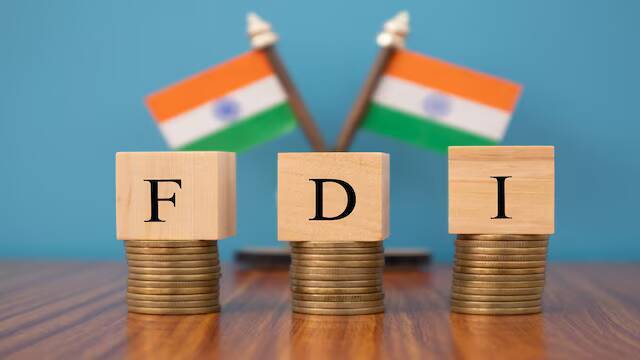
FDI inflows to India surge by 73% to $47 billion in 2025
The Indian economy has witnessed a significant boost in Foreign Direct Investment (FDI) inflows, with a staggering 73% increase to $47 billion in 2025, according to a report by the United Nations Trade and Development. This remarkable growth is a testament to India’s growing appeal as a preferred investment destination for foreign investors. The surge in FDI inflows is primarily driven by large investments in services such as finance and IT, as well as manufacturing.
The report highlights that India has emerged as a favorable destination for foreign investors, with the country’s FDI inflows increasing by 73% to $47 billion in 2025. This significant increase is a result of the government’s efforts to improve the business environment, simplify regulatory frameworks, and introduce policies that encourage foreign investment. The growth in FDI inflows is expected to have a positive impact on the Indian economy, contributing to job creation, technology transfer, and overall economic growth.
The services sector, including finance and IT, has been a major driver of FDI inflows to India. The country’s IT industry, in particular, has been a significant attractor of foreign investment, with many global companies setting up their operations in India. The finance sector has also witnessed significant investment, with foreign investors showing interest in India’s growing financial markets. The government’s initiatives to promote digital payments, financial inclusion, and ease of doing business have contributed to the growth of the services sector.
Manufacturing has also been a key sector for FDI inflows, with many foreign companies setting up their manufacturing units in India. The government’s “Make in India” initiative, launched in 2014, has been instrumental in promoting India as a manufacturing hub. The initiative aims to increase the share of manufacturing in India’s GDP to 25% by 2025 and create 100 million new jobs. The growth in manufacturing has been driven by investments in sectors such as automotive, pharmaceuticals, and textiles.
In contrast, FDI inflows to China declined for the third consecutive year, falling by 8%. This decline is attributed to various factors, including the ongoing trade tensions between the US and China, as well as the COVID-19 pandemic. The decline in FDI inflows to China has resulted in India emerging as a more attractive destination for foreign investors.
The growth in FDI inflows to India is expected to have a positive impact on the country’s economy. FDI is a key driver of economic growth, as it brings in new technologies, management practices, and capital. It also contributes to job creation, both directly and indirectly, and helps to increase the competitiveness of Indian industries. The government’s efforts to improve the business environment and promote foreign investment are expected to continue, with the aim of making India a top destination for FDI.
The UN report highlights that the growth in FDI inflows to India is a result of the government’s efforts to improve the ease of doing business in the country. The government has introduced various initiatives, such as the Goods and Services Tax (GST), to simplify the tax regime and reduce compliance costs. The government has also introduced policies to promote foreign investment, such as the National Investment Promotion and Facilitation Agency, which provides a single-window clearance for foreign investors.
The growth in FDI inflows to India is also expected to have a positive impact on the country’s current account deficit. FDI is a non-debt creating inflow, which means that it does not add to the country’s external debt. This is in contrast to foreign portfolio investment, which can be volatile and may lead to a sudden outflow of funds. The growth in FDI inflows is expected to help reduce the country’s current account deficit, which has been a concern for policymakers in recent years.
In conclusion, the surge in FDI inflows to India is a positive development for the country’s economy. The growth in FDI inflows is driven by large investments in services such as finance and IT, as well as manufacturing. The government’s efforts to improve the business environment and promote foreign investment have contributed to the growth in FDI inflows. The growth in FDI inflows is expected to have a positive impact on the Indian economy, contributing to job creation, technology transfer, and overall economic growth.
News Source: https://www.ndtvprofit.com/economy/indias-fdi-inflows-surge-74-to-47-billion-un-data-10864485/amp/1
About the Author