Trump sues US’ largest bank JPMorgan, its CEO for ₹45,800 crore for ‘debanking’
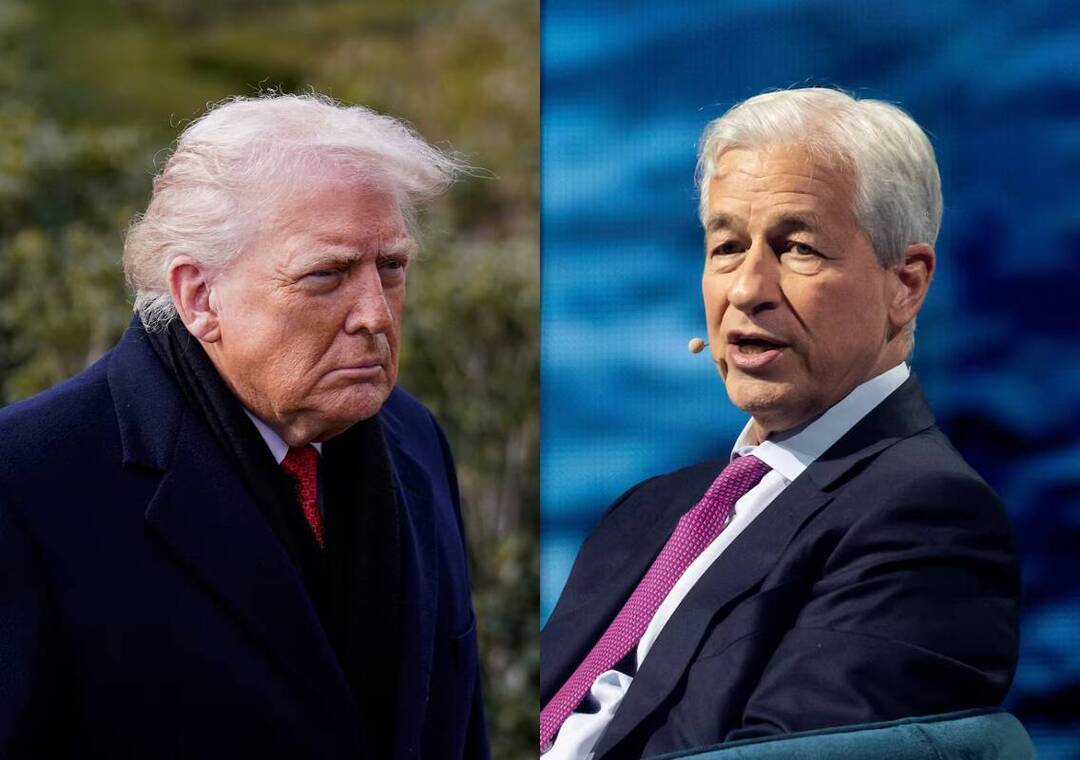
In a shocking move, former US President Donald Trump has sued JPMorgan Chase, the largest bank in the United States, and its CEO Jamie Dimon for a staggering $5 billion (approximately ₹45,800 crore) for allegedly “debanking” him. According to Trump, the bank “unilaterally- and without warning or remedy- terminated several of [his] bank accounts” due to its “woke” beliefs that it needs to distance itself from him.
This lawsuit is a significant development in the ongoing saga of Trump’s tumultuous relationship with the banking industry. The former President has long been a vocal critic of the banking sector, accusing it of being biased against him and his supporters. This lawsuit is seen as a major escalation of that feud, with Trump seeking damages of $5 billion from JPMorgan Chase and its CEO.
According to the lawsuit, Trump claims that JPMorgan Chase terminated his bank accounts without warning or explanation, citing the bank’s “woke” culture as the reason behind this decision. Trump alleges that the bank’s decision was motivated by a desire to distance itself from him due to his political views and affiliations. The lawsuit states that JPMorgan Chase’s actions were “unlawful, malicious, and designed to harm” Trump’s business interests.
The concept of “debanking” refers to the practice of banks terminating the accounts of customers, often without warning or explanation. This can have severe consequences for individuals and businesses, making it difficult for them to access basic financial services. Trump’s lawsuit claims that JPMorgan Chase’s decision to debank him was a form of political retaliation, aimed at punishing him for his views and affiliations.
The lawsuit is likely to have significant implications for the banking industry, with many experts warning that it could set a precedent for other individuals and businesses to sue banks for debanking. The case is also seen as a major test of the banking industry’s commitment to neutrality and impartiality, with many questioning whether banks should be allowed to terminate accounts based on political considerations.
JPMorgan Chase has yet to comment on the lawsuit, but the bank has faced criticism in the past for its handling of Trump’s accounts. In 2021, the bank faced backlash after it was revealed that it had frozen Trump’s accounts, citing concerns about potential reputational risk. The bank later reversed its decision, but the incident sparked widespread criticism of the bank’s handling of Trump’s accounts.
The lawsuit is also seen as a reflection of the increasingly polarized nature of American politics, with many viewing Trump’s lawsuit as a form of retaliation against the banking industry for its perceived bias against him. Trump’s supporters have long accused the banking industry of being biased against the former President, with many claiming that banks are seeking to punish Trump for his views and affiliations.
The outcome of the lawsuit is far from certain, with many experts predicting that it will be a long and complex process. Trump’s lawsuit will likely face significant challenges, including the need to prove that JPMorgan Chase’s decision to debank him was motivated by a desire to punish him for his political views. The lawsuit will also need to navigate the complex web of banking regulations and laws that govern the industry.
In conclusion, Trump’s lawsuit against JPMorgan Chase and its CEO Jamie Dimon is a significant development in the ongoing saga of Trump’s relationship with the banking industry. The lawsuit has sparked widespread debate and controversy, with many questioning the motivations behind JPMorgan Chase’s decision to debank Trump. As the case makes its way through the courts, it will be closely watched by many, with significant implications for the banking industry and the broader economy.
About the Author