Look forward to welcome Brazil’s Prez Lula da Silva to India: PM Modi
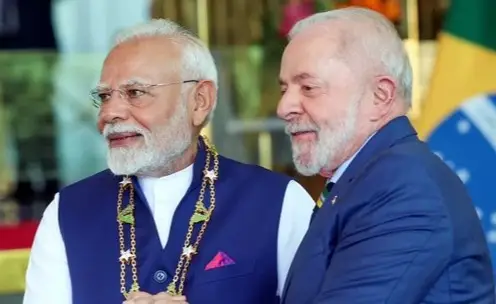
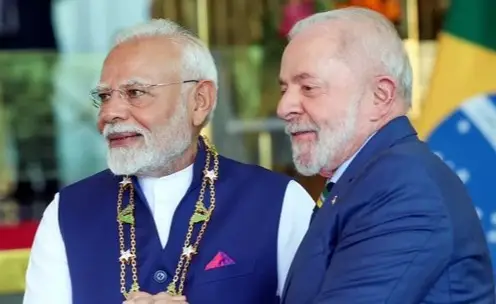
In a significant development, Prime Minister Narendra Modi spoke to Brazil’s President Luiz Inácio Lula da Silva on Thursday, expressing his eagerness to welcome the Brazilian leader to India. The conversation between the two leaders highlights the growing importance of the India-Brazil Strategic Partnership, which has been gaining momentum in recent years. As both countries navigate complex geopolitical relationships and trade tensions, their bilateral cooperation is becoming increasingly vital for advancing shared interests, particularly among the Global South.
During their conversation, PM Modi and President Lula da Silva reviewed the strong momentum in the India-Brazil Strategic Partnership, which encompasses a wide range of areas, including trade, investment, defense, and culture. The two leaders acknowledged the significance of their close cooperation, recognizing that it is essential for promoting the shared interests of the Global South. This partnership is not only crucial for India and Brazil but also has far-reaching implications for the broader region, as both countries are key players in regional and global affairs.
One of the significant aspects of the India-Brazil relationship is the strong trade ties between the two nations. Both countries have been working to enhance their economic cooperation, with a focus on increasing trade and investment. However, both India and Brazil are currently facing tariff-related tensions with the United States, which has created challenges for their exporters. The US has imposed tariffs on certain Indian and Brazilian products, citing concerns over trade deficits and unfair trade practices. In response, both countries have been seeking to diversify their trade relationships and reduce their dependence on the US market.
The India-Brazil Strategic Partnership is also driven by a shared commitment to promoting South-South cooperation and addressing global challenges. Both countries have been actively engaged in regional and international forums, such as the BRICS grouping, the G20, and the United Nations, to promote their shared interests and values. They have also been working together to address pressing global issues, including climate change, sustainable development, and global health security.
The invitation extended by PM Modi to President Lula da Silva to visit India reflects the growing warmth and camaraderie between the two leaders. The visit is expected to provide an opportunity for the two countries to further strengthen their bilateral relationship, explore new areas of cooperation, and deepen their strategic partnership. The Indian government has been actively courting Brazilian investment and trade, and the visit is likely to yield significant outcomes in terms of enhanced economic cooperation.
The India-Brazil relationship is also characterized by a strong cultural affinity between the two nations. Both countries share a deep appreciation for each other’s cultural heritage, with Indian culture having a significant following in Brazil. The two countries have been actively promoting cultural exchanges, including in the fields of music, dance, and art. The visit of President Lula da Silva to India is expected to provide an opportunity for the two countries to further strengthen their cultural ties and promote people-to-people exchanges.
In conclusion, the conversation between PM Modi and President Lula da Silva highlights the growing importance of the India-Brazil Strategic Partnership. As both countries navigate complex geopolitical relationships and trade tensions, their bilateral cooperation is becoming increasingly vital for advancing shared interests, particularly among the Global South. The visit of President Lula da Silva to India is expected to provide a significant boost to the bilateral relationship, and PM Modi’s invitation reflects the growing warmth and camaraderie between the two leaders. As India and Brazil continue to strengthen their partnership, they are likely to play an increasingly important role in shaping the global agenda and promoting the interests of the Global South.
About the Author