Somalians turned out to have higher IQ than we thought: Trump on $19-bn daycare fraud
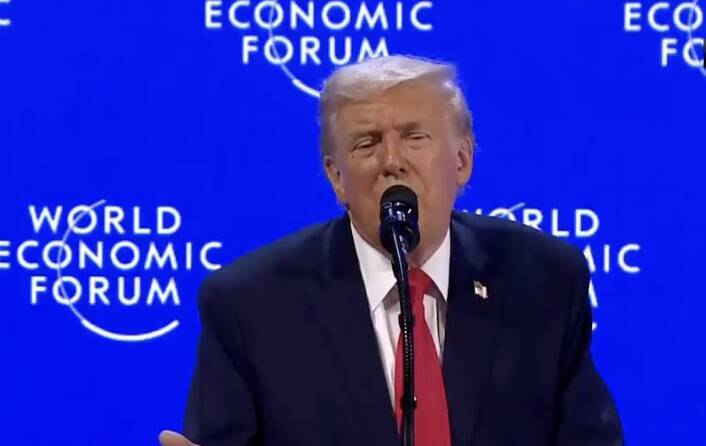
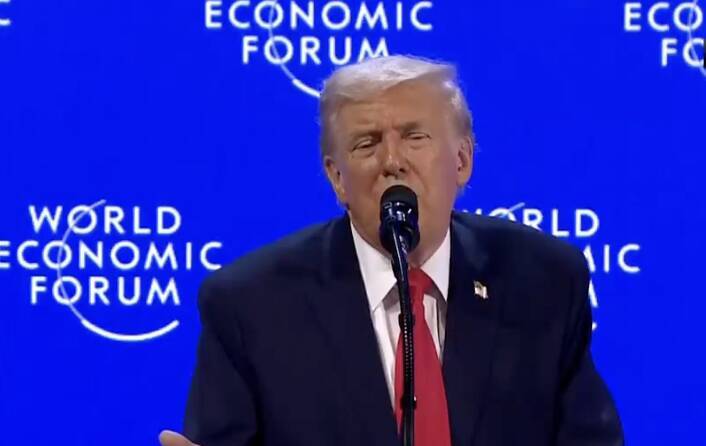
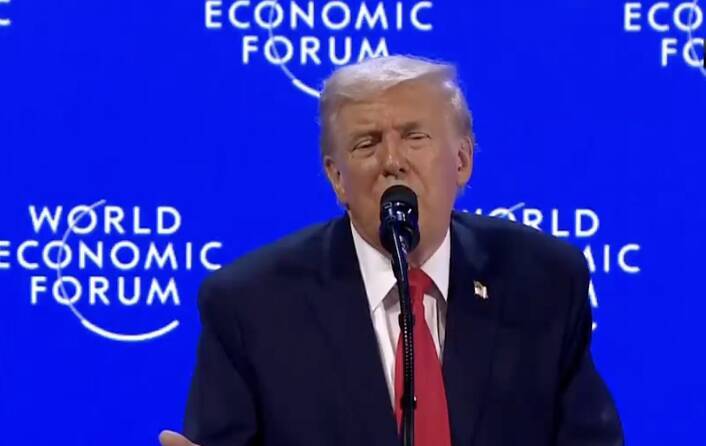
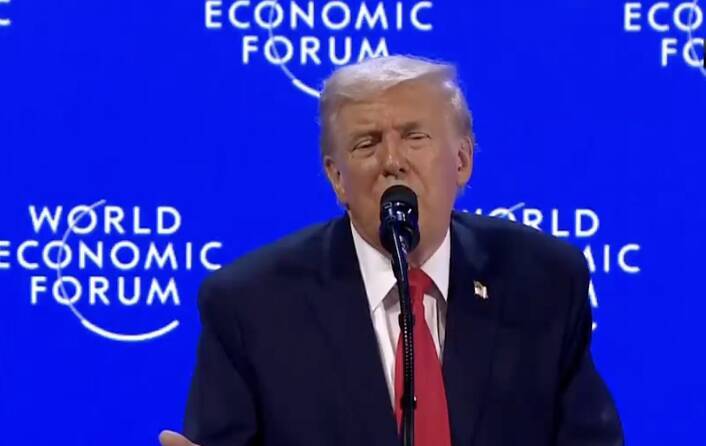
In a recent statement at the World Economic Forum (WEF), US President Donald Trump made some astonishing claims about Somalian-Americans, asserting that they had committed a staggering $19-billion daycare fraud in the state of Minnesota. The comments not only sparked widespread controversy but also raised eyebrows due to their nature and the targets of his criticism. Trump’s remarks were directed at the Somalian community in the United States, specifically referencing Congresswoman Ilhan Omar, who is of Somalian descent.
During his address, Trump said, “Can you believe that? Somalians turned out to have a higher IQ than we thought…They are pirates.” These words, uttered by the President of the United States, are not only derogatory but also reflect a profound misunderstanding or misrepresentation of the Somalian community and their contributions to American society. The reference to pirates is particularly demeaning, evoking stereotypes that do little to acknowledge the real challenges and achievements of Somalian immigrants in the US.
Furthermore, Trump’s comments took a personal turn when he referred to Ilhan Omar, a member of the US Congress, saying, “This fake congressperson…comes from a country that’s not a country and she’s telling us how to run America.” This statement is a clear attack on Representative Omar’s nationality and her right, as an elected official, to participate in the democratic process of the United States. Ilhan Omar is an American citizen, born in Somalia but immigrating to the US as a refugee. Her story is one of resilience and achievement, embodying the American dream that Trump often speaks about but seems to selectively apply.
The claim of a $19-billion daycare fraud attributed to Somalian-Americans in Minnesota is a serious accusation that lacks concrete evidence. Such allegations can have damaging effects on communities, perpetuating stereotypes and mistrust. It is essential for public figures, especially those in positions of power like the President, to be mindful of the information they disseminate and to ensure that their statements are based on facts rather than unfounded claims or biases.
The response to Trump’s comments has been swift and condemnatory from various quarters. Many have criticized the President for his divisive rhetoric, arguing that it not only hurts the Somalian-American community but also undermines the values of inclusivity and respect that America strives to represent. Others have pointed out the lack of evidence supporting the daycare fraud claim, suggesting that the statement is another example of Trump’s tendency to use misinformation to further his political agendas.
This incident also highlights the broader issue of how immigrant communities are perceived and treated in the United States. The path to integration and acceptance is often fraught with challenges, including discrimination, stereotyping, and exclusion. Statements like those made by Trump can exacerbate these issues, creating an environment where certain groups feel targeted and marginalized.
In conclusion, Trump’s comments about Somalian-Americans and the alleged $19-billion daycare fraud in Minnesota are a cause for concern. They reflect a worrying trend of using divisive language and making unsubstantiated claims to demean specific communities. As the US continues to grapple with issues of immigration, inclusion, and national identity, it is crucial for leaders to promote understanding, respect, and unity. The demonization of any group, based on their nationality, ethnicity, or background, is not only unjust but also counterproductive to the ideals that America seeks to uphold.
For more information on this story, please refer to the news source: https://x.com/atrupar/status/2013986907684839660
The discussion around Trump’s statements and their implications for Somalian-Americans and the broader immigrant community in the US is ongoing. It is essential to approach such topics with sensitivity and a commitment to factual accuracy, recognizing the human impact of political rhetoric and the importance of promoting a culture of respect and inclusivity.
In the wake of such controversies, it is also important to acknowledge the contributions of immigrant communities to American society. Somalian-Americans, like many other immigrant groups, bring unique perspectives, skills, and experiences that enrich the cultural and economic fabric of the United States. Their stories, including that of Ilhan Omar, are testaments to the resilience and determination of individuals who seek a better life for themselves and their families in America.
As the conversation around immigration and community integration continues, it is vital to focus on building bridges rather than walls, both physically and metaphorically. This includes supporting policies and initiatives that foster inclusivity, provide opportunities for social and economic mobility, and recognize the value of diversity in all its forms.
Ultimately, the strength of the United States lies in its ability to embrace diversity and to provide a platform for all its citizens to thrive. Statements that seek to divide or demean certain groups not only undermine this strength but also reflect poorly on the values of equality, justice, and freedom that America represents.
For the latest updates and to understand the context of Trump’s remarks, visit: https://x.com/atrupar/status/2013986907684839660
The dialogue about immigration, identity, and community in the US is complex and multifaceted. It requires a thoughtful and nuanced approach, one that balances the needs and rights of all individuals, regardless of their background. As this conversation evolves, it is crucial to prioritize empathy, understanding, and factual accuracy, ensuring that the narratives we construct are fair, inclusive, and reflective of the diverse experiences that make up the American story.
News source: https://x.com/atrupar/status/2013986907684839660
About the Author