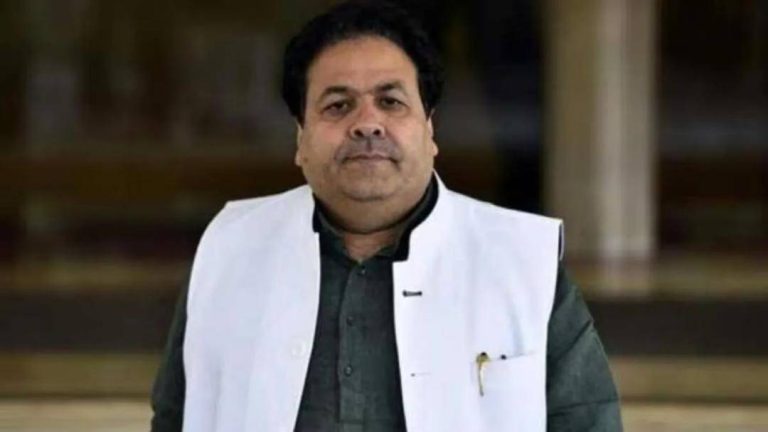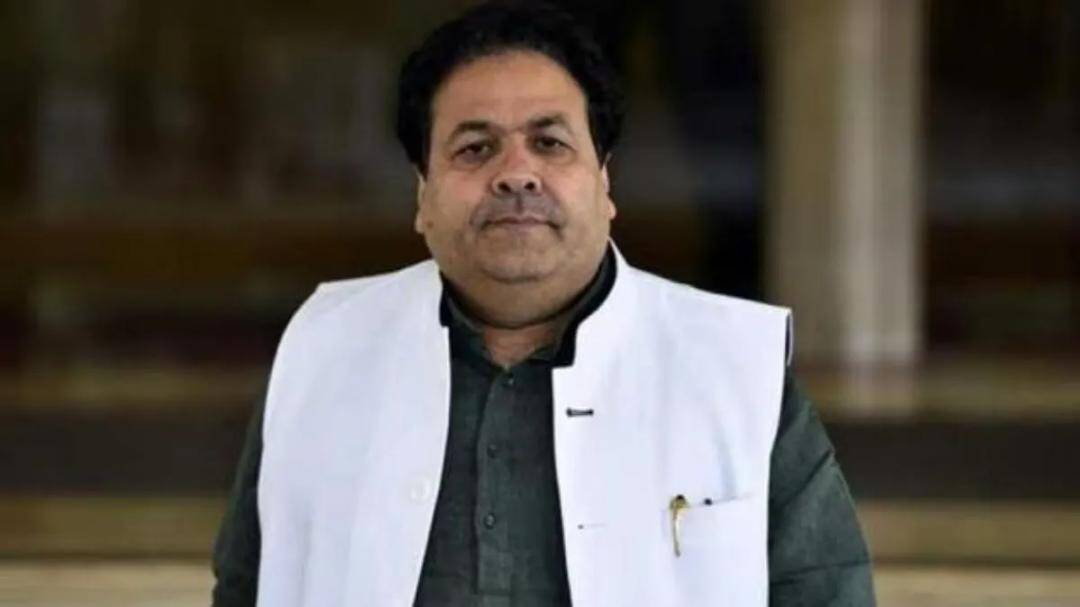
CMs meeting CMs in Switzerland to sign deals, criminal waste of money: Rajiv Shukla
The ongoing World Economic Forum (WEF) in Davos, Switzerland, has brought together world leaders, business magnates, and influencers to discuss the most pressing issues facing the global economy. However, the participation of Indian Chief Ministers in the event has sparked controversy, with some critics questioning the need for their presence. Rajya Sabha MP Rajeev Shukla has been vocal in his criticism, labelling the exercise as a “criminal waste of money”.
According to Shukla, the presence of Indian Chief Ministers in Davos is unnecessary, especially when they are meeting with other Indian dignitaries and signing agreements with Indian companies. “It’s strange…Indians are going to Davos to meet Indians. State governments are signing agreements with Indian companies in Switzerland which they could’ve done in India,” he said. This statement highlights the redundancy of the exercise, where Indian officials are traveling to a foreign land to engage with their counterparts from the same country.
Shukla’s criticism is not unfounded. The WEF is an expensive event, with participation fees running into thousands of dollars. The cost of attending the event, including travel, accommodation, and other expenses, is borne by the taxpayer. When Indian Chief Ministers attend the event, they are accompanied by a large entourage, including bureaucrats, security personnel, and other support staff. The total cost of their participation can run into crores of rupees, which is a significant burden on the exchequer.
Moreover, the agreements signed between state governments and Indian companies in Davos could have been easily signed in India, without incurring the huge expenses associated with traveling to Switzerland. Shukla’s statement that “CMs are meeting CMs in Davos” drives home the point that the exercise is an unnecessary extravagance. The time and money spent on attending the WEF could be better utilized in addressing the pressing issues facing the country, such as poverty, unemployment, and infrastructure development.
The WEF is often seen as a platform for networking and deal-making, but in the case of Indian Chief Ministers, it seems to be more of a photo opportunity. The presence of Indian leaders at the event is often touted as a symbol of India’s growing global influence, but it is essential to question whether this influence is being leveraged effectively. Are the agreements signed in Davos translating into tangible benefits for the people of India, or are they merely a publicity stunt?
The criticism of Shukla is not limited to the financial aspects of the exercise. He has also questioned the logic of Indian Chief Ministers traveling to a foreign country to meet with their counterparts from other states. In a federal system like India, the relationship between state governments is crucial, and there are existing mechanisms for inter-state cooperation and dialogue. The need for Indian Chief Ministers to travel to Davos to meet with each other raises questions about the effectiveness of these existing mechanisms.
In conclusion, the participation of Indian Chief Ministers in the World Economic Forum in Davos has sparked controversy, with critics questioning the need for their presence. Rajeev Shukla’s criticism of the exercise as a “criminal waste of money” highlights the redundancy and extravagance of the exercise. The agreements signed between state governments and Indian companies in Davos could have been easily signed in India, without incurring the huge expenses associated with traveling to Switzerland. As the country grapples with pressing issues like poverty, unemployment, and infrastructure development, it is essential to question the priorities of our leaders and ensure that taxpayer money is being utilized effectively.
Source: https://x.com/ShuklaRajiv/status/2013664724563726652
About the Author