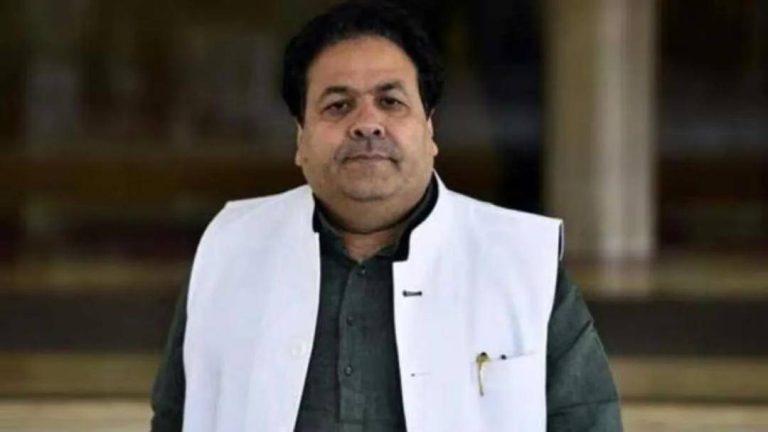
CMs meeting CMs in Switzerland to sign deals, criminal waste of money: Rajiv Shukla
The World Economic Forum (WEF) in Davos, Switzerland, has long been a platform for global leaders to converge and discuss pressing economic and social issues. However, this year’s edition has sparked controversy, with Rajya Sabha MP Rajeev Shukla criticizing the participation of Indian Chief Ministers in the event. Shukla’s remarks have ignited a debate about the necessity and efficacy of Indian leaders attending the WEF, particularly when it comes to signing agreements with Indian companies.
According to Shukla, the fact that Indian Chief Ministers are traveling to Davos to meet with other Indian leaders and sign agreements with Indian companies is nothing short of bizarre. “It’s strange…Indians are going to Davos to meet Indians. State governments are signing agreements with Indian companies in Switzerland which they could’ve done in India,” he said. This sentiment is echoed by many who question the logic behind incurring significant expenses to facilitate meetings and signings that could easily take place within India’s borders.
The crux of Shukla’s argument lies in the perceived wastage of resources. By attending the WEF, Indian Chief Ministers are not only incurring substantial travel and accommodation expenses but are also diverting valuable time and energy away from more pressing domestic issues. Moreover, the fact that these meetings and signings could be conducted within India raises questions about the true motivations behind participating in the WEF. As Shukla succinctly put it, “CMs are meeting CMs in Davos. It’s a criminal waste of money.”
This criticism is not unfounded, given the significant costs associated with attending the WEF. The event itself is a lavish affair, with participation fees, travel, and accommodation expenses running into thousands of dollars. For a country like India, where resources are often scarce and developmental needs are vast, such expenditures can be seen as frivolous and unjustifiable.
Furthermore, the WEF has long been criticized for its elitist nature, with many arguing that it serves as a platform for the wealthy and powerful to network and consolidate their interests, rather than genuinely addressing global challenges. In this context, the participation of Indian Chief Ministers can be seen as perpetuating a system that prioritizes the interests of the elite over those of the broader population.
It is also worth considering the potential benefits of attending the WEF, particularly in terms of attracting foreign investment and promoting India’s economic interests. However, as Shukla’s comments suggest, these benefits may be overstated, particularly when compared to the costs and potential alternatives. For instance, instead of attending the WEF, Indian leaders could focus on creating a more favorable business environment within India, thereby attracting investment and promoting economic growth without incurring the significant expenses associated with international travel and participation in elite forums.
In conclusion, Rajeev Shukla’s criticism of Indian Chief Ministers attending the World Economic Forum in Davos, Switzerland, highlights a critical issue that warrants closer examination. While the WEF may offer a platform for global leaders to engage and discuss pressing issues, the participation of Indian leaders, particularly for the purpose of signing agreements with Indian companies, raises important questions about the efficacy and justification of such expenses. As Shukla’s comments suggest, it may be time for Indian leaders to reassess their priorities and consider more effective, efficient, and responsible ways to promote India’s economic interests.
Source: https://x.com/ShuklaRajiv/status/2013664724563726652
About the Author