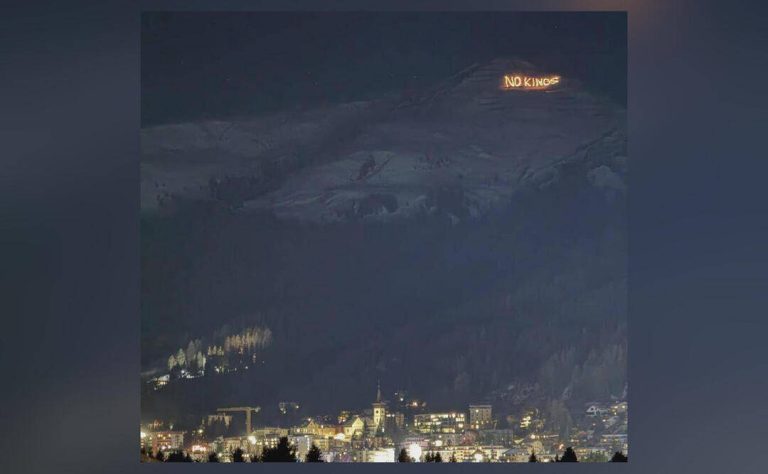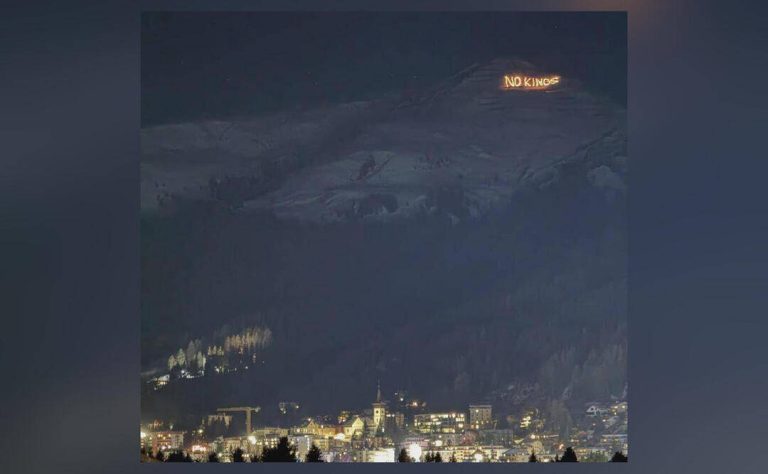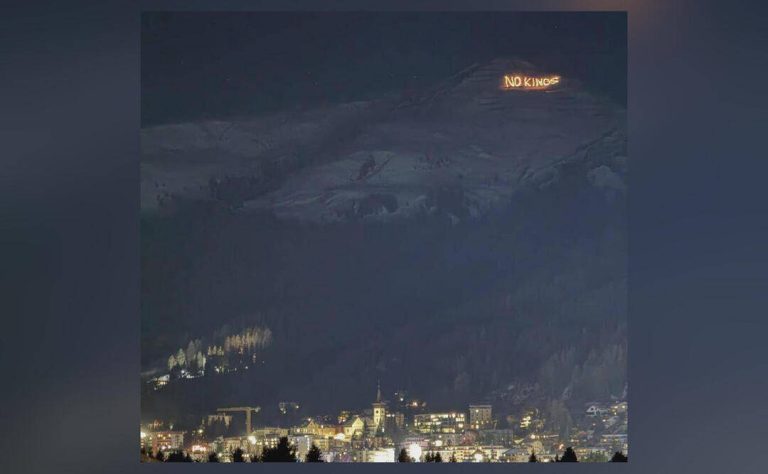
No Kings’ sign appears in Davos ahead of Trump’s WEF speech
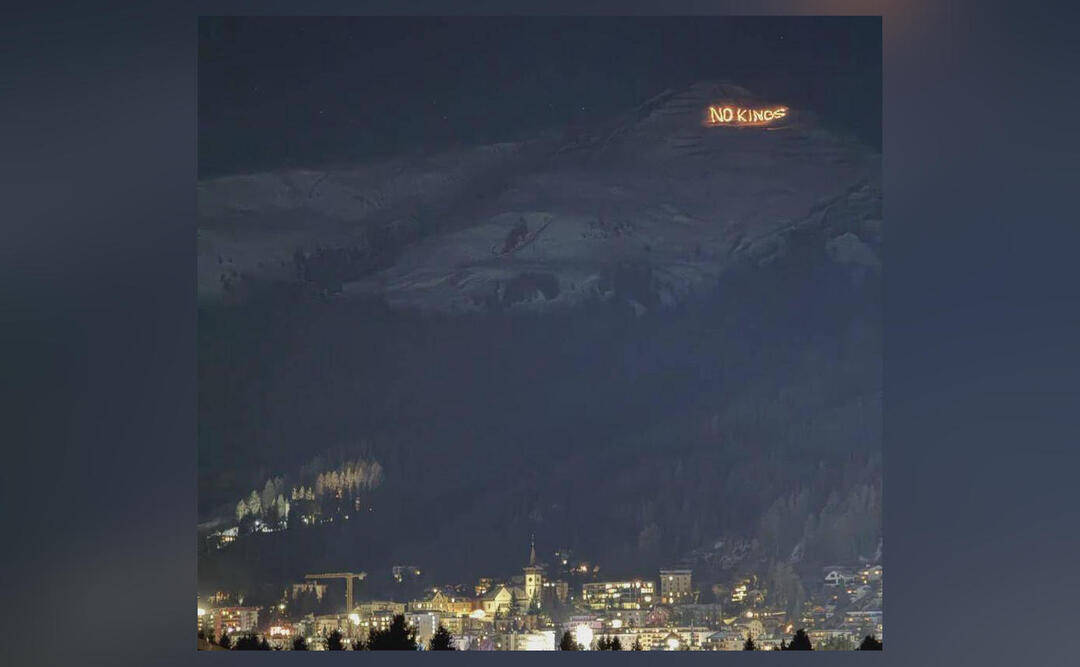
The World Economic Forum (WEF) in Davos, Switzerland, is always a highly anticipated event, bringing together world leaders, business executives, and intellectuals to discuss the most pressing issues of our time. This year’s edition was expected to be no different, with a multitude of topics on the agenda, from climate change to economic inequality. However, the arrival of US President Donald Trump has added an extra layer of controversy to the proceedings. In a bold statement, a ‘No Kings’ sign has appeared on a mountainside overlooking the WEF site, sparking a backlash and highlighting the deep-seated opposition to the Trump administration’s policies.
The sign, which was lit up a day before Trump’s scheduled address, is a clear reference to the president’s perceived authoritarian tendencies and his administration’s attempts to concentrate power. The phrase ‘No Kings’ has become a rallying cry for those who believe that nobody, including the president, is above the law. It is a powerful message that resonates with many who are concerned about the erosion of democratic norms and the rule of law in the United States.
The timing of the sign’s appearance is particularly significant, as it comes amidst Trump’s threats to annex Greenland, a move that has been widely condemned as a blatant disregard for international law and sovereignty. The idea that a president would even consider such a move has sent shockwaves around the world, with many questioning the motivations and intentions behind it. The ‘No Kings’ sign can be seen as a direct response to this kind of behavior, a reminder that there are limits to a president’s power and that the rule of law must be respected.
The sign has sparked a backlash, with many taking to social media to express their support for the message. The hashtag #NoKings has been trending, with people from all over the world weighing in on the issue. While some have praised the sign as a brave statement against authoritarianism, others have criticized it as a cheap stunt. However, one thing is clear: the sign has ignited a conversation about the limits of presidential power and the importance of accountability.
The WEF itself has become a focal point for protests and demonstrations over the years, with many using the platform to raise awareness about various issues, from climate change to economic inequality. The ‘No Kings’ sign is just the latest example of this trend, as people seek to use the event to draw attention to their causes. While some may see the sign as a distraction or a disruption, others will view it as a necessary statement, a reminder that the powerful must be held accountable for their actions.
As the world watches Trump’s speech at the WEF, the ‘No Kings’ sign will undoubtedly be on many people’s minds. The sign is a powerful symbol of resistance, a reminder that there are those who will not stand idly by while democratic norms are eroded. It is a message that transcends borders and ideologies, a call to action that reminds us all of the importance of standing up for what is right, even in the face of overwhelming power.
The appearance of the ‘No Kings’ sign in Davos is a significant moment, one that highlights the deep-seated concerns about the Trump administration’s policies and behavior. As the world grapples with the challenges of the 21st century, it is more important than ever that we stand up for the values of democracy, accountability, and the rule of law. The ‘No Kings’ sign is a powerful reminder of these values, a call to action that will resonate with many long after the WEF has come to a close.
In conclusion, the ‘No Kings’ sign in Davos is a significant statement, one that reflects the widespread opposition to the Trump administration’s attempts to concentrate power. As the world watches Trump’s speech at the WEF, the sign will serve as a powerful reminder of the importance of accountability and the rule of law. It is a message that will resonate with many, a call to action that will inspire others to stand up for what is right.
About the Author