CMs meeting CMs in Switzerland to sign deals, criminal waste of money: Rajiv Shukla
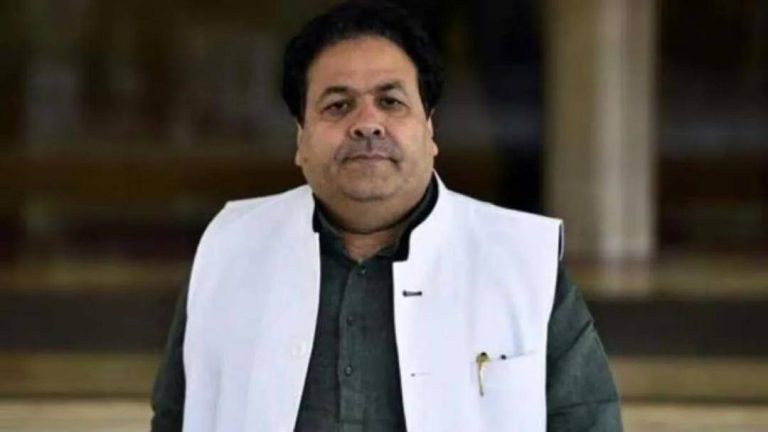
The ongoing World Economic Forum in Davos, Switzerland, has brought together some of the most influential leaders and thinkers from around the globe. However, the participation of Indian Chief Ministers in the event has sparked controversy, with some critics questioning the necessity and efficacy of their presence. Rajya Sabha MP Rajeev Shukla has been one of the most vocal critics, slamming the involvement of Indian CMs in the forum as a “criminal waste of money.”
According to Shukla, the fact that Indian Chief Ministers are traveling to Switzerland to meet with other Indian leaders and sign agreements with Indian companies is nothing short of absurd. “It’s strange…Indians are going to Davos to meet Indians,” he said in a statement. “State governments are signing agreements with Indian companies in Switzerland which they could’ve done in India.” This sentiment has resonated with many, who see the trip as an unnecessary expense and a frivolous use of taxpayer money.
The World Economic Forum is an annual event that brings together leaders from various fields, including politics, business, and civil society, to discuss global issues and forge partnerships. While the forum has been credited with facilitating meaningful dialogue and collaboration, the involvement of Indian Chief Ministers has raised eyebrows. With several Indian states facing significant economic and social challenges, many are questioning the wisdom of spending large sums of money to attend a conference in a foreign country.
Shukla’s criticism is not limited to the financial aspect of the trip. He also pointed out the bizarre nature of Indian Chief Ministers meeting with each other in a foreign country. “CMs are meeting CMs in Davos. It’s criminal waste of money,” he added. This comment highlights the absurdity of the situation, where leaders who could easily meet in India are instead choosing to do so in a luxurious setting in Switzerland.
The issue at hand is not just about the expense, but also about the perceived lack of transparency and accountability. With many Indian states struggling to provide basic amenities to their citizens, the decision to spend large sums of money on a foreign trip has been met with skepticism. The fact that these agreements could have been signed in India, without the need for a lavish conference in a foreign country, has only added to the criticism.
Furthermore, the involvement of Indian Chief Ministers in the World Economic Forum has also raised questions about the relevance of the event to India’s domestic challenges. While the forum has been instrumental in shaping global discourse on various issues, its connection to the everyday problems faced by Indians is not immediately clear. As such, the decision to attend the conference has been seen by some as a luxury that India can ill afford.
In recent years, the Indian government has been under pressure to address a range of pressing issues, including poverty, unemployment, and inequality. With the country’s economy still recovering from the impact of the COVID-19 pandemic, the need for prudent financial management and responsible governance has never been more pressing. In this context, the decision to spend large sums of money on a foreign trip has been seen as a misallocation of resources.
It is worth noting that the World Economic Forum has been criticized in the past for its elitist nature and lack of diversity. The event has been accused of being a platform for the wealthy and powerful to network and forge deals, while ignoring the concerns of ordinary people. In this context, the involvement of Indian Chief Ministers has been seen as a perpetuation of this elitist culture, where the interests of the powerful are prioritized over those of the marginalized.
In conclusion, the criticism of Indian Chief Ministers attending the World Economic Forum in Davos is not without merit. The fact that these leaders are traveling to a foreign country to meet with other Indians and sign agreements with Indian companies is a bizarre and unnecessary expense. As Rajeev Shukla pointed out, this is a “criminal waste of money” that could have been better spent on addressing the pressing challenges faced by Indian citizens. As the country continues to grapple with a range of economic and social issues, the need for responsible governance and prudent financial management has never been more pressing.
News source: https://x.com/ShuklaRajiv/status/2013664724563726652
About the Author