Largest Solar Storm in Over 20 Years Hits Earth
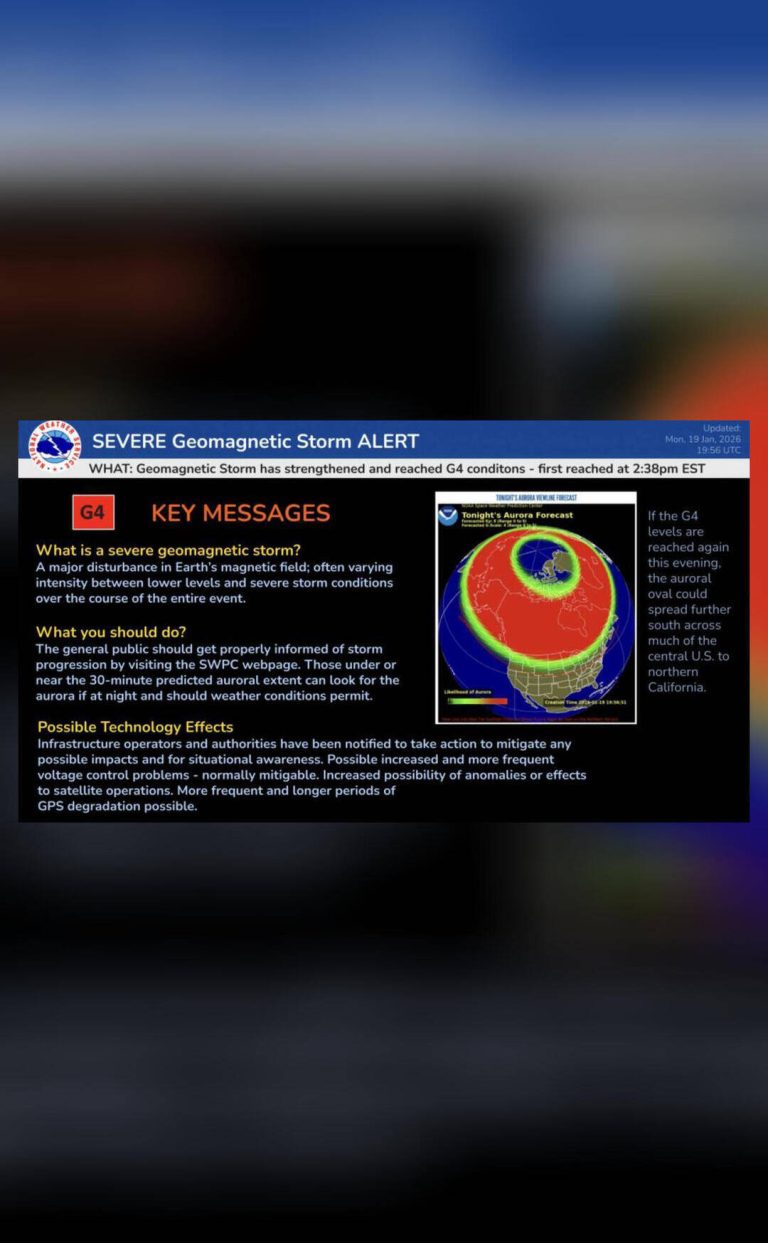
A powerful solar storm hit the Earth on Monday evening and early Tuesday morning, creating dazzling auroral displays at several locations across the globe. This spectacular event was the result of a massive solar flare that erupted from the sun, sending a huge wave of charged particles towards our planet. The largest solar storm in over 20 years, it has not only mesmerized sky gazers but also raised concerns about disruptions to satellite-based communications and GPS accuracy.
The solar storm, which was classified as a G5-level geomagnetic storm, was strong enough to cause significant distortions in the Earth’s magnetic field. As a result, people in areas that are not typically known for their aurora displays were able to witness the breathtaking spectacle. Social media was filled with images and videos of the stunning displays, with many people expressing their awe and wonder at the natural phenomenon.
However, the solar storm is not just a visually stunning event; it also has the potential to cause disruptions to our technological systems. Satellite-based communications, such as satellite TV and radio, may experience interference or blackouts due to the increased radiation from the sun. Additionally, the storm could also affect the accuracy of GPS systems, which are relied upon by a wide range of industries, including aviation, maritime, and transportation.
Solar radiation storms, like the one that hit the Earth, can also cause increased radiation exposure risks for passengers on flights that are traveling polar routes. This is because the Earth’s magnetic field provides less protection against solar radiation at higher latitudes, leaving passengers and crew members more vulnerable to the harmful effects of radiation. Airlines and aviation authorities are taking precautions to minimize the risks, such as rerouting flights and providing additional shielding to protect against radiation.
The solar storm has also sparked concerns about the potential impact on the power grid and other critical infrastructure. While the likelihood of a widespread power outage is low, the storm could still cause localized disruptions and damage to electrical systems. Utilities and grid operators are on high alert, monitoring the situation closely and taking steps to mitigate any potential disruptions.
The solar storm is a reminder of the awe-inspiring power of the sun and the importance of monitoring and preparing for space weather events. Space weather refers to the dynamic and variable conditions in the space environment, including solar flares, coronal mass ejections, and geomagnetic storms. These events can have a significant impact on our technological systems and daily lives, and it is essential that we have systems in place to monitor and respond to them.
In recent years, there has been an increasing focus on space weather and its potential impacts on our society. Governments, agencies, and industries are working together to develop strategies for mitigating the effects of space weather events, such as solar storms. This includes investing in research and development, improving forecasting and warning systems, and enhancing the resilience of our critical infrastructure.
As the solar storm continues to affect the Earth, sky gazers and scientists alike are eagerly watching the spectacle unfold. While the storm is expected to subside in the coming days, its impact will be felt for some time to come. As we continue to explore and understand the complexities of space weather, we are reminded of the importance of being prepared and resilient in the face of these powerful events.
The largest solar storm in over 20 years is a significant event that has captivated the imagination of people around the world. While it has the potential to cause disruptions to our technological systems, it is also a reminder of the beauty and power of the natural world. As we continue to monitor and learn from this event, we are reminded of the importance of being aware of and prepared for the potential impacts of space weather on our daily lives.
In conclusion, the largest solar storm in over 20 years has hit the Earth, creating dazzling auroral displays and raising concerns about disruptions to satellite-based communications and GPS accuracy. As we continue to watch the spectacle unfold, we are reminded of the importance of monitoring and preparing for space weather events. By working together and investing in research and development, we can enhance our resilience and mitigate the effects of these powerful events.
News Source: https://x.com/RT_com/status/2013348883477233817
About the Author