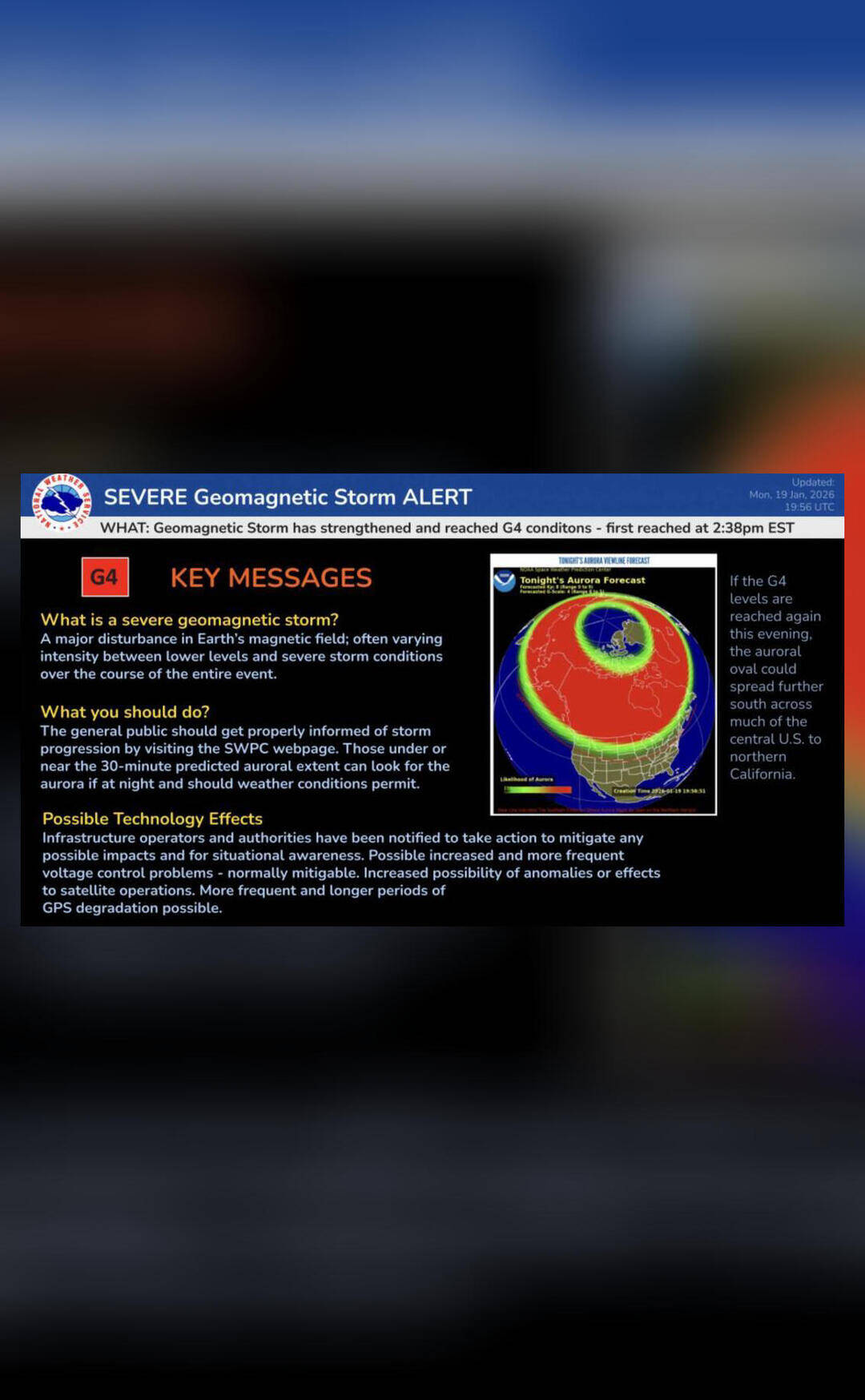
Largest Solar Storm in Over 20 Years Hits Earth
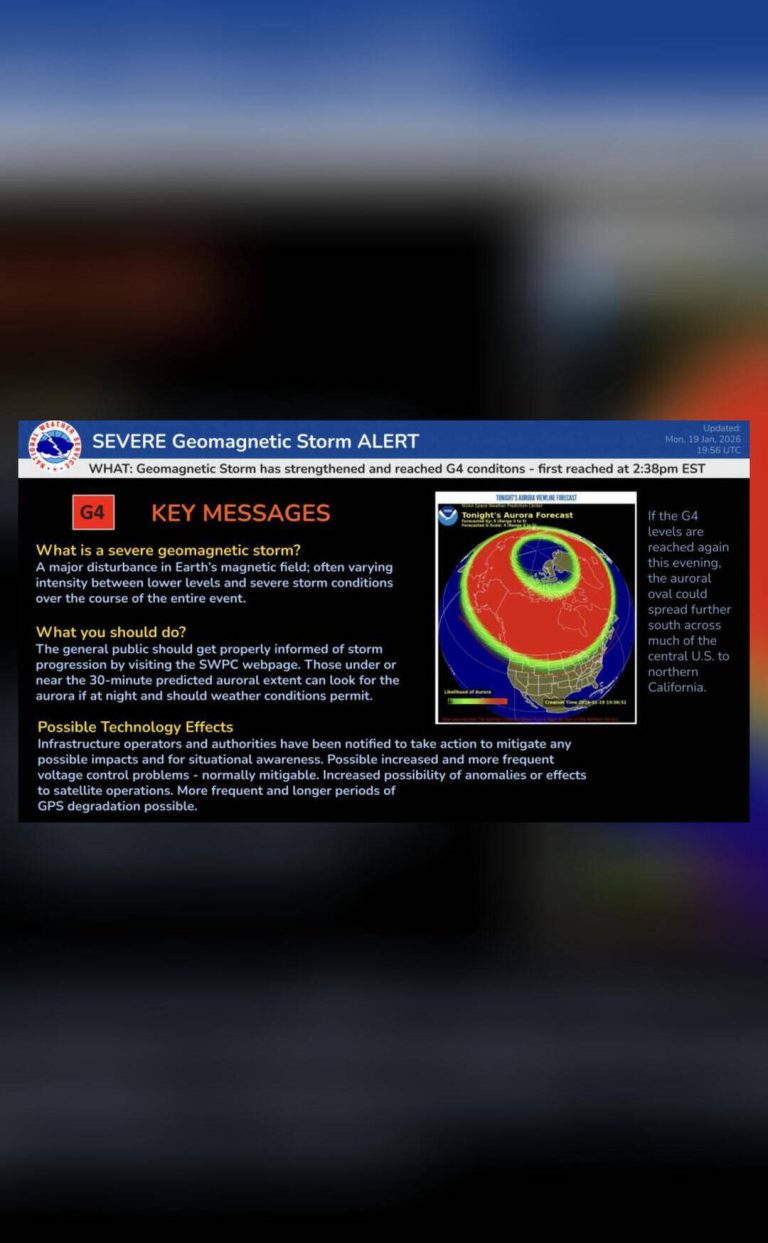
A powerful solar storm hit the Earth on Monday evening and early Tuesday morning, creating dazzling auroral displays at several locations across the globe. This phenomenon, which is the largest solar storm in over 20 years, has not only mesmerized sky gazers but also raised concerns about its potential impact on satellite-based communications and GPS accuracy. In this blog post, we will delve into the details of this solar storm, its effects, and what it means for us.
The solar storm, which is a coronal mass ejection (CME) from the sun, is a massive burst of plasma and magnetic field that is released into space. This CME is so powerful that it has caused a geomagnetic storm on Earth, leading to spectacular displays of the aurora borealis, also known as the northern lights, and the aurora australis, also known as the southern lights. The aurora displays were visible in several locations, including the northern United States, Canada, and Europe, as well as in the southern hemisphere, including Australia and New Zealand.
The solar storm has not only amazed sky gazers but also raised concerns about its potential impact on satellite-based communications and GPS accuracy. The geomagnetic storm can cause disruptions to satellite communications, including radio blackouts and navigation system failures. This can have significant implications for industries that rely on satellite-based communications, such as aviation, maritime, and finance. Additionally, the solar storm can also affect GPS accuracy, which can have implications for navigation systems, including those used in cars, airplanes, and ships.
Another concern associated with solar radiation storms is the increased radiation exposure risks for passengers on flights that are traveling polar routes. When a solar radiation storm occurs, it can cause a significant increase in radiation levels at high altitudes, which can pose a risk to passengers on flights that are traveling over the polar regions. This is because the polar regions offer less protection against solar radiation, and the increased radiation levels can increase the risk of radiation exposure for passengers.
The solar storm has also raised concerns about its potential impact on power grids and electrical systems. A geomagnetic storm can cause geomagnetically induced currents (GICs) in power grids and electrical systems, which can lead to power outages and equipment damage. This can have significant implications for industries that rely on power grids and electrical systems, such as healthcare, finance, and transportation.
In addition to its potential impacts on satellite-based communications, GPS accuracy, and power grids, the solar storm has also raised concerns about its potential impact on space exploration. The solar storm can pose a significant risk to astronauts and spacecraft, as the increased radiation levels can increase the risk of radiation exposure and equipment damage. This can have significant implications for space agencies, such as NASA, which are planning to send astronauts to the moon and Mars in the coming years.
The solar storm has also sparked a debate about the need for better space weather forecasting and preparedness. Space weather forecasting is the prediction of solar and geomagnetic activity, and it is essential for predicting the potential impacts of solar storms on Earth. However, space weather forecasting is still a relatively new field, and there is a need for more research and investment in this area. This can help to improve our understanding of space weather and its potential impacts, and it can also help to develop strategies for mitigating the effects of solar storms.
In conclusion, the largest solar storm in over 20 years has hit the Earth, causing dazzling auroral displays and raising concerns about its potential impact on satellite-based communications, GPS accuracy, and power grids. The solar storm has also raised concerns about its potential impact on space exploration and the need for better space weather forecasting and preparedness. As we continue to rely on technology and space-based systems, it is essential that we understand the potential risks and impacts of solar storms and take steps to mitigate them.
News Source: https://x.com/RT_com/status/2013348883477233817
About the Author