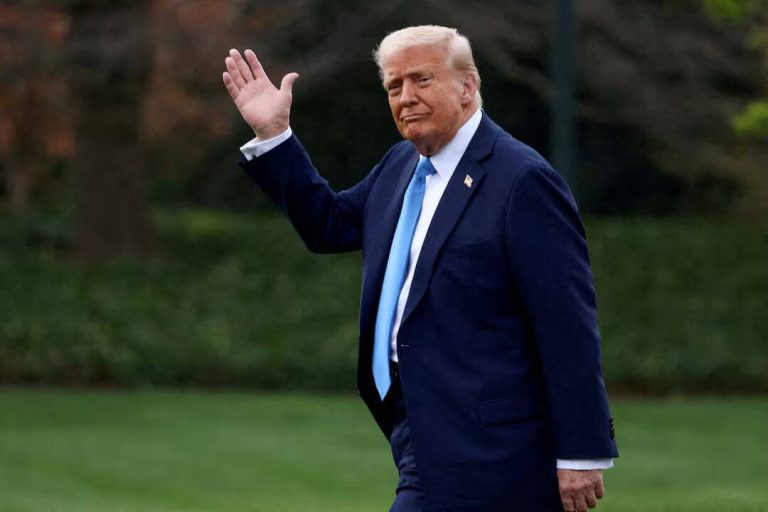
Trump to remain chairman of ‘Gaza Board of Peace’ even when he’s not US President
In a surprising turn of events, it has been revealed that Donald Trump, the former President of the United States, will continue to serve as the chairman of the ‘Gaza Board of Peace’ even after he is no longer in office. This news has raised several eyebrows, especially given the fact that the board’s charter has been designed in such a way that the chairman can only be removed under very specific circumstances.
According to the charter, the chairman of the Gaza Board of Peace can only be removed if he voluntarily resigns or is voted “incapable” by the executive board. The executive board, however, has appointees chosen by Trump himself, which makes it highly unlikely that he would be voted out. This means that Trump will continue to hold significant influence over the board, even when he is no longer the President of the United States.
The Gaza Board of Peace was established with the aim of promoting peace and stability in the Gaza region. The board has been tasked with overseeing various initiatives and projects aimed at improving the lives of people living in Gaza. However, the fact that Trump will continue to serve as the chairman of the board has raised concerns about the board’s independence and impartiality.
One of the most significant implications of Trump’s continued chairmanship is the potential for conflicts of interest. As the chairman of the board, Trump will have significant influence over the board’s decisions and actions. However, as a former President, he will also have his own personal and business interests to consider. This could lead to situations where Trump’s personal interests conflict with the interests of the board, which could undermine the board’s effectiveness and credibility.
Another concern is the fact that Trump has invited Prime Minister Narendra Modi to be a part of the Gaza Board of Peace. While Modi’s involvement could potentially bring significant benefits to the board, it also raises questions about the board’s independence and impartiality. As the Prime Minister of India, Modi will have his own priorities and interests, which may not always align with the goals and objectives of the board.
The invitation to Modi has also sparked debate about the role of India in the Gaza peace process. India has historically been a strong supporter of the Palestinian people, and has consistently advocated for a two-state solution to the Israeli-Palestinian conflict. However, India’s involvement in the Gaza Board of Peace could potentially complicate its relationships with other countries in the region, particularly Israel.
Despite these concerns, Trump’s continued chairmanship of the Gaza Board of Peace is likely to have significant implications for the region. As the chairman of the board, Trump will have significant influence over the board’s decisions and actions, and will be able to shape the board’s agenda and priorities. This could potentially lead to new opportunities for peace and stability in the region, but it also raises significant risks and challenges.
In conclusion, the news that Trump will remain the chairman of the Gaza Board of Peace even when he is no longer the US President has significant implications for the region. While the board has the potential to play a positive role in promoting peace and stability in Gaza, Trump’s continued chairmanship raises concerns about the board’s independence and impartiality. As the situation continues to evolve, it will be important to watch closely and see how the board’s actions and decisions are received by the international community.
The Gaza Board of Peace is a complex and multifaceted issue, and there are many different perspectives and opinions on the matter. However, one thing is clear: the board’s success will depend on its ability to balance the competing interests and priorities of its members, while also staying true to its core mission and goals.
As the world watches and waits to see how the Gaza Board of Peace will evolve, one thing is certain: the board’s actions and decisions will have significant implications for the people of Gaza, and for the wider region. Whether the board is able to achieve its goals and promote peace and stability in the region remains to be seen, but one thing is clear: the road ahead will be challenging, and will require careful navigation and diplomacy.
About the Author