Broken idols brought from outside: UP CM Yogi amid row over Manikarnika Ghat renovation
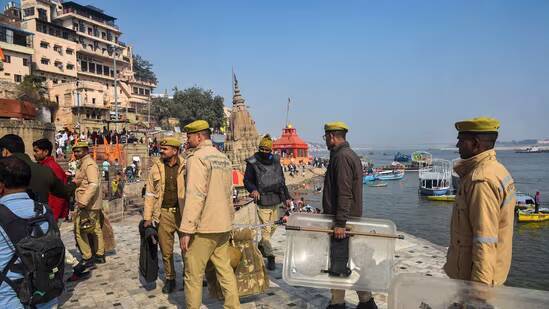
The recent renovation of Manikarnika Ghat in Varanasi has sparked a controversy, with opposition parties and locals alleging that the redevelopment project has led to the destruction of several ancient idols and statues. However, Uttar Pradesh Chief Minister Yogi Adityanath has come out strongly in defense of the project, claiming that broken idols were brought from outside to malign India’s heritage.
According to CM Yogi, the allegations of idol demolition are baseless and a part of a larger conspiracy to discredit the government’s efforts to preserve and promote India’s rich cultural heritage. “It is being claimed that idols are being demolished. There cannot be a bigger lie than this,” he said, emphasizing that the government is committed to protecting and preserving the country’s historical and cultural treasures.
The controversy began when reports emerged that several ancient idols and statues, including the Rani Ahilyabai Holkar statue, had been damaged or destroyed during the renovation work at Manikarnika Ghat. The opposition parties were quick to attack the government, accusing it of being insensitive to the country’s cultural heritage and of attempting to erase its history.
The Rani Ahilyabai Holkar statue, in particular, has been at the center of the controversy. The statue, which was erected in honor of the 18th-century queen of Indore, is said to have been damaged during the renovation work. The opposition parties have demanded that the government take immediate action to restore the statue and ensure that such incidents do not recur in the future.
However, CM Yogi has maintained that the allegations of destruction are false and that the government is committed to preserving the country’s cultural heritage. He has also accused the opposition parties of trying to politicize the issue and of attempting to create unrest in the state.
The renovation of Manikarnika Ghat is part of a larger project to develop and beautify the ghats along the Ganga River in Varanasi. The project, which is being implemented by the Uttar Pradesh government, aims to improve the infrastructure and amenities at the ghats, while also preserving the cultural and historical significance of the area.
While the opposition parties have been critical of the government’s handling of the project, many locals and experts have welcomed the initiative, saying that it will help to improve the overall experience of visiting the ghats and will also contribute to the preservation of the area’s cultural heritage.
The controversy over the Manikarnika Ghat renovation is not an isolated incident. In recent years, there have been several instances of cultural and historical sites being damaged or destroyed, either due to natural disasters or human activities. The incidents have sparked widespread outrage and have highlighted the need for greater awareness and efforts to preserve the country’s cultural heritage.
In this context, the statement by CM Yogi that broken idols were brought from outside to malign India’s heritage takes on a significant dimension. If true, it would suggest that there are forces that are actively working to undermine the country’s cultural heritage and to create unrest and controversy.
As the controversy over the Manikarnika Ghat renovation continues to unfold, it is clear that the issue is not just about the preservation of cultural heritage, but also about the politics of history and identity. The government’s efforts to preserve and promote India’s cultural heritage are being seen as an attempt to assert a particular vision of the country’s history and identity, and the opposition parties are resisting this vision.
Ultimately, the controversy over the Manikarnika Ghat renovation highlights the need for a more nuanced and informed discussion about the preservation of cultural heritage in India. It is essential to recognize that cultural heritage is not just about preserving ancient monuments and artifacts, but also about promoting a sense of shared history and identity.
As the debate over the Manikarnika Ghat renovation continues, it is hoped that the government and the opposition parties will engage in a constructive dialogue about the preservation of cultural heritage and the promotion of India’s rich cultural diversity.
Source: https://x.com/PTI_News/status/2012458022187192360
About the Author