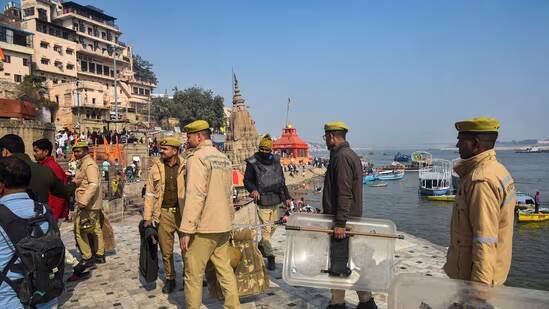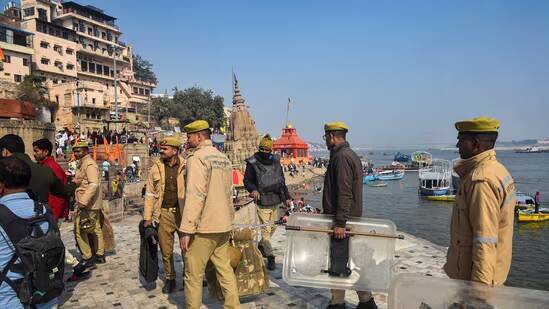
Broken idols brought from outside: UP CM Yogi amid row over Manikarnika Ghat renovation
The recent redevelopment of Manikarnika Ghat in Varanasi has sparked controversy, with allegations of destruction of historical idols and statues. Amidst the row, Uttar Pradesh Chief Minister Yogi Adityanath has claimed that broken idols were brought from outside to malign India’s heritage. The statement comes as a response to the opposition’s attack on the government over the alleged destruction of the Rani Ahilyabai Holkar statue.
According to CM Yogi, the allegations of idol demolition are baseless and a deliberate attempt to mislead the public. “It is being claimed that idols are being demolished. There cannot be a bigger lie than this,” he said. The Chief Minister emphasized that the redevelopment of Manikarnika Ghat is aimed at preserving and promoting India’s rich cultural heritage, rather than destroying it.
The controversy began when opposition parties alleged that the government was destroying historical idols and statues as part of the redevelopment project. The Rani Ahilyabai Holkar statue, in particular, was reported to be demolished, sparking widespread outrage. However, the government has maintained that the statue was not destroyed, but rather relocated to a new site as part of the redevelopment plan.
The opposition has been quick to criticize the government’s handling of the situation, with many leaders accusing the government of being insensitive to India’s cultural heritage. The controversy has also sparked a wider debate about the preservation of historical sites and the role of the government in protecting India’s cultural legacy.
CM Yogi’s statement has added fuel to the fire, with many questioning the claim that broken idols were brought from outside to malign India’s heritage. While the government has not provided any evidence to support this claim, it has emphasized that the redevelopment of Manikarnika Ghat is a complex project that requires careful planning and execution.
The project aims to transform the ghat into a modern and tourist-friendly destination, while also preserving its historical and cultural significance. The government has allocated significant funds for the project, which is expected to be completed in the near future.
As the controversy continues to unfold, it is clear that the redevelopment of Manikarnika Ghat has become a highly politicized issue. The government must navigate the complex web of historical, cultural, and political sensitivities to ensure that the project is completed successfully.
In the meantime, the public remains skeptical about the government’s claims, and the opposition continues to attack the government over the alleged destruction of historical idols and statues. The controversy serves as a reminder of the challenges involved in preserving India’s cultural heritage, and the need for careful planning and execution in such projects.
The redevelopment of Manikarnika Ghat is not just a local issue, but a national one, with implications for India’s cultural and historical legacy. As the country continues to grow and develop, it is essential that the government prioritizes the preservation of historical sites and cultural heritage, while also promoting tourism and economic development.
In conclusion, the controversy over the redevelopment of Manikarnika Ghat highlights the complexities and challenges involved in preserving India’s cultural heritage. While the government has claimed that broken idols were brought from outside to malign India’s heritage, the opposition has attacked the government over the alleged destruction of historical idols and statues. As the debate continues, it is essential that the government prioritizes transparency, accountability, and careful planning to ensure that the project is completed successfully.
News Source: https://x.com/PTI_News/status/2012458022187192360
About the Author